
Billionaire in 100 Days – Day 10: Build discipline like the elite by mastering the discipline habits of successful people.
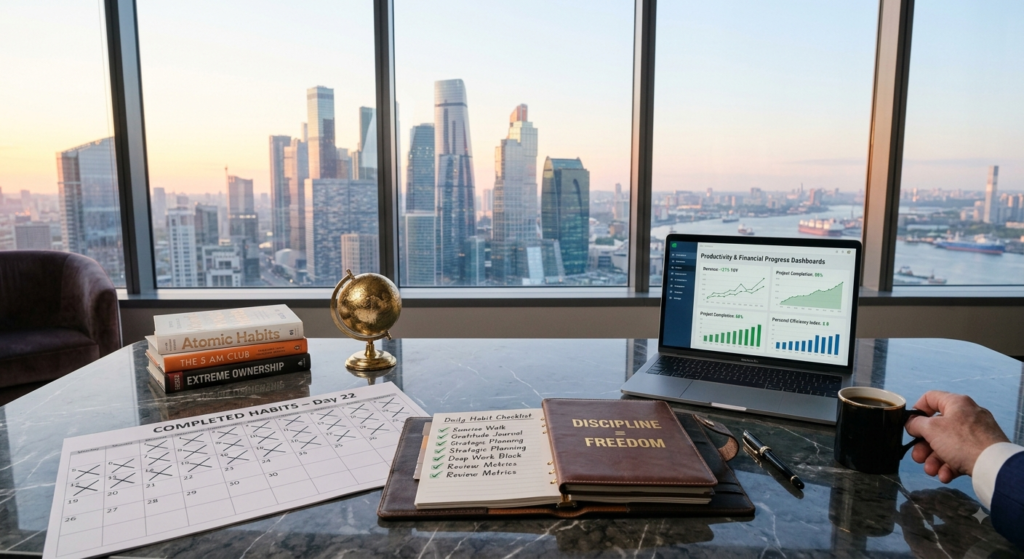
Discipline = Freedom
Motivation feels powerful.
You wake up inspired.
You make ambitious plans.
You promise yourself that today will be different.
But then the excitement disappears.
You’re tired.
The weather isn’t perfect.
Your mood changes.
Something more entertaining comes along.
And suddenly, the plan you made yesterday doesn’t feel important anymore.
This is where discipline separates dreamers from builders.
Motivation asks, “Do I feel like doing this?”
Discipline asks, “Does this need to be done?”
The most successful people don’t wake up motivated every single day.
They build discipline through systems that keep them moving even when motivation disappears.
Discipline is doing what needs to be done, even when you don’t feel like doing it.
Day 10 is about learning to build discipline as a daily habit.
Because when you control your habits, you begin controlling your direction.
And when you control your direction consistently…
Your future starts changing.
Discipline Habits of Successful People: One Small Win at a Time


Why Discipline Matters More Than Motivation
Motivation is temporary.
Discipline is repeatable.
You may feel motivated today and accomplish five things.
Tomorrow, you may feel exhausted and accomplish nothing.
If your progress depends entirely on your mood, your results will always be inconsistent.
Discipline creates stability.
It allows you to:
- Work when motivation disappears.
- Save when you want to spend.
- Exercise when you want to rest.
- Learn when entertainment is easier.
- Stay focused when distractions appear.
- Keep promises when nobody is watching.
That consistency is incredibly powerful.
1. Do What You Must, Not What You Feel
Your feelings are real.
But they don’t always represent your priorities.
You may not feel like making that important call.
You may not feel like studying.
You may not feel like working on your business.
You may not feel like getting out of bed early.
But if the action moves you toward your goal…
Do it anyway.
Successful people don’t eliminate uncomfortable feelings.
They learn not to let temporary feelings control important decisions.
Before asking:
“What do I feel like doing?”
Ask:
“What needs to be done?”
That simple shift can change your productivity completely.

The Difference Between Comfort and Progress
Comfort feels good.
Progress often doesn’t.
Learning something difficult can be frustrating.
Starting a business can be uncertain.
Saving money can require sacrifices.
Building a reputation takes patience.
Developing expertise requires repetition.
If you always choose what feels comfortable today, you may sacrifice what you want tomorrow.
Discipline means being willing to experience temporary discomfort for a more valuable future.
2. Stay Consistent Even When It’s Hard
Anyone can work hard when everything is going perfectly.
The real test comes when things go wrong.
Sales decline.
A project fails.
Someone rejects your idea.
Progress becomes slow.
Your energy drops.
This is when consistency matters most.
You don’t have to perform at your absolute maximum every day.
Sometimes the goal is simply:
Don’t stop.
Do the minimum necessary.
Keep the habit alive.
Return tomorrow.
Consistency protects momentum.
Small Actions Become Powerful Habits
You don’t need to completely transform your life overnight.
Start small.
Read ten pages.
Save a small amount.
Exercise for twenty minutes.
Practice a skill for thirty minutes.
Complete one important task.
Repeat tomorrow.
Then repeat again.
Eventually, the behavior becomes automatic.
And what once required discipline becomes part of your identity.

3. Control Your Emotions
Emotional control doesn’t mean becoming emotionless.
It means learning to respond instead of immediately reacting.
Business decisions can create pressure.
Money can create fear.
Criticism can create anger.
Failure can create frustration.
Excitement can also lead to impulsive decisions.
A disciplined person creates space between emotion and action.
Before making an important decision, pause.
Think.
Review the consequences.
Then act.
This is especially important when money, reputation, or long-term relationships are involved.
Don’t Let One Bad Day Become a Bad Month
Everyone has difficult days.
The problem isn’t having one.
The problem is allowing one difficult day to become an excuse to abandon your entire routine.
You missed your workout?
Return tomorrow.
You wasted an afternoon?
Use the evening wisely.
You made a bad decision?
Learn from it.
You lost momentum?
Restart.
Discipline isn’t perfection.
Discipline is returning to the path.

4. Stick to Your Plan Daily
A plan is only valuable when you follow it.
Create a simple daily structure.
For example:
Morning: Deep work and high-priority tasks.
Afternoon: Meetings, communication, and execution.
Evening: Learning, review, and preparation.
The exact schedule doesn’t matter as much as consistency.
Your routine should make your priorities obvious.
When you know what needs to happen next, you spend less energy negotiating with yourself.
Make Discipline Easier With Systems
Don’t rely entirely on willpower.
Build an environment that supports good decisions.
Keep distractions away from your workspace.
Prepare your clothes the night before.
Schedule important tasks.
Automate savings where appropriate.
Keep your goals visible.
Create routines.
Remove unnecessary decisions.
The goal is to make the right action easier to repeat.
5. Never Break Promises to Yourself
This may be the most important discipline lesson of all.
Every time you make a promise to yourself and keep it…
You build self-trust.
Every time you repeatedly break those promises…
You weaken your confidence.
Start making smaller promises.
If you say:
“I will work for 30 minutes.”
Do it.
If you say:
“I will save this amount.”
Follow through.
If you say:
“I will learn this skill.”
Show up.
You are teaching yourself that your own word matters.

Discipline Creates Freedom
At first, discipline can feel restrictive.
Wake up on time.
Follow your budget.
Complete your work.
Say no to distractions.
Stick to your plan.
But eventually, discipline creates something much more valuable:
Freedom.
Financial discipline can create more financial options.
Health discipline can create more physical freedom.
Career discipline can create more professional opportunities.
Learning discipline can create more earning potential.
Time discipline can create more control over your schedule.
Discipline isn’t about making life smaller.
It’s about building a life where you have more choices.

Your Day 10 Challenge
Today, choose five promises you can realistically keep.
For example:
- Work on your most important goal for 30 minutes.
- Avoid unnecessary social media for one hour.
- Complete one difficult task before entertainment.
- Spend only what you planned.
- Spend 20 minutes learning a valuable skill.
Don’t choose impossible goals.
Choose promises you can actually keep.
Then keep them.
Tomorrow, do it again.
That’s how discipline is built.
The Billionaire Mindset
Average thinking says:
“I’ll do it when I feel motivated.”
Disciplined thinking says:
“I’ll do it because it’s important.”
Average thinking says:
“I’ll start tomorrow.”
Disciplined thinking says:
“I’ll start today.”
Average thinking says:
“I failed, so I’ll quit.”
Disciplined thinking says:
“I failed. Now I’ll learn and continue.”
The difference isn’t always talent.
It’s repetition.
It’s standards.
It’s self-control.
It’s the ability to keep moving when nobody is watching.
Key Takeaways
- Discipline is more reliable than motivation.
- Do what matters instead of following every feeling.
- Stay consistent during difficult periods.
- Control your reactions before making important decisions.
- Build systems instead of relying only on willpower.
- Keep the promises you make to yourself.
- Small disciplined actions compound over time.
- Discipline doesn’t remove freedom—it creates it.
Final Thought
Your future is being shaped by what you repeatedly do.
Not what you occasionally intend to do.
Not what you plan to do.
Not what you wish you could do.
What you actually do.
Every disciplined decision is a vote for the person you want to become.
Wake up when you said you would.
Do the work you promised yourself.
Save when you planned to save.
Learn when you planned to learn.
Keep going when things become difficult.
You don’t need perfect discipline.
You need consistent discipline.
Because eventually, the habits you control…
Begin controlling your results.
Master your discipline.
Master your habits.
Master your direction.
And you take another step toward building the life you want.
Continue the Journey
Billionaire in 100 Days – Day 10
Discipline = Freedom.
Save this post and continue your journey with Day 11. 💰
#BillionaireIn100Days #Discipline #SuccessHabits #Consistency #SelfControl #WealthMindset #EntrepreneurLife #MentalStrength #GrowthMindset #RichHabits