

Most people will do almost anything to avoid being alone with their own thoughts. The silence feels threatening. The moment there’s a pause — waiting in line, sitting in traffic, eating lunch — the phone comes out like a reflex. Anything to fill the space — but this is why successful people spend time alone: they stay in the silence instead of numbing it.
Here’s why you should care: if you can’t tolerate solitude, you can’t do the deep, uninterrupted thinking that creates wealth. Every meaningful thing you’ll ever build — the business, the skill, the strategy, the self-knowledge — requires time alone with your own mind. People who fear being alone stay busy, stay distracted, and stay exactly where they are. People who learn to be alone gain access to something most never find: themselves.
This is Day 20 of the Billionaire in 100 Days challenge, and it’s about building solitude strength as your competitive advantage.
Lonely and Alone Are Not the Same Thing
Let’s clear this up first, because the confusion keeps people trapped. Loneliness is the pain of wanting connection and not having it. Aloneness is simply the state of being with yourself. They’re as different as hunger and fasting — one is suffering, the other is a chosen discipline with benefits.
You can be lonely in a crowded room. You can be profoundly content alone on a mountain. The difference isn’t the presence of other people — it’s your relationship with yourself. People who haven’t learned to be alone often surround themselves with noise to avoid meeting the person in the mirror. But that person is the one building your future. You might want to get acquainted.
Here’s the paradox: learning to be alone actually improves your relationships. When you’re comfortable with yourself, you stop using other people as distractions, validators, or emotional life support. You choose company instead of needing it — and chosen connection is deeper than desperate connection.
Why Successful People Spend Time Alone: What Solitude Gives You
Clarity. Noise keeps you reactive; silence lets you think. In solitude, the mental static fades and you can finally hear your own judgment about your life — what you actually want, what’s actually working, what actually needs to change. Most people outsource these questions to friends, influencers, and algorithms. Solitude gives them back to you.
Self-knowledge. You can’t understand yourself in a crowd. Alone, without performance and without audience, you discover what you genuinely enjoy, what you actually believe, and what you’d do if nobody were watching. That knowledge is the foundation of every authentic decision you’ll ever make — including the business you build and the life you design.
Deep work. Wealth is created in deep, focused work — and deep work requires solitude. Not just physical aloneness, but mental aloneness: no notifications, no conversations, no input. Just you and the problem. Every hour of genuine solitude spent building is worth ten hours of distracted busyness.
Emotional self-reliance. When you’re comfortable alone, other people’s moods stop controlling yours. Rejection stings less. Criticism lands softer. You stop performing for approval because you’ve already approved of your own company. That’s not arrogance — it’s stability, and stability compounds.
Original thinking. Crowds produce consensus; solitude produces originality. Every breakthrough idea in history was born in someone’s quiet hours, not in a brainstorming session. If you want to think differently from everyone else, you have to spend time away from everyone else.
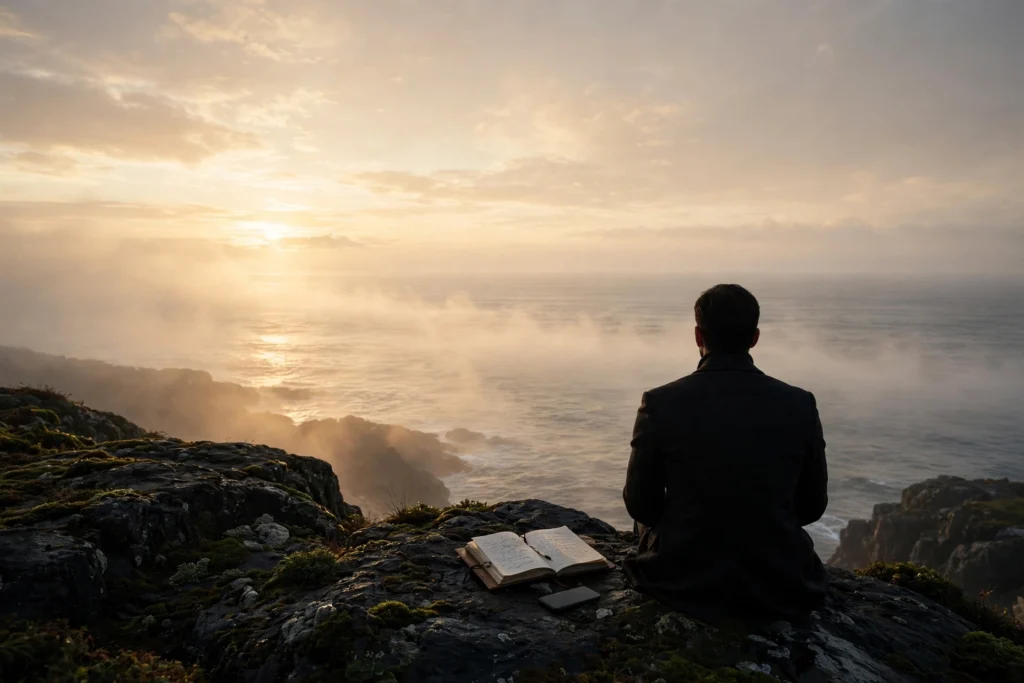
Why Everyone Avoids It (And What They’re Really Afraid Of)
If solitude is so valuable, why does it feel so uncomfortable? Because silence amplifies whatever you’ve been avoiding. The anxiety about money. The relationship you’re unsure about. The dreams you’ve postponed. The person you’ve become versus the person you meant to be.
The phone isn’t the problem — it’s the anesthesia. Every scroll is a small dose of “don’t think about it.” But the avoided thoughts don’t disappear; they just wait, growing heavier, until they surface as burnout, restlessness, or a vague sense that life is passing you by.
The discomfort of solitude is front-loaded. The first few sessions feel strange, even unpleasant. Then something shifts. The noise in your head organizes itself. Thoughts complete themselves instead of looping. You start to enjoy the company — because the company is you, and you’re finally paying attention.
The Solitude Practice: Start Small
You don’t need a cabin in the woods. You need a daily appointment with yourself:
The 30-minute rule. Spend 30 minutes a day completely alone — no phone, no music, no podcast, no other people. Walk, sit, stare out a window. Let your mind wander where it wants. This isn’t meditation (though it can be). It’s just unfilled time, and it’s where your best thinking has been waiting.
One solo activity weekly. Eat a meal alone. Take a walk alone. Go somewhere alone — a café, a park, a museum. Notice how quickly the self-consciousness fades and genuine enjoyment replaces it. You’re training the muscle of self-sufficiency.
Phone-free zones. The phone is solitude’s assassin. Create spaces where it doesn’t exist: the bedroom, the first hour of the morning, meals. Guarding your time from your own device is the cheapest solitude upgrade available.
The annual solo retreat. Once a year, take a day — or a weekend — entirely alone. No agenda, no productivity goals. Review your year, think about your direction, listen to yourself. The clarity that comes from a single day of real solitude can redirect an entire year.
Alone, Not Isolated
A necessary distinction: learning to stay alone doesn’t mean abandoning people. Humans need connection — building a powerful network of the right people remains essential. The goal isn’t isolation; it’s independence. The person who can be happy alone brings something rare to every relationship: presence without neediness, generosity without transaction, loyalty without dependence.
Think of solitude strength and connection as two skills that reinforce each other. Solitude builds the self; connection multiplies it. But the order matters. Build the self first, and your connections become choices instead of crutches.

Day 20 Challenge
Take 30 minutes alone today — no phone, no music, no input. Walk or sit somewhere quiet. Don’t try to “be productive.” Just be with your thoughts. Write down the three clearest thoughts that surface. That’s your mind, finally getting a word in.
Key Takeaways
- Loneliness and aloneness are different: loneliness is unwanted disconnection; aloneness is chosen self-company.
- Solitude delivers clarity, self-knowledge, deep work, emotional self-reliance, and original thinking — none available in noise.
- People avoid solitude because silence amplifies avoided thoughts; the discomfort is front-loaded and passes.
- Start with 30 unfilled minutes daily, one solo activity weekly, phone-free zones, and an annual solo retreat.
- The goal is independence, not isolation — solitude strength builds the self that makes connections deeper.
- If you can’t be alone, you can’t do the deep work that creates wealth. Learn to stay alone, and you gain an edge most people will never have.
