
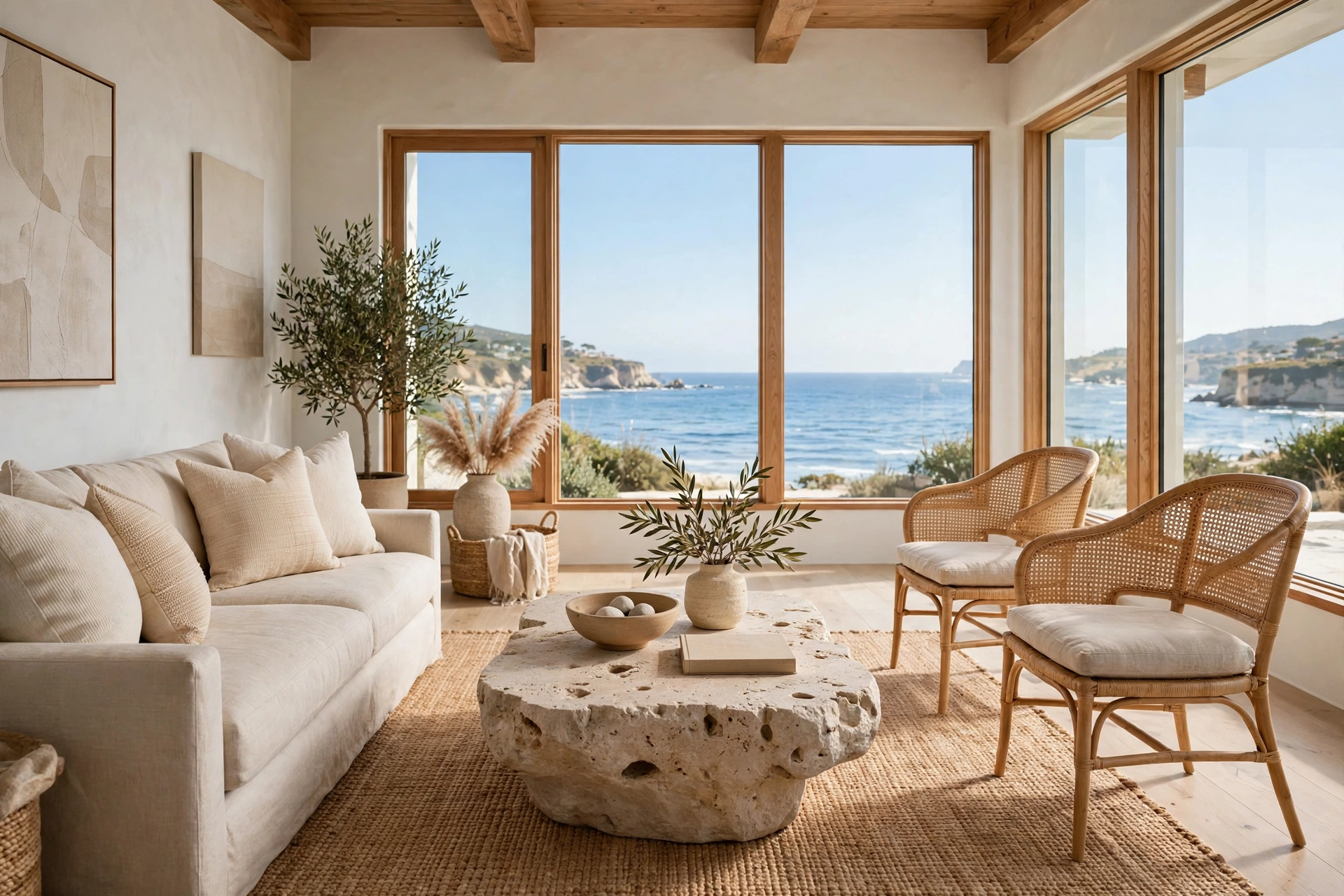
Walk into a genuinely luxurious beach house and the first surprise is what is missing. There are no anchor-print cushions, no jars of novelty shells on every surface, no driftwood signs telling you to relax. The wealthy coastal look is quieter than the gift-shop version: calm colour, natural texture, beautiful basics and rooms that can handle sand, salt and wet towels without losing their composure.
That restraint is not a lack of personality. It is a different kind of confidence — one that lets the ocean be the artwork and the house be the frame. Here is the decor language high-end beach houses actually use, and how to borrow it at any scale.
Colour: Borrowed From the Shore, Not the Souvenir Shop
A Soft, Sun-Faded Palette
The base palette is almost always warm white, sand, stone, pale oak and weathered grey, layered with muted sea tones — fog blue, sage, sea-glass green and deep navy used sparingly as an anchor. Bright turquoise and coral, the colours of beach merchandise, appear rarely and in tiny doses, if at all.
This palette does practical work. It reflects heat, hides sand and salt marks gracefully, and photographs beautifully at every hour because it changes with the light, just as the beach does. Rooms feel bright at noon and cocooning at dusk without a single repaint.
One Dark Note Per Room
To stop pale rooms feeling washed out, designers add one grounding element: an ebony side table, a deep navy throw, blackened-metal lamps or a dark timber ceiling beam. That single contrast gives the eye a resting point and makes all the pale tones around it look intentional rather than unfinished.
Texture Does the Talking
With colour kept calm, texture becomes the decoration. Linen with a visible weave, raw silk, boucle in washable blends, seagrass and jute underfoot, rattan and cane webbing on cabinet fronts, limewashed walls, honed stone with a matte finish, and timber that still shows its grain. Run your hand across a luxury beach house and every surface feels different; look across it and everything harmonises.
Layering Without Clutter
The layering rule is simple: one texture per large surface, repeated with discipline. Linen sofas, a jute rug, cane chairs, a stone coffee table. Mixing five patterns is coastal chaos; mixing five textures in one colour family is coastal luxury. Cushions stay in solids and subtle stripes, usually in the same three tones, so swapping them between rooms actually works.
Natural materials also age honestly by the sea. Linen softens, teak silvers, stone deepens. Owners who choose them are choosing a house that looks better in year three than a house of fragile finishes fighting the climate.
Furniture: Low, Deep and Ready for Real Life
Performance Fabrics, Invisible Technology
The biggest quiet revolution in beach houses is fabric. Solution-dyed acrylics and modern indoor-outdoor weaves now mimic linen and cotton so convincingly that designers use them everywhere — sofa upholstery, dining chairs, even headboards. They resist fading, shrug off sunscreen and can be cleaned after a wet swimsuit incident without drama. Luxury, here, means never having to hover over a guest with a coaster speech.
Shapes That Encourage Lingering
Furniture sits low and deep: generous sofas you can curl into, swivel chairs that turn toward the view or the conversation, daybeds on terraces, and dining tables long enough for board games after dinner. Pieces are fewer and larger rather than many and small, which keeps rooms feeling calm and makes cleaning sand out of them faster.
Vintage and handmade pieces earn their place too — a weathered teak bench, hand-thrown ceramics, a single piece of coral-toned art. One storied object per room gives soul without theme-park energy.
Windows, Light and the View as Artwork
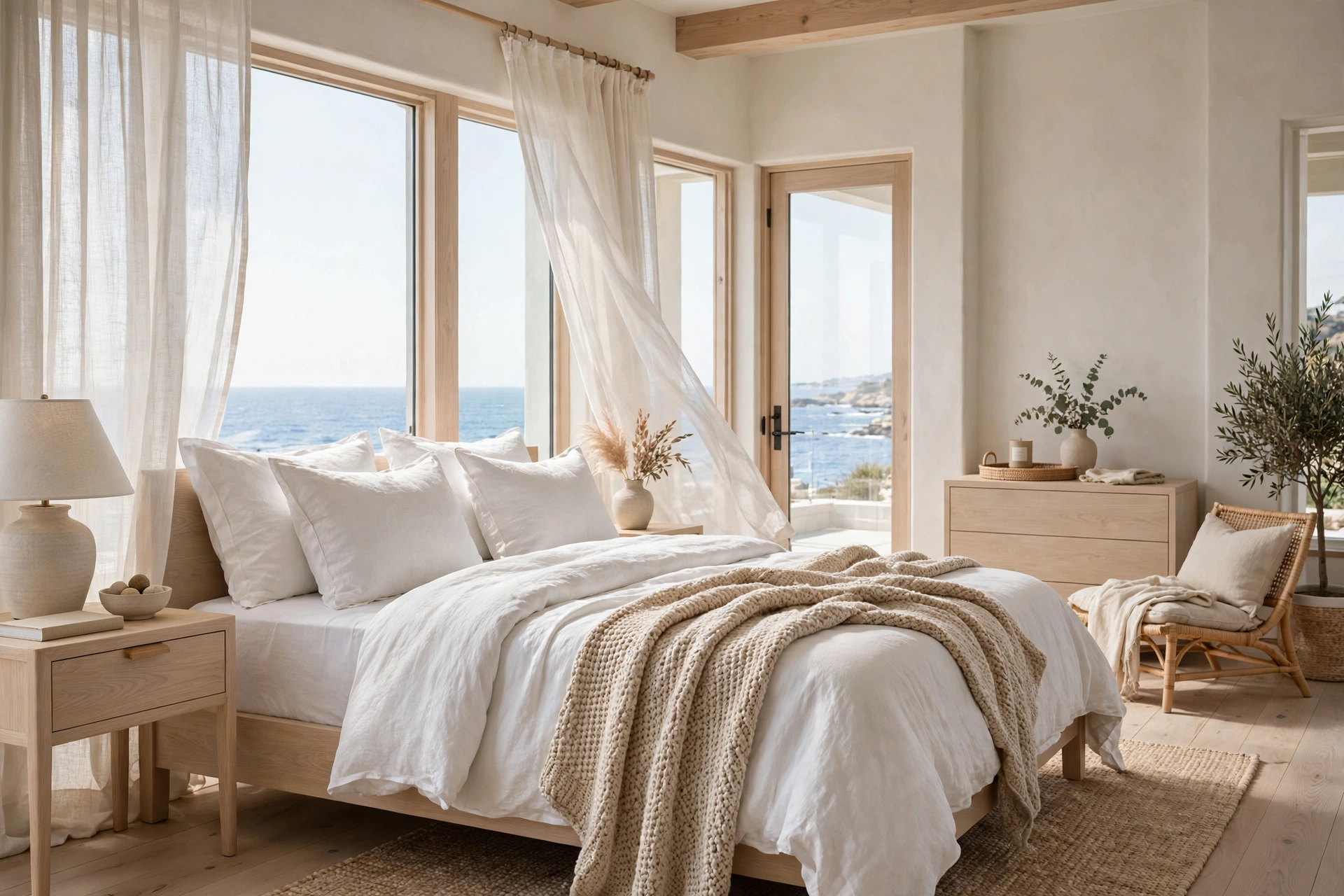
In a beach house, the view is the largest artwork you own, and decor decisions protect it. Window treatments are minimal: sheer linen that diffuses glare, woven shades that roll away completely, or nothing at all where privacy allows. Furniture is arranged so no tall piece blocks a sightline to the water, and mirrors are placed to bounce the view into darker corners rather than to decorate walls at random.
Lighting follows the sun’s example — warm, layered and low-glare. Woven pendants over islands and dining tables, ceramic table lamps with linen shades, and candlelight outside. Overhead glare is the enemy of coastal calm; multiple soft sources win every time.
The Practical Systems Behind the Calm
An Entry That Catches the Beach
Every luxury beach house has a hardworking threshold: an outdoor shower, a bench, hooks, a basket for shoes and a beautiful but ruthless mat system. Sand is stopped at the door by design, not chased around the house by staff or owners all weekend. Many add a small laundry or towel station near the entry, so wet gear never travels through living spaces.
Storage for the Real Inventory
Beach life comes with equipment — boards, umbrellas, coolers, games, spare towels, sun hats. Houses that stay serene have ventilated storage sized for that inventory, ideally near where it is used. When everything has a place, surfaces stay clear, and clear surfaces are the single most recognisable feature of expensive coastal interiors.
If you are planning upgrades in phases, it helps to cost the unglamorous systems alongside the pretty ones. The tools on our financial calculators hub make that kind of phased planning easier to model before you commit.
Bedrooms and Bathrooms by the Sea
Beach bedrooms are studies in restraint: white or sand linen bedding with one textured throw, blackout-backed curtains for real sleep, a bench for the beach bag, and nothing on surfaces except a lamp, a book and perhaps a single vase of greenery. The luxury is sensory — cool linen, the sound of water, air moving — not visual noise.
Bathrooms lean spa-like and durable: honed stone or large matte tiles with minimal grout lines, teak bath mats and benches, brushed nickel or unlacquered brass that patinas gracefully in salt air, and big mirrors lit from the side. Outdoor showers, where climate and privacy allow, become the most-loved feature in the entire house.
Outdoor Spaces: Where Beach Houses Earn Their Keep
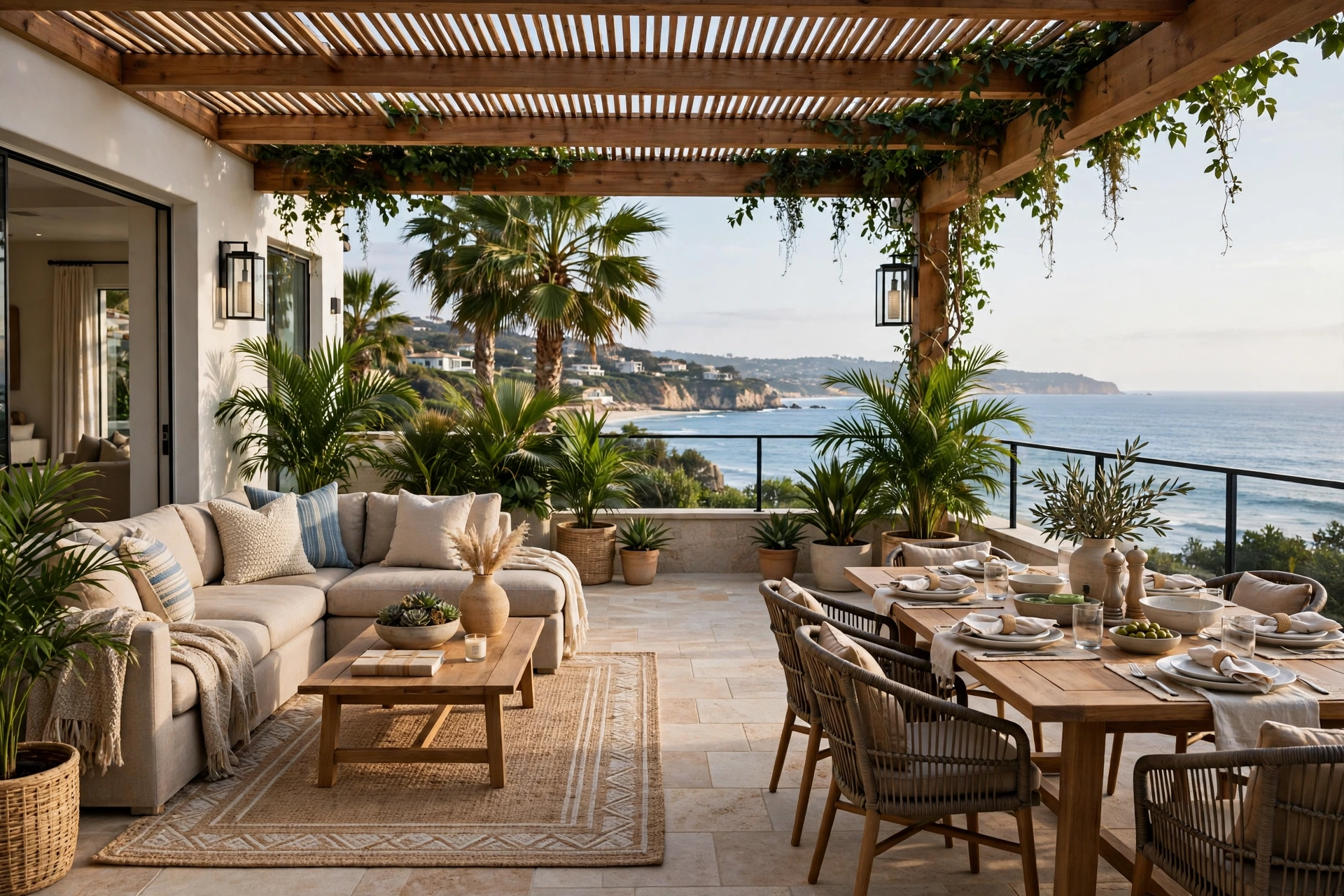
Terraces are furnished as true rooms — sofa, rug rated for outdoors, side tables, shade — not as a row of loungers facing a pool. Dining moves outside under a pergola or deep eave, with lighting warm enough for faces and a serving surface close to the kitchen door. Fire pits extend the season and give evenings a centre once the sun drops.
Planting stays native and sculptural: grasses that move, palms for height, groundcovers that hold sand rather than fight it. A clipped green hedge for wind protection does more for comfort than any expensive heater.
Small Touches That Read as Expensive
The final layer is almost embarrassingly simple. Matching hangers in a guest wardrobe. Thick, plain white towels with no logos, rolled in a bathroom basket. A carafe of water by each bed. Outdoor cushions stored dry so they never smell of mildew. A single scent — cedar, fig or sea salt — repeated in candle and soap so the house has a quiet signature. None of these items is rare. Together they signal that someone thoughtful is in charge of the details, which is exactly the feeling guests describe afterwards as luxury, even when they cannot name a single piece of furniture.
Seasonal editing helps too. In summer the house lightens: throws folded away, extra shells — if any — gone, windows washed until the view sharpens. In cooler months a wool throw, a deeper cushion tone and firewood stacked neatly by the hearth add weight without changing the palette. The house breathes with the year instead of being redecorated for it.
For more coastal and resort-style homes, browse the wider Millionaire Lifestyle collection.
What to Skip — and What to Steal
Skip word art, themed collections, plastic-looking faux finishes, and any fabric that cannot survive your actual life. Skip buying a matching set of anything; collected-over-time always looks richer.
Steal the palette discipline, the texture-first layering, the performance fabrics, the ruthless entry system and the clear-surface rule. Steal, above all, the mindset: a beach house is luxurious when it makes coastal life easier and calmer, not when it shouts about the beach from every cushion. The ocean is already the statement. The house just needs to listen well.
Related: Luxury Villa Design: 10 Ideas Borrowed From 5-Star Resorts
