
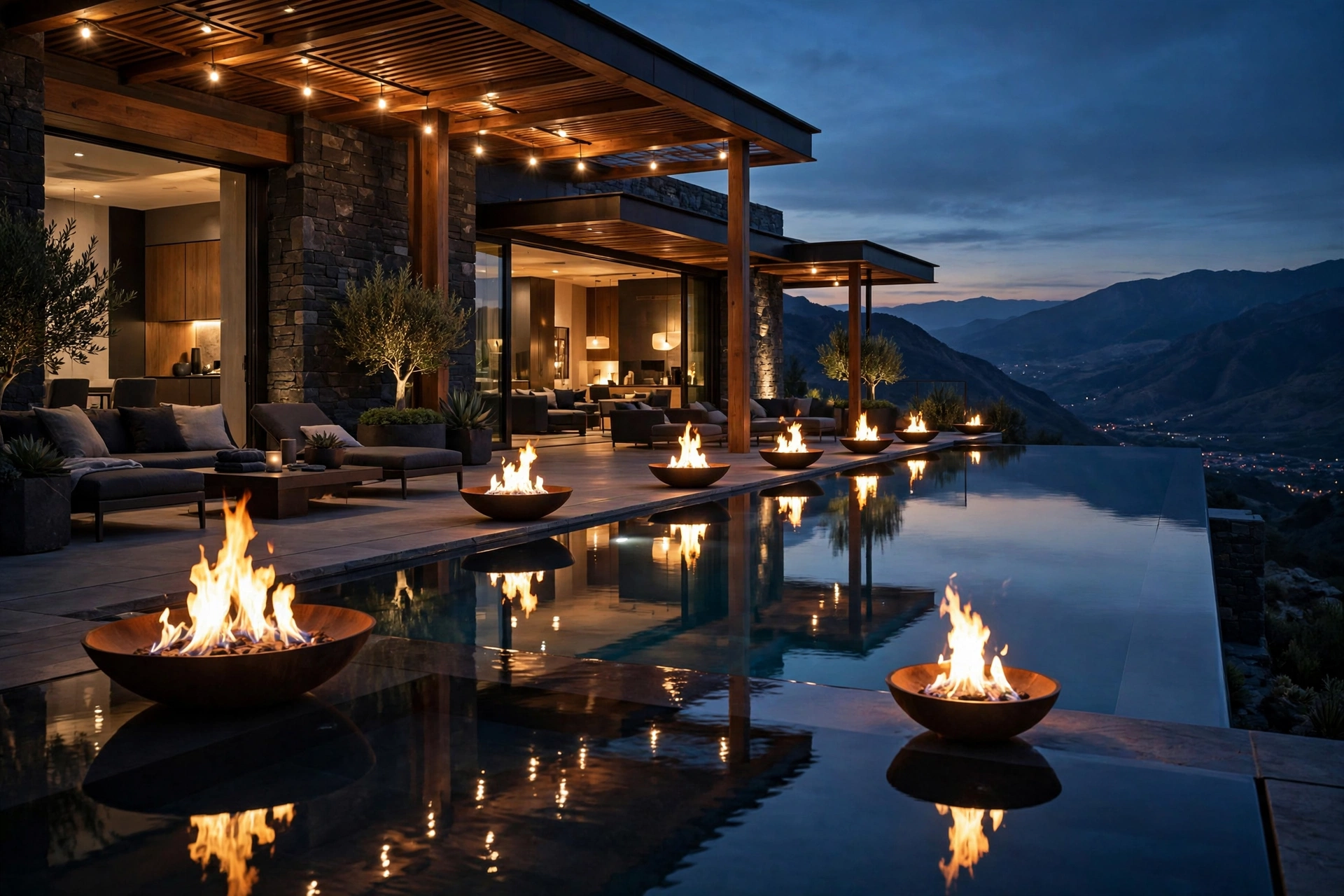
A dream pool is not really about size. The pools people remember — the ones guests photograph, the ones that make a house feel like a resort — succeed because of three things working together: a clean edge, a warm contrast, and light that flatters the water after dark. You can have a modest rectangular pool and still get that feeling, or you can have a huge freeform pool that feels ordinary because none of those details were thought through.
This guide breaks down the ideas behind the most striking luxury pools, in plain language: how infinity edges actually work, why fire bowls are placed where they are, how to layer night lighting without turning your garden into a stadium, and the practical choices — coping, finishes, seating, and maintenance — that decide whether a pool stays beautiful after the first summer.
Start With the Shape You Will Use Most
Before you fall for a dramatic shape, think about how you swim. Lap swimmers love a long, straight rectangle. Families who mostly lounge, chat, and cool off often prefer a wider pool with a generous shallow shelf. Social pools benefit from built-in benches along one side so people can sit in the water without blocking swimmers.
The quiet power of a rectangle
There is a reason so many high-end homes use a simple rectangle. Straight lines line up with the house, the terrace, and the garden, so everything looks intentional. A rectangle is also easier to cover, easier to heat evenly, and easier to fit with an automatic cover — a practical luxury that keeps leaves out and warmth in.
Curved and freeform pools can be beautiful on large, natural plots where the garden itself is informal. On a smaller or more architectural plot, curves can fight with the house. If you love curves, consider a compromise: a rectangle with one softened end, or a circular spa attached to a rectangular pool.
Add a tanning shelf
A tanning shelf — sometimes called a Baja shelf — is a wide, shallow ledge, usually just deep enough to cover your ankles when you sit on a lounger placed in the water. It is one of the most used features in modern luxury pools because it serves everyone: toddlers can splash safely at the edge under supervision, adults can read with their feet in the water, and it gives the pool a resort look without taking up the whole deep end.
Keep the shelf big enough for two loungers and a small side table if space allows. Umbrella sleeves built into the shelf let you add shade without a heavy base cluttering the water.
Infinity Edges: How They Work and When They Suit You
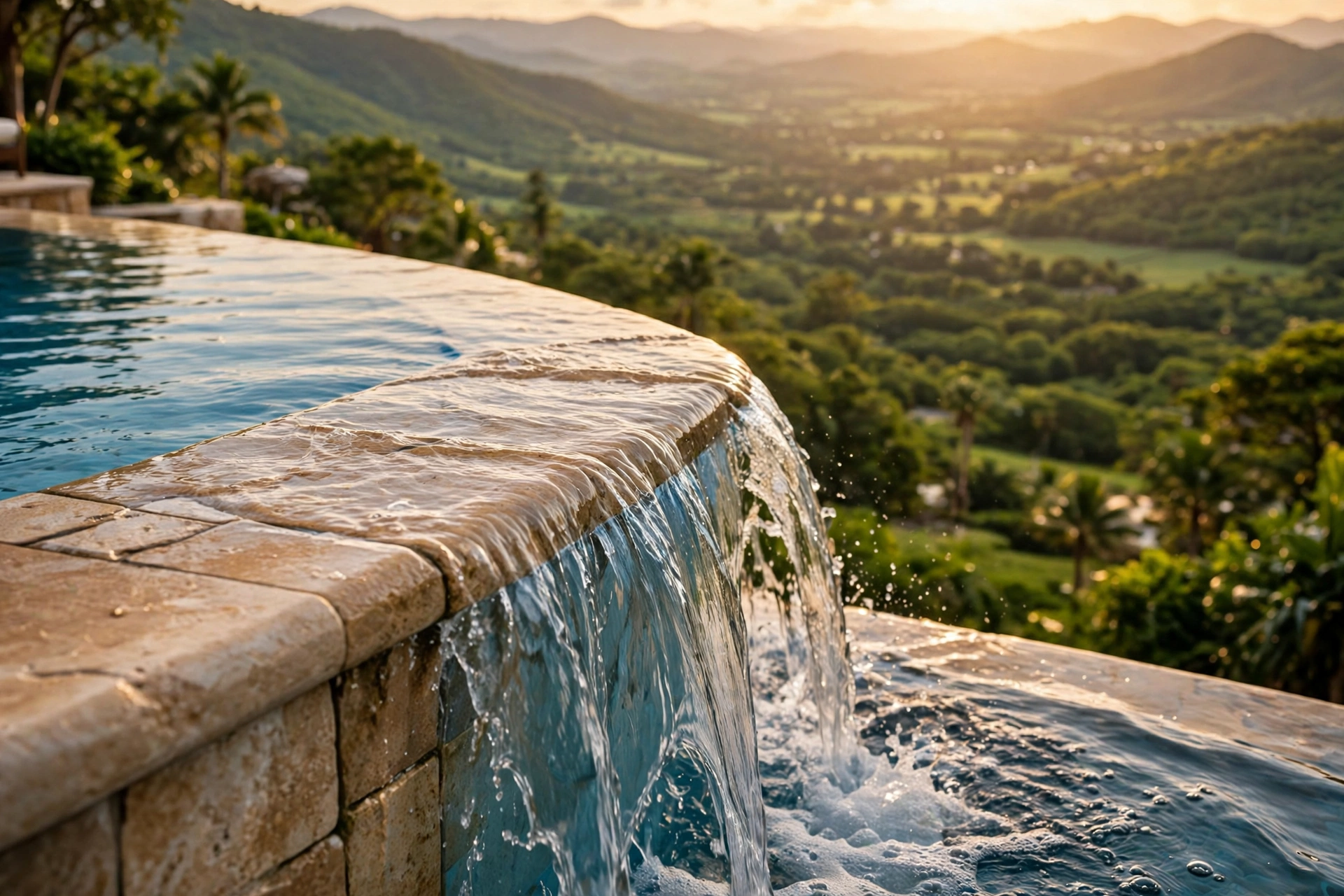
An infinity edge — also called a vanishing edge or negative edge — is where one side of the pool is built slightly lower than the water level, so water spills gently over it into a hidden catch basin below, then gets pumped back in. From the house, the water appears to merge with whatever is beyond: a valley, a garden, the sea, or even just a well-planted border.
The view makes the decision
An infinity edge only earns its keep if there is something worth merging with. A slope, a distant view, or a lower garden level is ideal. On a completely flat plot surrounded by a fence, an infinity edge can still look sleek, but the effect is subtler — you get a mirror-like stillness rather than a dramatic horizon line. In that case, a raised perimeter-overflow design, where water flows evenly over all sides into a narrow channel, can give a similarly calm, glassy look.
What it means in practice
Infinity edges need that catch basin, an extra pump, and careful leveling. They lose a little more water to evaporation and splash, and they need regular checks so leaves do not block the basin. None of this is difficult, but it does mean an infinity pool rewards an owner who keeps up basic maintenance or has reliable help. If you want the lowest-maintenance pool possible, a classic skimmer pool with a beautiful coping stone may be the smarter luxury.
A helpful way to budget for any of these upgrades is to model the running costs alongside the build cost — the tools on our financial calculators hub are handy for comparing a bigger one-off project against monthly upkeep before you commit.
Fire Bowls and Fire-and-Water Features
Fire next to water works because of contrast: cool blue water, warm orange flame, and the sound of a small waterfall if the bowl spills into the pool. Fire bowls are usually placed on raised pedestals or on the corners of a spa, spaced symmetrically so the flames frame the pool rather than compete with it.
Choosing the right fire feature
Fire bowls are the classic choice — round or square bowls in concrete, copper, or corten steel, lit by gas. Copper develops a soft patina over time; concrete feels more modern and architectural.
Fire pits beside the pool give you a gathering spot you can actually sit around after a swim, which bowls on pedestals do not. If your evenings are social, a sunken seating area with a fire pit at one end of the pool deck often gets more use than decorative bowls alone.
Fire and water bowls combine both: a gentle sheet of water pours from the bowl into the pool beneath the flame. They look spectacular at night, but they need both gas and plumbing, so place them where access for servicing is easy.
Safety and practicality matter here. Keep flames away from overhanging branches and pool covers, use a wind guard in exposed gardens, and choose an ignition system you can control from the house or a simple switch — if lighting the fire is a chore, you will stop doing it.
Night Lighting That Makes Water Glow
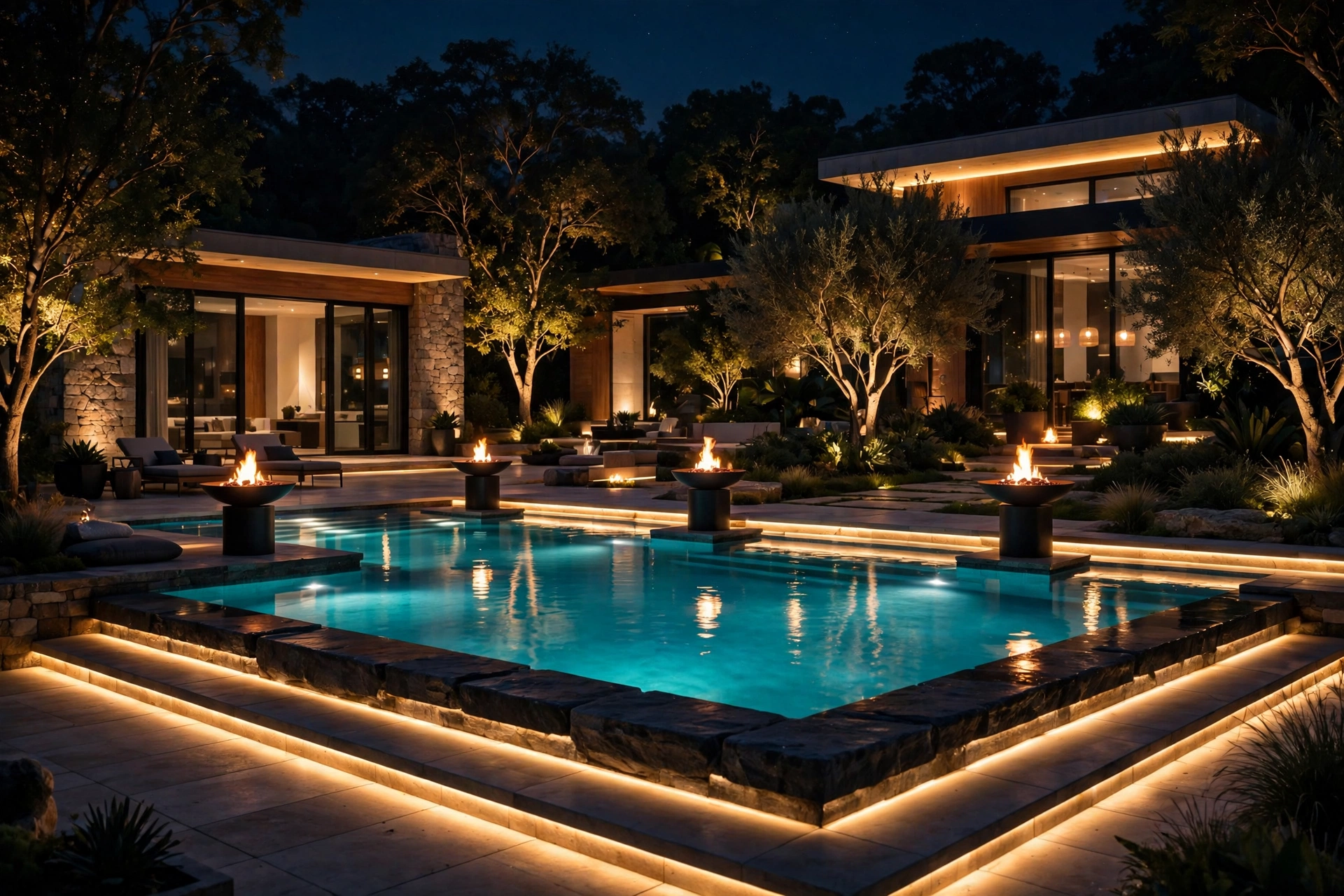
Pool lighting is where many otherwise lovely pools fall down. One harsh white light at the deep end makes the water look flat and the garden beyond it disappear. Layered, warmer, dimmable lighting is what creates the magazine look.
Layer one: inside the pool
Modern LED pool lights can shift from crisp white to soft blue to warm amber. Two smaller lights usually distribute light more evenly than one large one, and placing them so they shine away from the main seating area avoids glare in your eyes while you look at the water. A gentle blue or turquoise tends to flatter most pool finishes at night.
Layer two: the deck and steps
Low bollards, recessed step lights, and subtle strip lighting under coping or bench edges define where to walk without flooding the space. Keep the light low and shielded — you want to see the path, not the bulb. Highlight the tanning shelf edge and spa spillway so the water movement catches the light.
Layer three: the garden beyond
Uplight one or two specimen trees, wash a stone wall with a soft grazing light, and leave some areas dark on purpose. Darkness is part of luxury lighting design; if everything is lit, nothing stands out. The pool should be the brightest element, the garden a soft backdrop.
Smart controls help enormously. A single evening scene that dims the house terrace lights, brings the pool to a warm glow, and lights the fire bowls together will get used nightly. Five separate apps will not.
Finishes, Coping, and the Details You Touch
You experience a pool through its edges as much as its water. Coping — the stone or concrete cap around the rim — should feel comfortable under bare feet and not become slippery when wet. Light-colored stone stays cooler in strong sun. Large-format porcelain pavers that continue from the terrace into the pool surround create a seamless, expensive look and are practical to clean.
Inside the pool, finish color decides water color. White and pale gray finishes give that bright Caribbean blue. Medium gray gives a deeper, more natural lagoon tone. Dark finishes create a reflective, mirror-like surface that looks dramatic with infinity edges and night lighting, though they can make it harder to judge depth, so clear depth markers and good lighting matter.
Glass mosaic tile on a spa or a single feature wall adds sparkle without overwhelming a simple design. If you tile the entire pool, choose a blend of similar tones rather than a single flat color — variation hides waterline marks and looks richer in sunlight.
Shade, Seating, and the Hours Between Swims
A dream pool area is really an outdoor room. Plan for the hours beside the water, not just in it: a pergola or deep overhang, a simple drinks station so nobody trails water through the house, and towel storage within a few steps.
Choose heavy furniture with fabrics rated for sun and chlorine splash. Two loungers you love beat six cheap ones, and add one shaded daybed for the person who never swims but always joins.
A Simple Order to Plan In
If you are starting from scratch or renovating, work in this order: shape and shelf first, edge type second, finishes third, then fire and lighting together, and furniture last. Visit pools at night if you can, not just in daylight showrooms, because evening is when a luxury pool proves itself.
For more outdoor inspiration, browse the Millionaire Lifestyle category. Keep the palette restrained, and let water, fire, and light do the showing off — that restraint is the real signature of a dream pool.
