
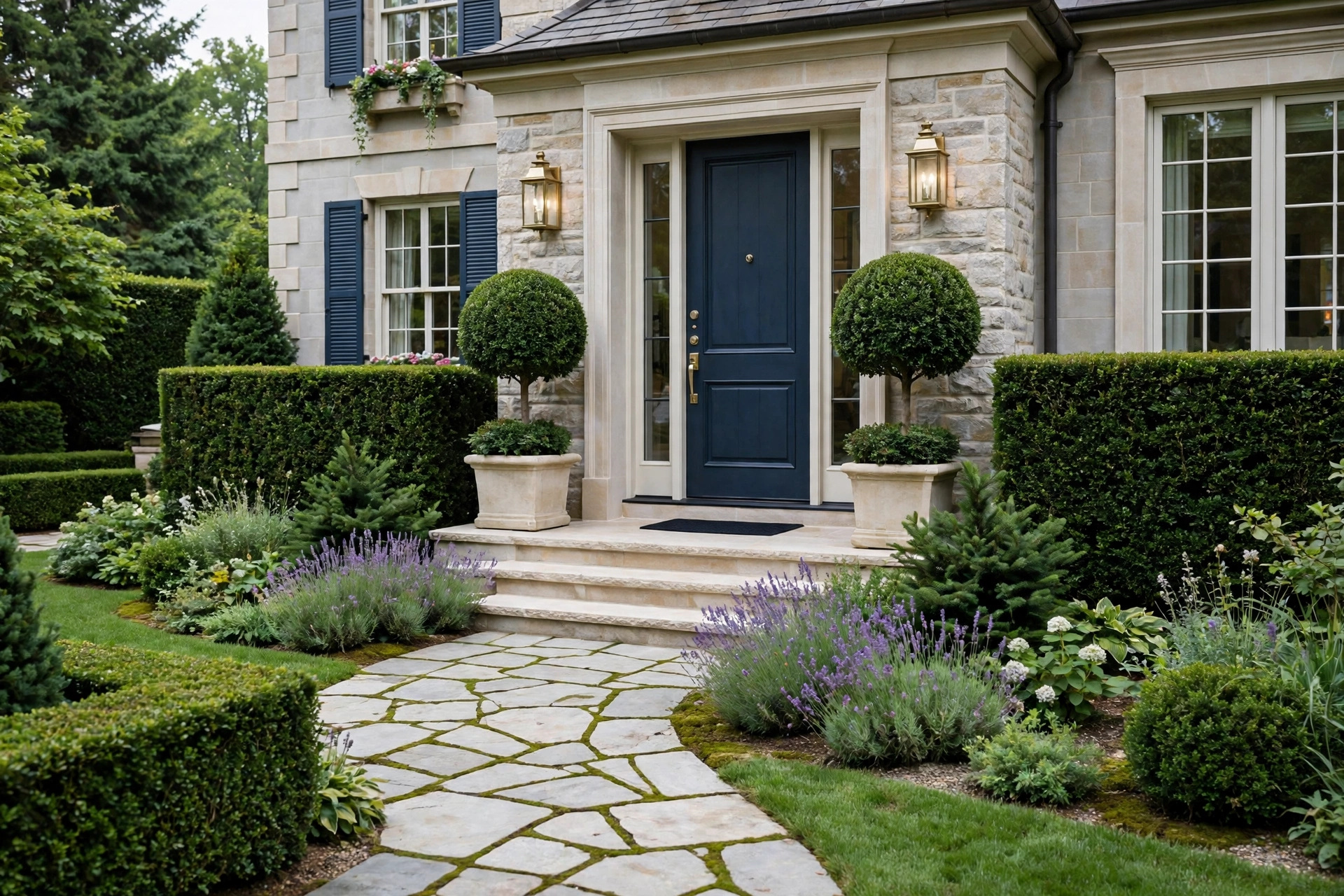
Curb appeal is simply what a house says before anyone steps inside. A luxury garden does not shout with dozens of flower colors or expensive ornaments. It whispers something more persuasive: this home is cared for. Clean edges, healthy green structure, a clear path to the door, and light that flatters the house at dusk will do more for first impressions than any single showpiece plant.
The title of this guide uses the phrase every homeowner hopes for — a front garden that transforms how the whole property feels. No honest guide can promise a specific increase in a home’s value, because that depends on the house, the street, and the market. What thoughtful landscaping reliably does is change perception: visitors relax, photographs look better, and the home reads as established and well kept. Here is how designers achieve that effect, and how to borrow their methods at any scale.
Structure First: The Bones of a Luxury Garden
Planting fashions change with seasons; structure is what you see in winter, in photographs, and from the street every single day. Designers call it the bones of the garden, and it is where luxury is really decided.
Evergreen framework
Hedges, clipped spheres, cones, and small evergreen trees give a garden its year-round architecture. A low, neat hedge along the front boundary, a pair of clipped shapes flanking the front door, or a row of small trees with clear stems and round crowns instantly signals intention. Box alternatives, yew, holly, and pittosporum are common choices depending on climate; the species matters less than the discipline of regular, light trimming so shapes stay crisp.
Clean lines and honest edges
Nothing cheapens a garden faster than wavy, broken lawn edges and soil spilling onto paths. A defined edge — metal edging, a row of setts, or simply a sharply cut turf edge maintained monthly — makes even simple planting look deliberate. Keep paths swept, joints weeded, and gravel raked or topped up. These are inexpensive habits with an outsized visual payoff.
A path that welcomes
The walk from gate to door is a small journey and deserves design. Wide enough for two people, lit softly, and bordered by planting that does not snag clothing. Large stone slabs with planting or gravel between them feel modern; classic brick suits older houses. If your path is sound but dull, flanking it with low planting or two generous pots at the door can lift the whole entrance without rebuilding anything.
Planting That Looks Rich Without Constant Work
Luxury planting is usually restrained: fewer varieties, repeated often, in drifts and blocks rather than one of everything. Repetition is the designer’s shortcut to a calm, expensive look — the eye reads order, and order reads as care.
The green-first palette
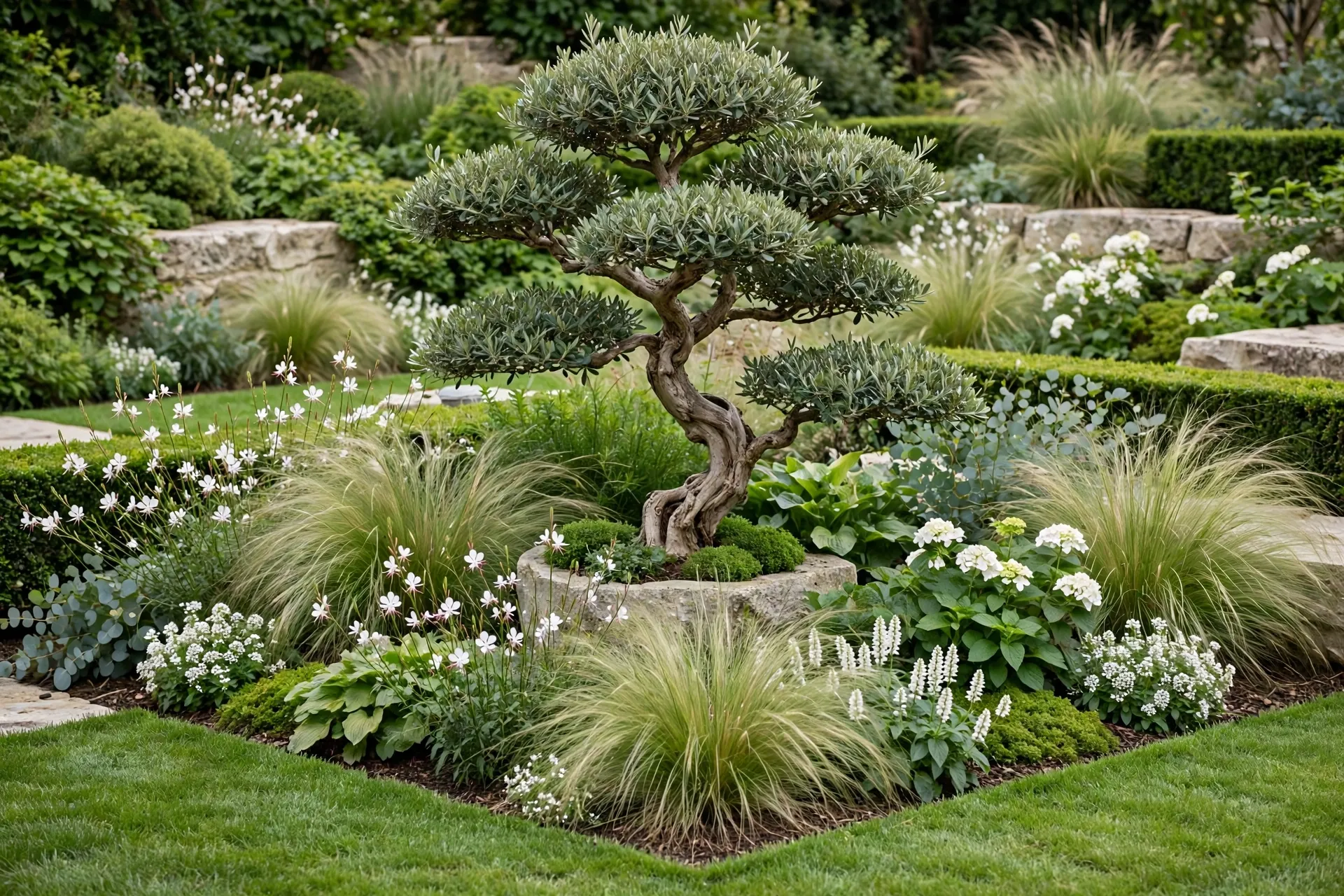
Start with greens in different textures — glossy leaves against feathery grasses, deep yew behind pale variegated shrubs — then add one or two flower colors as accents. White and cream flowers are the classic luxury choice because they glow at dusk and never clash with the house. A seasonal rotation in just the pots by the door keeps things fresh without replanting beds.
Layers, like a room
Plant in three layers: small trees or tall shrubs at the back, medium shrubs in the middle, and low ground cover or grasses at the front. This layering hides fences, gives depth even in a shallow front garden, and means something is always carrying the display — spring blossom, summer foliage, autumn color, winter berries or bark.
Trees are the long game
A single well-chosen small tree — an olive in a mild climate, a multi-stem amelanchier, a Japanese maple in a sheltered spot — can anchor a front garden more powerfully than a dozen shrubs. Plant for the mature size, give it a proper mulch ring, and stake it well for its first seasons. Trees also frame the house in photographs, softening rooflines and adding the sense that the property has been loved for years.
The Front Garden Details Guests Notice
The front door zone. Two matching pots, a clean door, polished or replaced hardware, and a house number that is easy to read. This small cluster is the most photographed square meter of any home.
Boundaries. A fence or wall in good repair, painted or stained consistently, with the gate closing properly. If you can upgrade one stretch, choose the stretch visible in the approach view — first impressions form from one direction.
The lawn, or its alternative. A healthy lawn with stripes from a roller mower is a timeless luxury signal. Where water or shade makes lawn a struggle, alternatives can look equally refined: a gravel garden with sculptural planting, generous paved forecourt softened by pots, or low ground-cover planting. A thriving alternative always beats a failing lawn.
Hide the working parts. Bins, meters, and hoses undo curb appeal in seconds. A simple slatted screen, a hedge, or a storage box in the same finish as the fence makes them disappear. Designers call this removing visual noise, and it is one of the cheapest upgrades on this list.
Lighting: The Evening Half of Curb Appeal
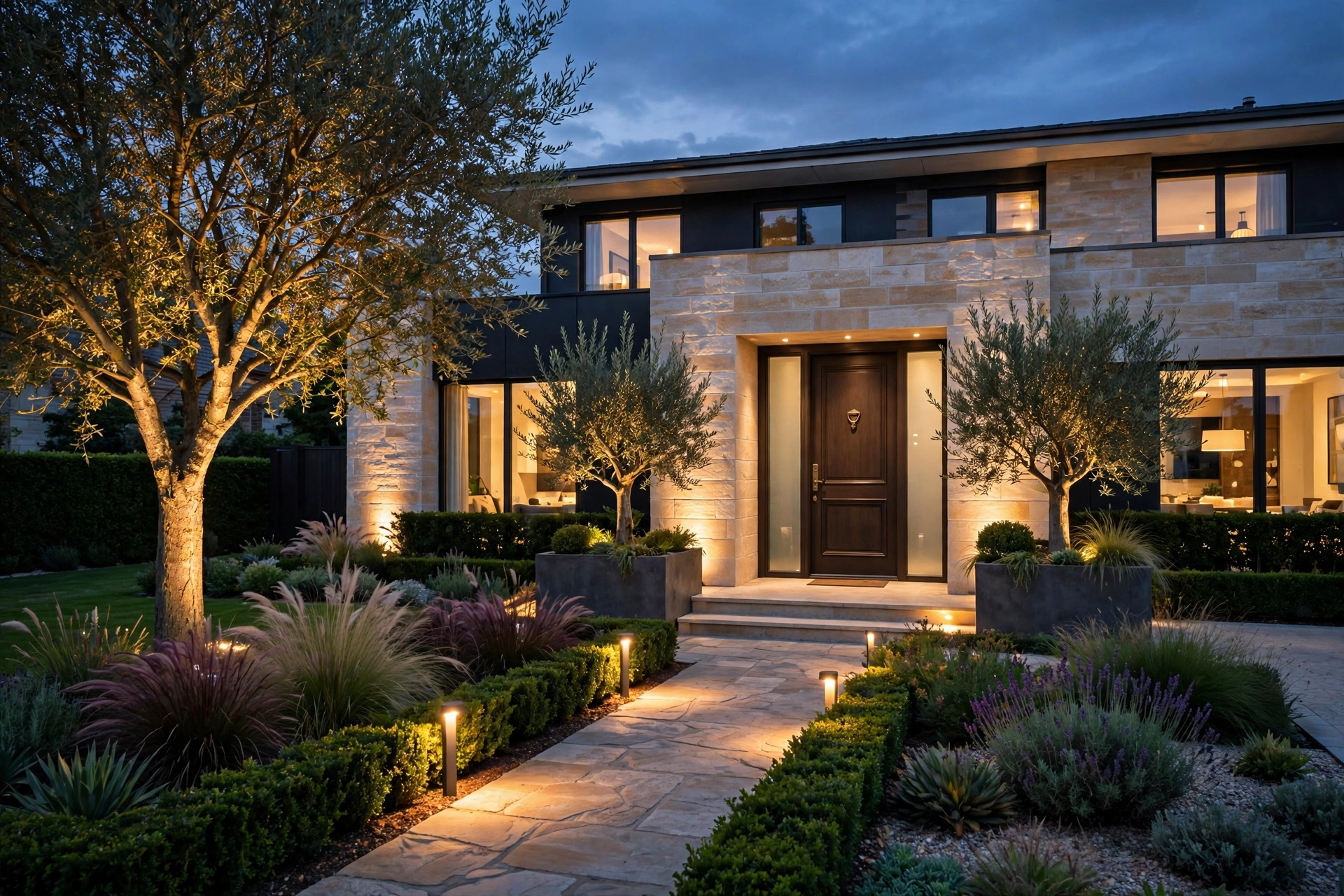
Many people only see your home after dark — returning neighbors, evening guests, and anyone browsing property photographs taken at dusk. A few lights, well placed, make a house look warm and established. Uplight the anchor tree, wash the front door area with a soft wall light, and add low markers along the path. Keep the color warm and the brightness modest; you are painting with light, not securing a perimeter.
If you are planning a larger garden project alongside other home improvements, it helps to stage the spending sensibly — the tools on our financial calculators hub can help you compare phasing the work over two seasons against doing everything at once.
A Seasonal Rhythm That Keeps It Looking Expensive
Luxury gardens are maintained little and often. A simple rhythm works: a monthly tidy for edges, paths, and pots; hedge and shape trimming two or three times a year depending on growth; mulch beds once a year to suppress weeds and feed soil; and a twice-yearly check of lights, irrigation, and the front door zone. Mulch deserves emphasis — a fresh, even layer of bark or compost makes beds look newly planted even when nothing has changed, and it is one of the highest-impact, lowest-cost refreshes available.
Water wisely: deep, less frequent watering encourages strong roots, and a simple drip line in key beds protects your planting investment through dry spells far better than daily sprinkling.
Where to Spend and Where to Save
If you are prioritizing, spend on structure and permanence: edging, the path, the anchor tree, quality pots, and lighting. Save on short-lived bedding plants bought in bulk, novelty ornaments, and any feature that needs constant attention to look good. As an illustrative example, many homeowners find that a phased plan — edges and door zone in season one, trees and lighting in season two — spreads both cost and effort while the garden visibly improves at each step.
Avoid the common traps: planting too close to the house so shrubs swallow windows within three years, mixing many materials (three kinds of paving, two fences, assorted pots) instead of repeating one or two, and choosing plants for the flower they carry for three weeks rather than the foliage they carry all year.
The Real Secret
Walk across the street and look at your home the way a guest does. Photograph it. The camera will show you the leaning pot, the tired edge, the bin in view — and it will also show you how close you already are. Luxury landscaping is mostly editing: fewer things, healthier, neater, and lit with care.
For more outdoor inspiration — pools, outdoor living rooms, and evening gardens — browse the Millionaire Lifestyle category. Start with structure, repeat your planting, keep the edges honest, and your front garden will quietly do what the best luxury gardens do: make the whole home feel like it belongs to someone who cares.
