
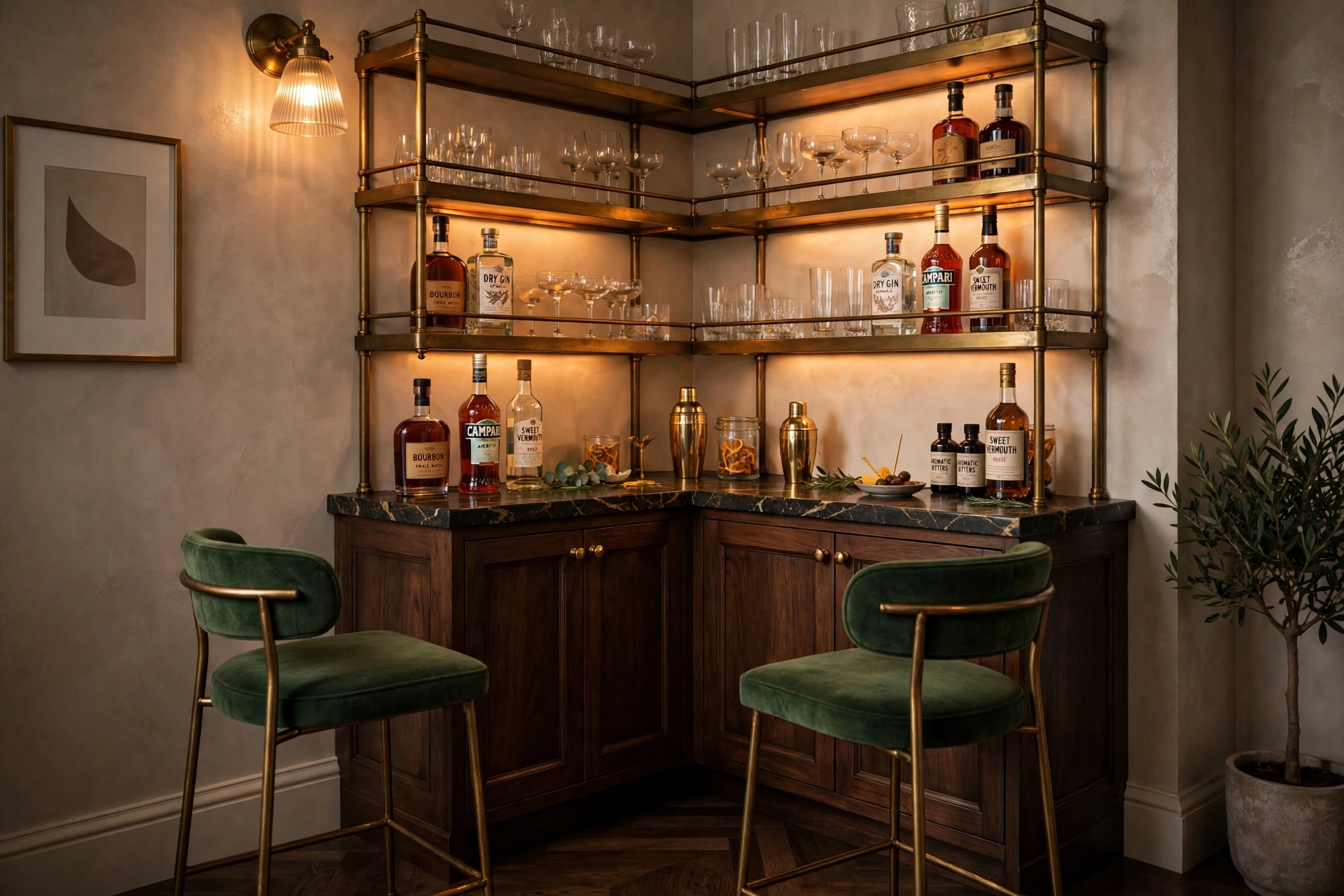
You do not need a dedicated room, a cellar or a carpenter to have a home bar that guests remember. You need one corner with intention: a surface, a little glow, glassware that catches the light, and the confidence to keep it edited. In fact, the small bars are often the best ones. Constraint forces curation, and curation is the whole secret — a tight, beautiful drinks station says more about a home than a sprawling shelf of dusty bottles ever will.
This guide covers the three classic formats — the cart, the cabinet and the built-in nook — plus the lighting, stocking and styling rules that turn any of them into a statement. It also includes non-drinkers from the start, because a great home bar serves everyone at the party. For the dining rooms and kitchens these corners usually join, see Millionaire Lifestyle.
Choose Your Corner Like You Mean It
The best corner is near where people gather but not inside the traffic flow: the end of a living room, beside the dining table, in a wide hallway alcove, or on the quiet side of an open-plan kitchen. You want guests to drift toward it, linger, and drift back — not queue across a doorway.
Check three practical things before you fall for a spot. First, floor: a level surface where a cart will not wobble and spills can be wiped without drama. Second, power: a nearby socket opens up a small lamp, a mini fridge or an ice maker later. Third, backdrop: a wall you can paint, panel or hang art on, because the bar’s background does half the styling work. A deep green, charcoal or warm plaster wall behind glass and brass is an instant mood, even in a rented flat where the bar itself is just a tray on a sideboard.
Format One: The Bar Cart
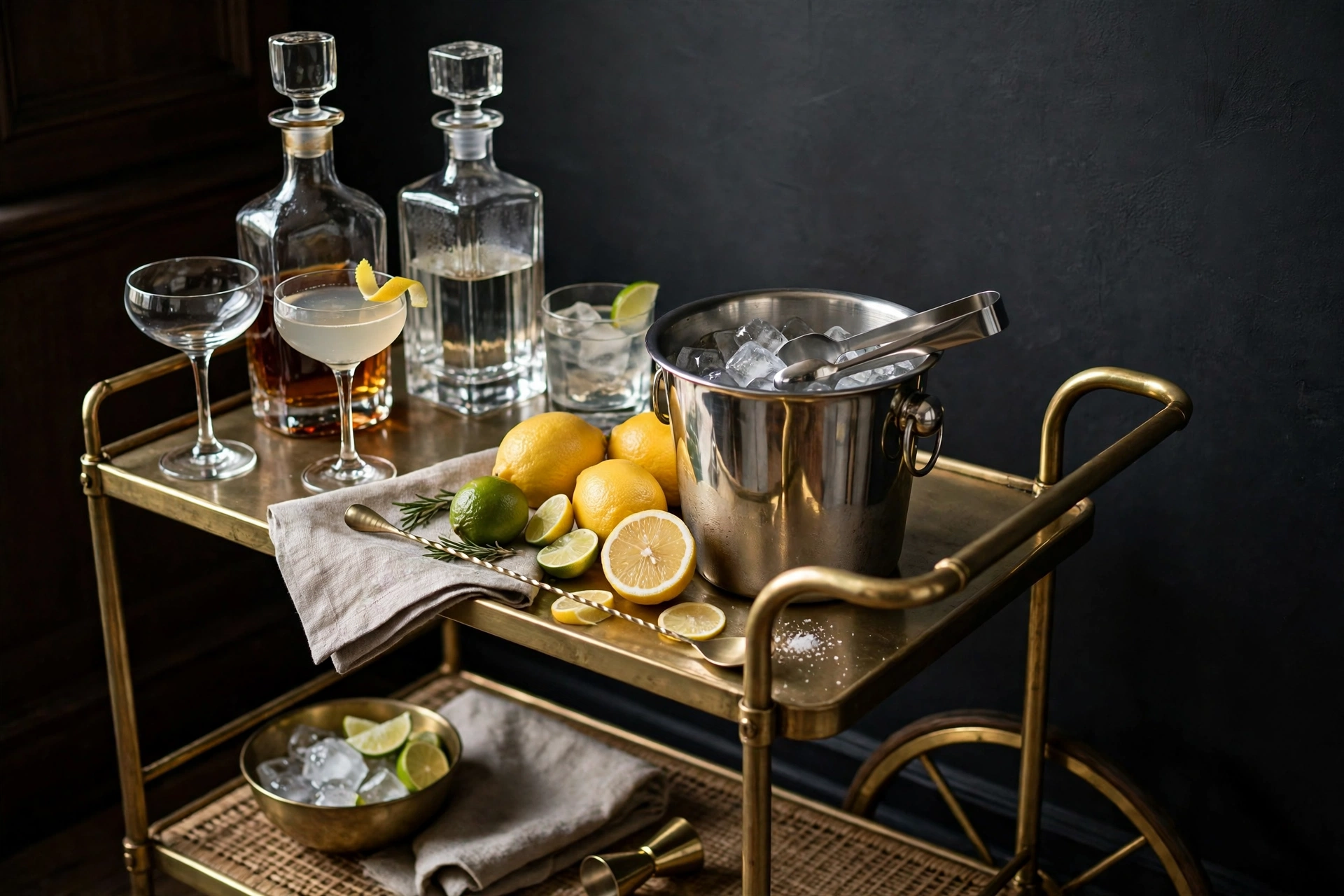
The cart is the renter’s hero and the small-space classic: mobile, affordable to start, and glamorous by design. Two tiers are plenty — top for making, bottom for storing.
Choose a cart with a raised edge or gallery rail so bottles stay put when it moves, and wheels that lock. Brass and wood warm a room; black metal and glass suit modern spaces; rattan brings a softer, coastal note. Style the top tier with the working set: two or three bottles in active use, a shaker or mixing glass, a small ice bucket, and one fresh thing — a bowl of citrus or a small plant. The bottom tier holds backup bottles, extra glasses and a folded linen towel. If your cart looks like a shop shelf, you have stocked the display instead of the drink; edit until there is air between objects.
A cart also moonlights gracefully: coffee station in the morning, tea and cake for afternoon guests, sparkling water and cordials at family gatherings. That flexibility is why it remains the most recommended first bar.
Format Two: The Cabinet Bar
If you prefer everything hidden until the reveal, a cabinet bar is your format: a sideboard, armoire or purpose-made drinks cabinet whose doors open to a fitted interior. The theatre is real — closed, it is furniture; open, it is a destination.
Inside, fit a mirror or a contrasting paint colour on the back panel, a small battery light that switches on with the doors, and a shelf height planned around your tallest bottle. Keep a pull-out or fold-down surface if the cabinet lacks a worktop, because drinks need a stage to be made on. Cabinets suit homes with children or pets, collections worth protecting from dust and sunlight, and anyone whose taste runs to calm rooms with secrets.
Second-hand cabinets adapt beautifully to this role. As an illustrative example, a vintage sideboard with a lined interior, a stick-on light and a marble-effect tray can become a convincing cabinet bar over a single weekend, at a fraction of the cost of a bespoke piece.
Format Three: The Built-In Nook
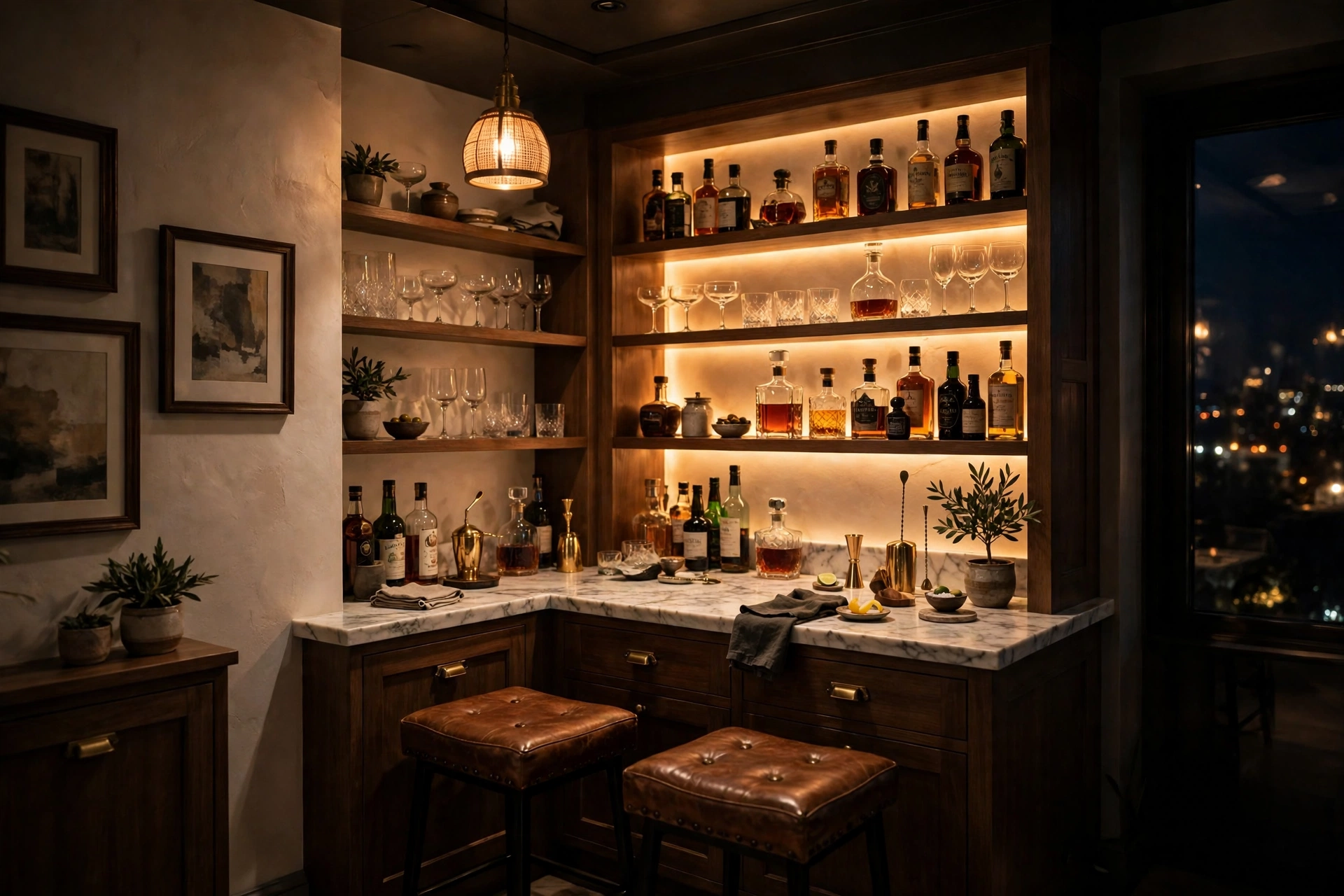
A shallow alcove, the space under stairs, or a run of kitchen-style units in a living room can become a permanent bar nook: a counter, open shelves or glass-fronted cabinets above, and perhaps a small under-counter fridge and a tiny sink if plumbing is near.
Built-ins reward restraint. Two shelves are usually enough; three crowded ones shrink the nook visually. Run a strip of warm light under each shelf so glassware glows, choose a counter material that can take ice and citrus without complaint — stone, sealed wood or a good stone-effect surface — and repeat one metal for tap, rails and handles so the nook reads as one designed object. Add two stools only if the counter overhang honestly fits knees; a standing bar with room to mingle beats cramped seating every time.
Lighting: Give the Corner Its Glow
Every memorable bar, from hotel counters to this corner, is lit like a stage. Your corner needs one warm light source of its own: a small table lamp on the cabinet, a picture light above the shelves, a pendant over the nook, or LED strips hidden under shelving. Warm, low light makes glass sparkle and faces relax, and it signals — to guests and to you — that the evening has shifted gear.
If the corner sits in a bright open-plan room, that dedicated glow matters even more. It carves a destination out of a large space, the way a rug defines a seating area. Candles in hurricane holders nearby add the flicker; keep them on a stable surface away from the ice-and-elbow zone of active mixing.
Stocking: Fewer Bottles, Better Chosen
A statement bar is stocked by the drinks you actually make, not by a checklist. Start with the ingredients for two or three favourites you can prepare confidently, plus the tools to make them: a shaker, a jigger or measure, a bar spoon, a strainer and a reliable opener. Fresh elements lift everything — lemons, limes, good ice in generous quantity, and a herb or two if your drinks call for it.
The everyone’s-invited shelf
Reserve real estate for alcohol-free options with the same presentation standards: a couple of interesting cordials or alcohol-free spirits, sparkling water, tonic, juices and garnishes, served in the same beautiful glasses. Guests who are not drinking should never be handed a sad substitute in a tumbler meant for water. A small card or a confident offer — “I’m making these two, and this one without” — makes the whole corner feel generous rather than divided.
Glassware without the museum
You do not need a dozen shapes. A set of tumblers, a set of stemmed glasses that can serve wine or spritz-style drinks, and one celebratory set — coupes or flutes — covers nearly everything a home host pours. Store the everyday sets within reach of the bar and the dishwasher’s route, because glassware that is annoying to wash quietly stops being used.
Styling the Statement
With function settled, styling is a short list of deliberate moves. Anchor the corner with one piece of art, a mirror, or a bold wall colour behind it. Create height in odd numbers: a tall bottle, a medium decanter or plant, a low bowl of citrus reads as a composed group where a flat row does not. Decant only what you pour often, and label anything unmarked — mystery bottles impress nobody mid-party. Keep a small tray under the working area to catch drips and define the making zone, and a beautiful towel folded over a rail or cart handle for the inevitable spill, handled without fuss.
Add one personal note: framed cocktail illustrations, a souvenir bottle from a meaningful trip, a stack of two drinks books you genuinely open. Personality is what separates a home bar from a hotel replica, and guests always ask about the object with a story.
Habits of a Bar That Stays Beautiful
Statement corners stay statements through tiny maintenance. Wipe bottles and shelves weekly — dust is the enemy of sparkle. Retire bottles that have sat untouched through a full season of gatherings; pass them on or cook with them, and let the space breathe. Restock ice, citrus and mixers on your regular shopping rhythm so the bar is always one small step from ready. And if you plan to grow from cart to cabinet to built-in over time, stage the budget and test the totals with the free financial calculators first — a corner built calmly, in phases, tends to be the one that still delights you years later.
Small Corner, Big Statement — the Short Version
Pick a corner near the gathering, give it a backdrop and a glow, choose the format your life honestly fits, stock for the drinks you truly make, and style it with air between the objects. That is all a home bar has ever needed to be: a small, deliberate invitation to pause, raise a glass — whatever is in it — and enjoy the room you have made.
