
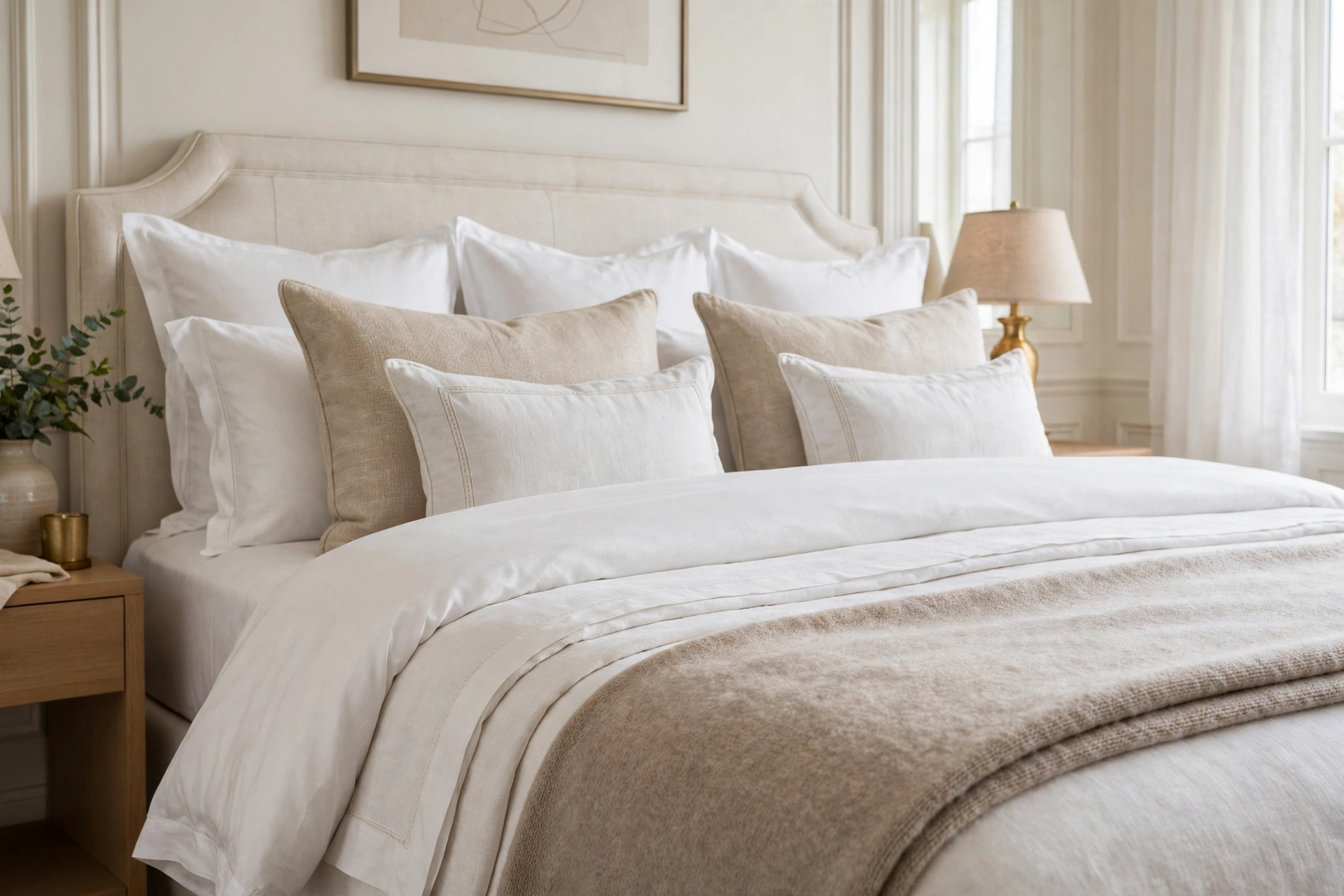
Everyone has slipped into a hotel bed and thought the same thing: why does this feel better than mine? The mattress helps, but it is rarely the whole answer. The real secret is layers — a deliberate stack of protectors, sheets, warmth and texture, each doing one job well. Once you understand what each layer is for, you can rebuild the feeling at home with whatever budget you have, replacing one honest layer at a time.
This guide walks the stack from the mattress up, in the order hotels build it. It also covers the mistakes that make expensive bedding feel disappointing, because luxury bedding layers fail more often from bad combinations than from cheap fabric. For the wider bedroom picture, see the other guides in Millionaire Lifestyle.
Layer 0: The Mattress and Topper
Every layer above sits on this foundation, so be honest about it first. If your mattress sags or you wake with aches that fade by midday, no sheet will fix it. A topper, however, can rescue a mattress that is sound but too firm: a few centimetres of latex, feather blend or memory foam adds the slight sink that makes a bed feel plush rather than hard.
Hotels favour a medium feel that suits most sleepers, with softness coming from the topper and bedding rather than from a very soft mattress. At home, choose for the person who sleeps worst, not the person who shops best. If two sleepers disagree, a topper on one side is a perfectly respectable compromise.
Layer 1: The Protector Nobody Sees
A mattress protector is the least glamorous layer and one of the most important. It guards against spills and sweat, which keeps the mattress fresher for years, and a quilted cotton protector adds a whisper of padding that smooths the surface.
Choose a protector that is quiet. Crinkly waterproof plastics announce themselves with every turn. Modern protectors with a soft cotton top and a discreet waterproof backing do the job silently. Fit matters: it should sit snug like a fitted sheet, with deep pockets if you have added a topper, so it does not bunch under the sheet above it.
Layer 2: The Fitted Sheet
The fitted sheet is your true sleeping surface, so this is where fabric choice counts most. Cotton remains the hotel standard because it breathes, washes well and softens over time. Two weaves dominate. Percale is plain-woven, matte and crisp, with a cool hand-feel that suits warm sleepers. Sateen is woven to feel smoother and slightly warmer, with a gentle sheen. Neither is better; they are different, and mixing them up is why some people buy good sheets and feel let down.
Long-staple cotton tends to pill less and last longer than short-staple cotton, which matters more in daily use than headline thread counts. Very high thread counts can feel dense and hot. As a practical rule, buy the best-made sheet you can afford from a maker who tells you the fibre and weave honestly, and buy two sets so one is always clean and ready. Elastic should run all the way around the fitted sheet, not just at the corners, if you move a lot in your sleep.
Layer 3: The Flat Sheet — the Hotel Signature
Many home beds skip the flat (top) sheet and sleep directly under the duvet. Hotels almost never do. The flat sheet adds a cool, smooth layer against the skin, lets you regulate temperature by folding it back, and keeps the duvet cover cleaner for longer, which means less wrestling it off for washing.
Hotels also fold the flat sheet over the top of the duvet or blanket in a wide cuff. That crisp folded band is a visual signature of a made hotel bed, and it protects the duvet edge from makeup, oils and wear. If you try only one change from this article, try adding the flat sheet for a fortnight. Most people keep it.
Layer 4: Warmth — Blanket, Duvet and Weight
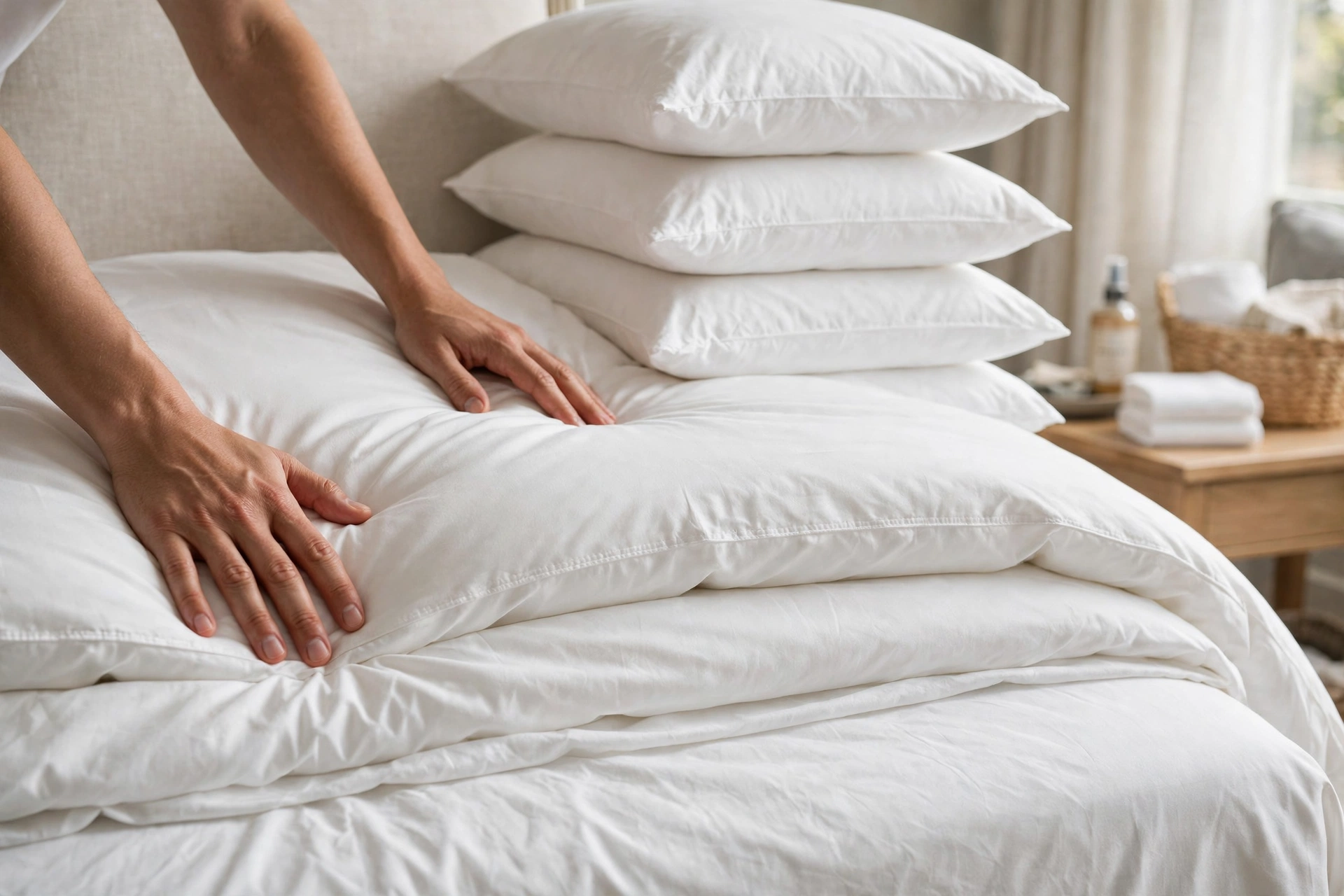
Warmth should be adjustable, because bedrooms and bodies change temperature across the year and across the night. Hotels solve this with a medium duvet plus a lighter blanket or coverlet, rather than one enormous winter duvet used all year.
Choosing a duvet
Down and feather blends feel lofty and light for their warmth; good synthetic fills now mimic that feel well, wash more easily and suit allergy-prone sleepers. Look at tog or warmth ratings as a guide to season, not as a quality score. A common home setup is a mid-weight duvet for most of the year, with the coverlet added on cold nights and the duvet folded down in summer, leaving the flat sheet and coverlet as the sleeping layers.
Size up if you share. A duvet one size larger than the bed drapes generously over the sides, looks luxurious, and ends the midnight tug-of-war. The cover should be cotton, in white or a pale neutral, with ties or buttons that actually keep the duvet corners in place.
The blanket or coverlet
Between the flat sheet and duvet, or folded at the foot, a cotton, waffle-weave or matelassé coverlet adds texture and just enough weight for sleepers who like to feel held without heat. It is also the layer that makes the bed look finished in photographs: smooth, structured, and forgiving of wrinkles in a way thin sheets are not.
Layer 5: Pillows, in Two Honest Groups
Hotel pillow maths is simple: sleeping pillows at the back, decorative pillows at the front, and never so many that bedtime becomes an excavation.
For sleeping, most people need one good pillow, some need two. Side sleepers generally need a firmer, higher pillow to fill the shoulder gap; back sleepers a medium one; stomach sleepers a soft, low one. Hotels stack a firmer pillow behind a softer one so guests can choose — a trick worth copying in a shared bed. Pillow protectors under the cases keep pillows fresher, and cases should match the sheet set for that calm, unified look.
Decorative cushions are seasoning, not the meal. Two square cushions and perhaps one long lumbar cushion are enough. Choose covers with texture — linen, bouclé, a subtle stripe — in tones drawn from the room. Store them in one consistent place at night, ideally a bench or basket, so the ritual stays quick.
Layer 6: The Throw, Folded With Intent
The throw at the foot of the bed does three jobs: it adds the colour or pattern the white layers deliberately avoid, it protects the duvet from bags, pets and afternoon naps on top of the bed, and it offers extra warmth exactly where cold feet need it. Fold it in thirds lengthwise and lay it across the foot, or drape it loosely for a softer look — but pick one style and repeat it, because consistency is what reads as luxury.
Natural-feel fibres photograph and drape best: wool in winter, cotton or linen blends in summer. As an illustrative example, a household might own just two throws and rotate them by season rather than collecting one in every colour.

How Hotels Actually Make the Bed
Technique is free, and it shows. Pull the fitted sheet drum-tight. Lay the flat sheet with its top edge at the headboard, then fold it back over the duvet in that wide cuff. Tuck the foot firmly — the famous hospital corner is simply a neat diagonal fold — and let the sides hang or tuck them depending on how formal you want the room to feel. Shake the duvet inside its cover from the top corners so the fill spreads evenly, and smooth the coverlet by hand rather than chasing every wrinkle with an iron. Stand pillows up against the headboard, sleeping pillows first, decorative ones in front, with the open ends of cases facing inward so the bed looks seamless from the door.
Two minutes of this each morning is the difference between a bed that was slept in and a bed that invites you back.
Washing and Rotation: Keeping Layers Luxury
White and pale bedding stays luxurious only with honest care. Wash sheets weekly in warm water, duvet covers every one to two weeks, and protectors monthly. Avoid heavy fragrance and excess fabric softener, which coat fibres and reduce absorbency and breathability over time; clean cotton should smell of almost nothing. Dry fully before storing, keep a spare set folded in the bedroom rather than a distant cupboard, and replace pillows when they stay flat after folding — a tired pillow undermines every layer around it.
If you are upgrading in stages, plan the order — protector and sheets first, duvet second, decorative layers last — and sanity-check the total with the free financial calculators before a big linen purchase, so the bed improves without the budget suffering.
The Formula on One Line
Protector for freshness, fitted sheet for feel, flat sheet for the hotel signature, adjustable warmth in the middle, pillows in two honest groups, and a throw for colour and protection. That is the whole formula. None of it requires a suite, a housekeeper or a fortune — just layers chosen on purpose, made with care, and washed like you mean it. Build the stack once, and every night after that is simply checking in.
