
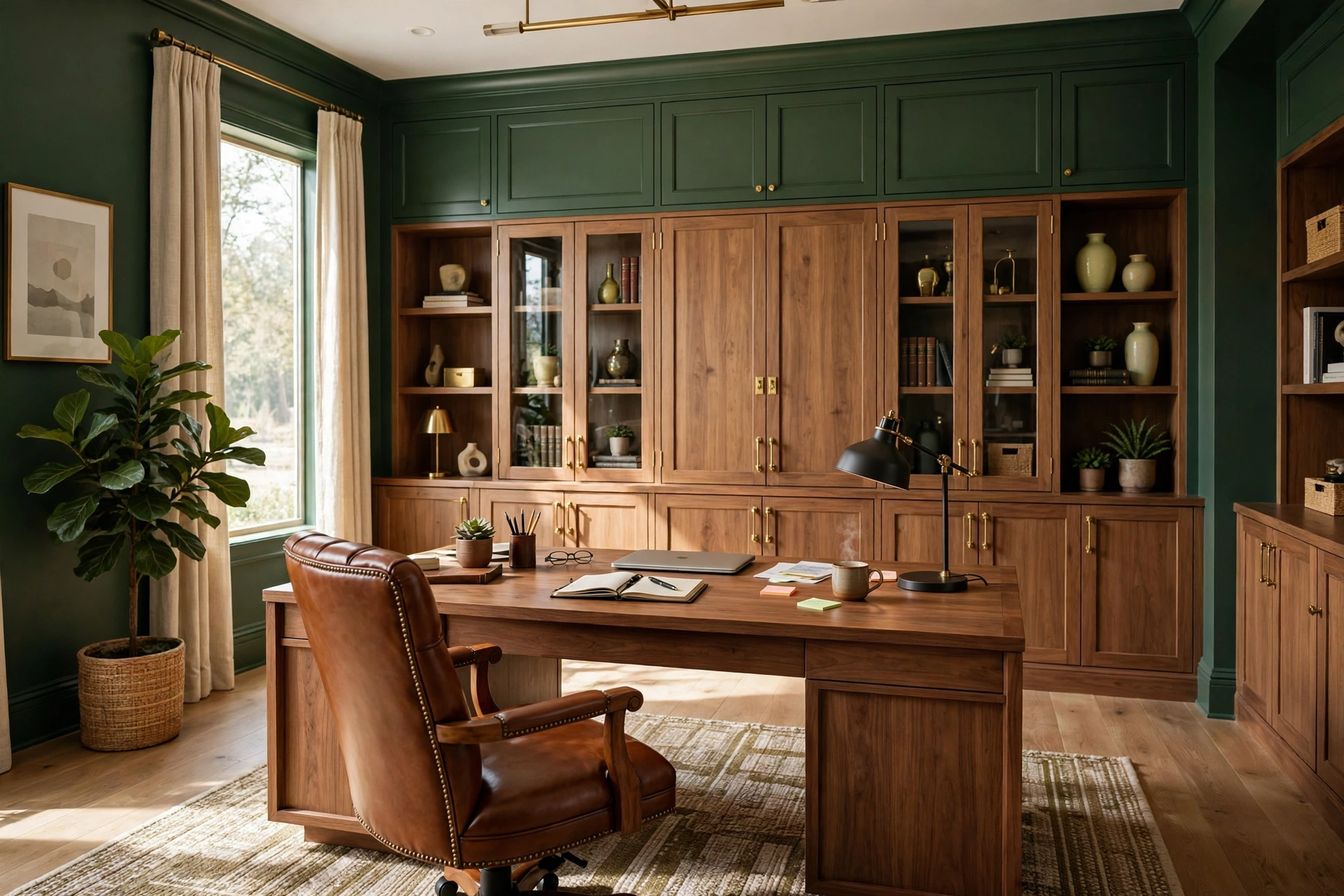
A luxury home office is not a spare bedroom with a better chair. It is a room designed with the same seriousness as a boardroom or a private study in a great house — a place where the layout supports focus, the materials calm the mind, and every object has earned its place. Whether you run a business from home, manage investments, write, or simply want a workspace that rises to the level of your ambitions, the principles behind high-end offices are surprisingly practical. They are about light, order, acoustics and ritual far more than they are about spending. This guide breaks down how executive home offices are put together, and how to borrow the ideas room by room and stage by stage.
Choose the Room Like an Executive Would
The best home office starts before any furniture is bought, with the choice of room. Privacy matters most. A room with a door you can close, away from the busiest traffic of the house, protects calls and deep work in a way no desk accessory can. Natural light comes next, ideally from the side rather than directly behind or in front of your screen, so you get daylight without glare or a washed-out video image. A view — even a modest garden view — genuinely helps during long days, giving your eyes somewhere to rest between tasks.
Sound deserves equal attention. Rooms over a quiet side of the house, away from playrooms and kitchens, start with an advantage. Thick doors, soft furnishings and books all absorb noise, and even a simple draught seal around the office door makes calls clearer and concentration easier. If you are converting a space, consider what is on the other side of each wall before you commit. Finally, think about arrival. In luxury homes the office often sits near the entrance or in a garden building, so visitors and deliveries for work never have to cross private family space. That separation — work has its own front door, in effect — is one of the most professional luxuries of all.
Layout: The Desk Is the Anchor
Every executive office is organised around the desk, and its position sets the tone for the whole room. The classic power layout places the desk facing into the room, with the door visible and a composed wall behind you. On video calls, that background does your reputation a favour: bookshelves, art or panelling instead of a bed or a hallway. It also changes how you feel sitting there — facing the room, like a host, rather than facing a wall like a cubicle worker. Where space allows, leave genuine clearance behind the desk for a comfortable chair and movement, and in front of it for one or two guest chairs. That conversational grouping is what turns a workstation into an office.
Zones within the room
Larger luxury offices are zoned, and zoning is an idea worth stealing at any size. The desk zone handles screens and paperwork. A reading zone — one good armchair, a side table and a lamp — gives you somewhere to think, review documents or take a call away from the keyboard, and that change of seat genuinely helps when you are stuck on a problem. A meeting zone, even just a small round table with two chairs, suits conversations and collaborative work. Storage forms the fourth zone, ideally as one complete wall of cabinetry so the rest of the room stays clear. If your room is small, you can still suggest zones: desk by the window, armchair in the corner, storage behind doors. The rhythm of moving between them structures the day.
Materials and Colours That Mean Business
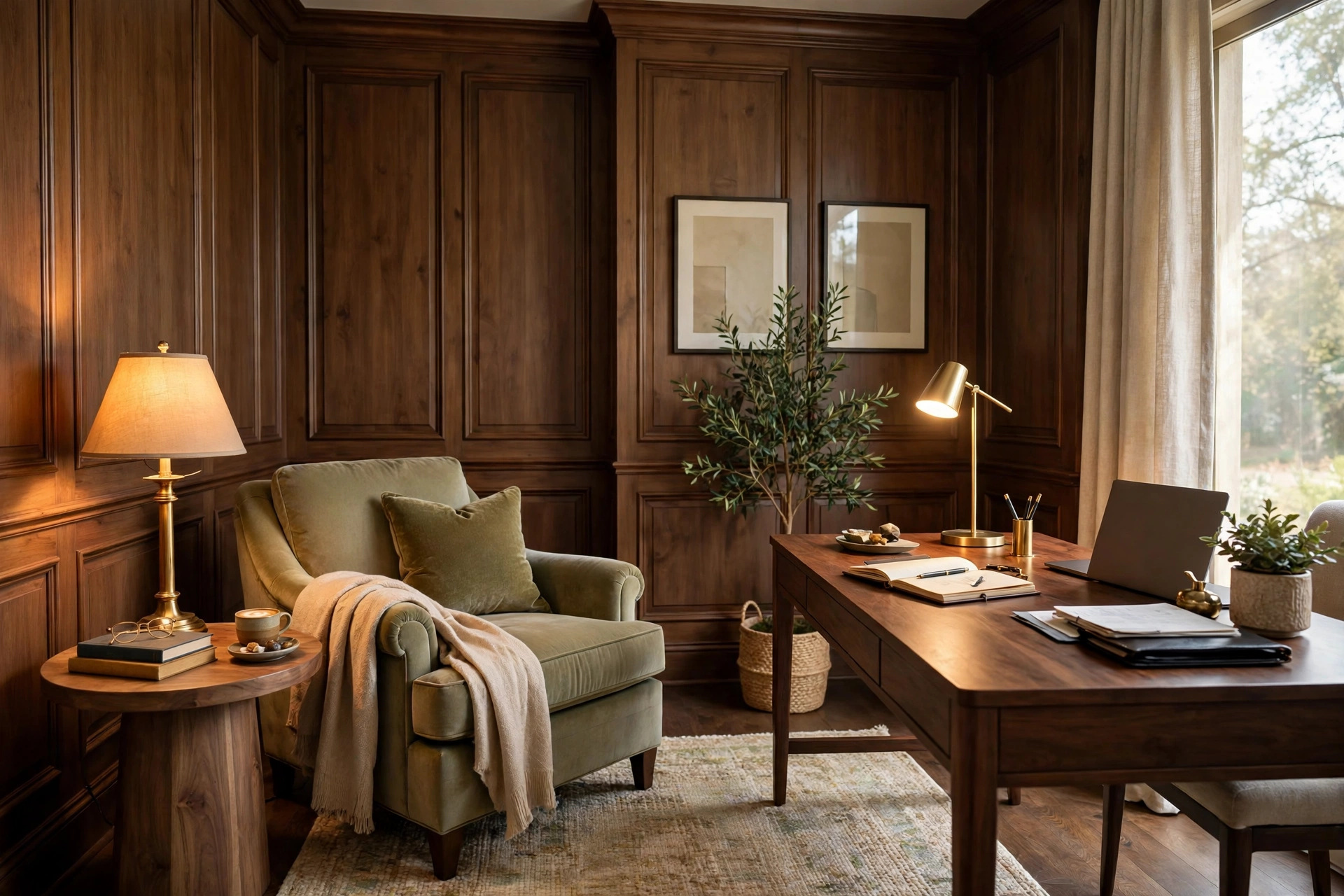
Luxury offices favour a restrained, tactile palette. Deep greens, inky blues, warm greys and rich neutrals recur because they feel calm, masculine or feminine depending on the furnishings, and endlessly professional on camera. Natural materials do the heavy lifting: a timber desk or shelving, leather in the chair or desk accessories, stone or metal in small doses, and wool or textured fabric underfoot. The rule is contrast with control — dark walls with warm wood, pale walls with blackened metal and cognac leather, always a limited palette repeated around the room so it feels designed rather than accumulated.
Panelling is the architectural shortcut many high-end offices use. Simple wall moulding, full-height shaker panels or fluted timber adds structure to plain walls and instantly makes a room feel like a study rather than a spare room. Painted in the same colour as the walls, it reads as quiet luxury. In timber, it becomes the feature itself. Ceiling details count too: a coffered or beamed ceiling, or simply a well-scaled pendant or chandelier over the desk zone, gives the room a centre of gravity that flat white ceilings lack.
Flooring and the five-senses check
Underfoot, wide-plank wood or quality carpet with a large rug defining the desk area both work; the rug softens sound and anchors the furniture. Run a five-senses check on any plan. Sight: is the view from the desk composed? Sound: is the house muffled? Touch: do surfaces feel substantial? Temperature: can you control the room independently? Luxury is mostly the absence of small irritations.
Light in Layers, Cameras in Mind
Serious offices are lit in layers, just like luxury living rooms. Daylight is managed with sheers, blinds or shutters so it never blinds the screen. Ambient ceiling light provides an even base for grey days. Task light — a proper desk lamp with an adjustable arm and warm, dimmable output — handles documents and evening work without flooding the room. Accent light over shelves, art or a bar corner gives the room depth after dark and makes video backgrounds look rich rather than flat.
Video calls deserve deliberate planning now that they are a core part of business life. The goal is soft light on your face from the front, a background with depth and one or two intentional objects, and a camera at eye level. A window to your side, a lamp with a shade in front of you, and bookshelves or art a little distance behind you will outperform any filter. Hide cables ruthlessly in this room above all: cable trays under the desk, a charging drawer, and wireless peripherals where they perform well. Nothing undermines an executive impression faster than a nest of wires in shot.
If you are fitting out the office in stages, prioritise the chair, the desk lamp and cable management first — you feel those daily — then storage, then decoration. The planning tools in the Financial Calculators hub can help you sequence a fit-out budget sensibly alongside your other household projects, so the office improves steadily without one overwhelming spend.
Storage: Order Is the Real Luxury
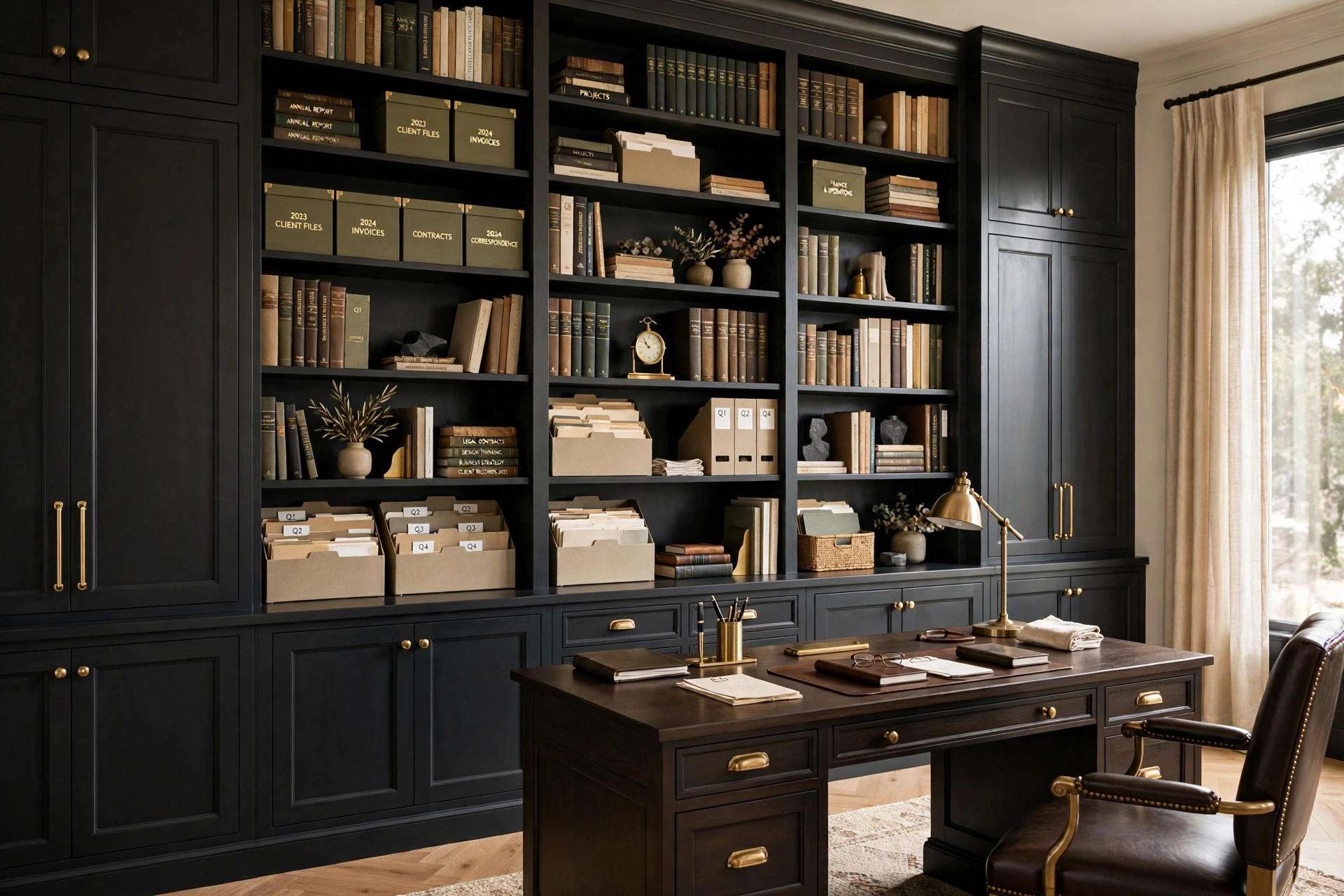
Walk into any truly high-end office and the striking thing is what you cannot see: no paper piles, no printer squatting on the floor, no boxes in the corner. Built-in cabinetry is the luxury standard because it turns storage into architecture. Floor-to-ceiling cupboards with closed doors hide files, equipment and supplies, while a section of open shelving displays books and a few chosen objects. Printers, shredders and routers live inside ventilated cupboards. Drawers are fitted with dividers, charging points and filing sized to what you actually keep.
You can approach the same standard without joinery by being strict. One closed cabinet, identical boxes and files in a single colour, a tray system for live paperwork, and a rule that the desk clears completely at the end of the day. That evening reset ritual — desk empty, chair straight, tomorrow’s list written — is a hallmark of people who treat their home office as a real headquarters. It takes five minutes and it changes how the room greets you each morning.
The Finishing Layer: Furniture and Objects
With the architecture settled, furniture should be few and excellent: one substantial desk, one genuinely supportive chair, guest seating that invites conversation, and lighting you look forward to switching on. Art works harder here than in any other room — a single large piece sets the tone, while small framed prints suit shelves. One sculptural plant beats five small pots on the desk. A clock, a water carafe, quality notebooks and a tray for keys: these small rituals are inexpensive and together create the composed atmosphere people mean by executive.
Avoid the themed office and the showroom office. Slogan-filled rooms date quickly, and perfectly styled but uncomfortable rooms fail the working test. The luxury standard is a room that photographs beautifully at 9 a.m. and still works beautifully at 9 p.m.
Making It Yours, Stage by Stage
Start with the bones: room choice, desk position, storage wall and lighting. Add the working layer — desk, chair, lamp, cable control — and live in the room for a while. Then finish slowly: paint, rug, art, reading chair, objects. Each stage should leave the office fully usable. Keep a short list of what still irritates you each month and fix irritations in order. That, more than any single purchase, is how executive offices are really built.
For more rooms in this same calm approach, browse the Millionaire Lifestyle collection, with practical details you can adapt at your own pace.
