
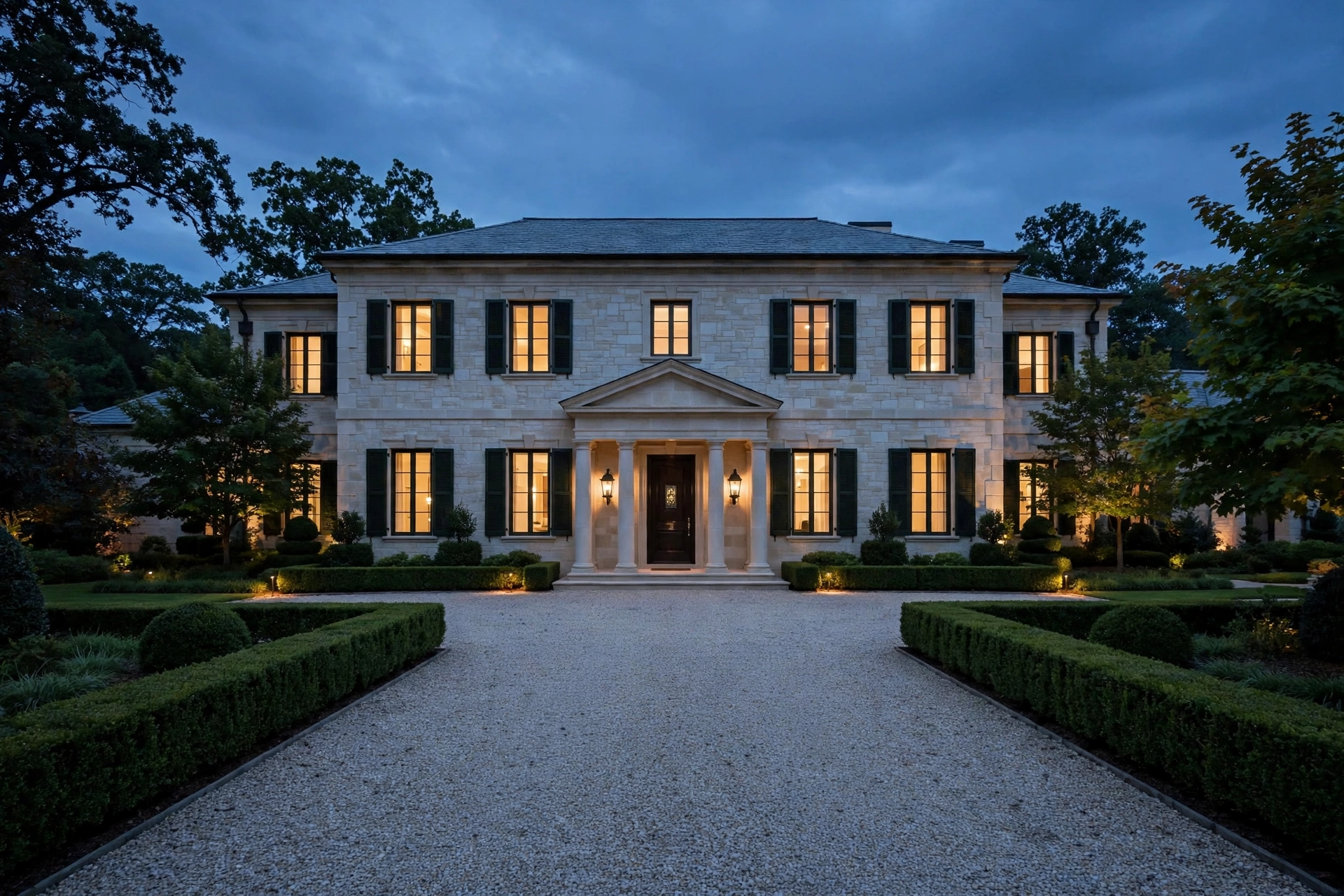
Quiet luxury is the defining look of the modern mansion exterior. It is the opposite of the loud, gold-trimmed, everything-on-display style that dates within a decade. A quiet-luxury facade does not beg for attention from the street. Instead, it earns a second look: balanced proportions, honest materials, soft light, and landscaping so composed it looks effortless — which, of course, it never is.
The good news is that quiet luxury is a set of decisions, not a budget bracket. Many of its strongest moves — restraint, symmetry, a limited palette, layered planting — cost discipline more than money. Whether you are designing a new build, renovating a facade, or simply upgrading a normal house, these are the exterior ideas that create that calm, expensive first impression.
Start With Proportion, Not Decoration
Architects who work on high-end homes obsess over proportion before they discuss a single material. How tall is the building compared to its width? Do the windows align on a clear rhythm? Does the roof pitch suit the style of the house, and does the entrance sit where the eye expects it?
Quiet-luxury exteriors feel right because the bones are right. Windows are evenly spaced or deliberately grouped, the front door is centred or clearly framed, and extensions respect the original lines instead of fighting them. If you are changing an existing house, the highest-impact exterior work is often corrective: aligning a mismatched window, simplifying a cluttered roofline, or removing additions that break the symmetry.
A Restrained Material Palette
Loud houses use many materials. Quiet houses use few — and use them well. A classic quiet-luxury palette might be just three elements: a soft rendered or stone main wall, a natural slate or clay-tile roof, and timber or bronze-toned metal for doors and details.
Stone deserves its reputation here. Limestone, sandstone, and local stone cladding bring weight and permanence that paint cannot imitate. Used across the whole facade it is a major investment; used on a plinth, a portico, gate piers, or a garden wall, it still anchors the design. The rule is consistency: one stone, repeated calmly, beats five finishes competing for attention.
Colour That Whispers
Quiet luxury colour is drawn from nature and architecture, not from a trend chart. Warm off-whites, pale limestone, soft greys, deep charcoal for contrast details, and the muted greens of the planting itself. Front doors are often black, deep green, or natural timber — glossy enough to feel finished, never bright enough to shout.
Test colours on the building, not on a card. Exterior light is unforgiving, and a warm white that looks creamy at noon can turn stark at dusk. Paint a large sample area and live with it for a few days before committing, and keep the palette tight: walls, trim, door, and metalwork should read as one family.
The Entrance: Portico, Door, and Hardware
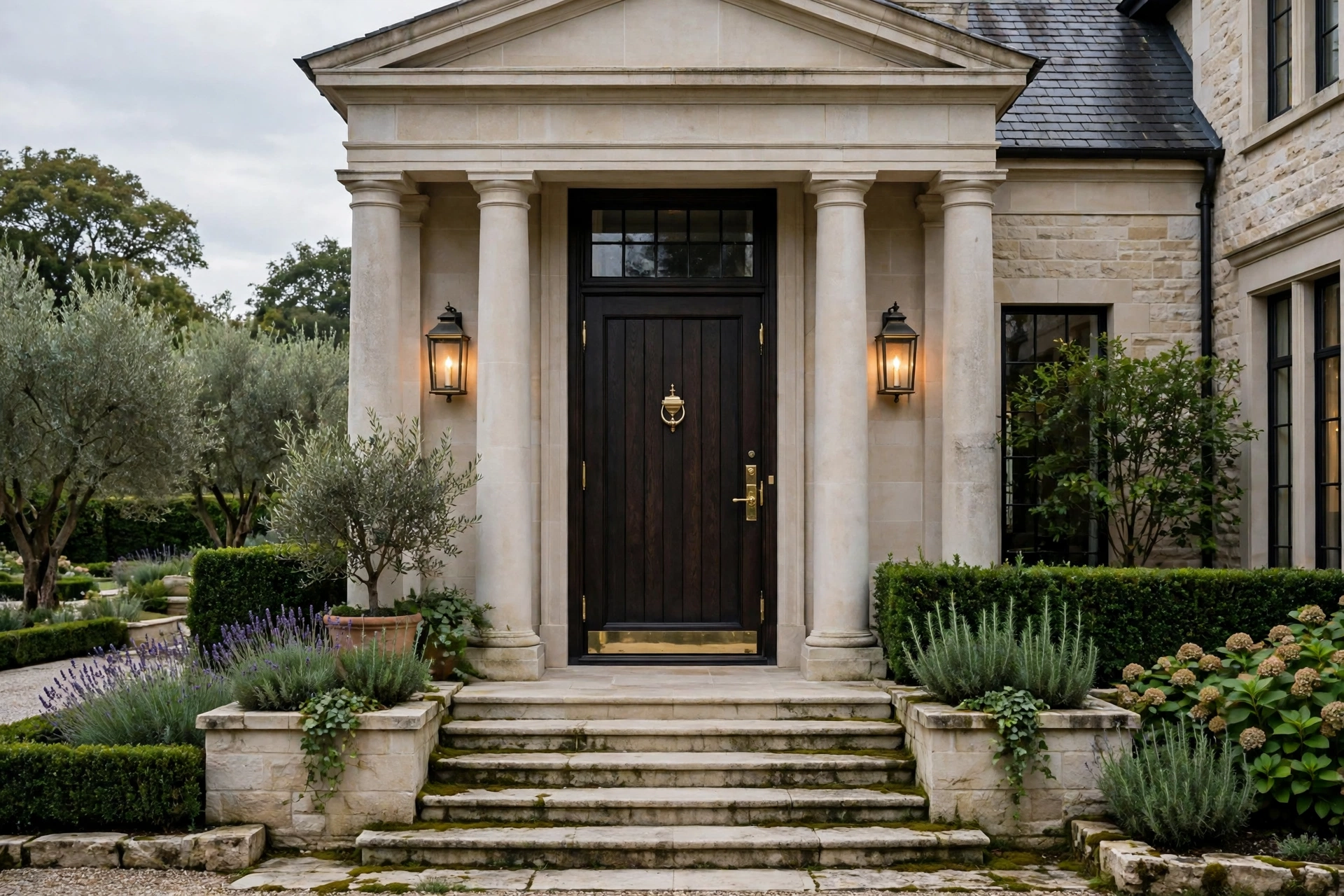
If the facade is the sentence, the entrance is the punctuation. Elite homes mark the door with architecture — a portico, a stone surround, steps in a solid material, or a deep recessed porch that gives shelter and shadow. Shadow matters: a recessed entrance looks expensive because depth reads as substance.
Scale the door up if you can. A taller, wider front door, or a door with glazed sidelights, changes the whole elevation. Then finish it properly: solid timber or steel, substantial hardware in aged brass, bronze, or matte black, and a house number in a clean, classic style. Small, heavy, real details are the vocabulary of quiet luxury.
Windows: Bigger, Simpler, Better Framed
Few upgrades transform a mansion exterior like windows. The quiet-luxury direction is toward larger panes, slimmer frames, and fewer fussy divisions. Steel-look glazing, tall sash windows on classical homes, and clean full-height glass on contemporary ones all share the same principle: let the opening be generous and the frame be quiet.
Consistency is critical. Mixed window styles are the fastest way to make a house look improvised. If a full replacement is out of reach, repainting all frames in one deep, soft colour — charcoal and near-black are favourites — can unify a facade surprisingly well, especially paired with new, simple external lighting.
Lighting That Glows, Never Glares
Drive past expensive homes at night and notice what you cannot see: the light sources. Quiet-luxury lighting is layered and indirect. Path lights tucked into planting, uplights washing a stone wall or a specimen tree, a warm lantern either side of the door, and gentle step lights on stairs.
Choose warm colour temperatures, put exterior circuits on timers or smart controls, and light features rather than flooding areas. A facade lit softly from a few considered points looks like a boutique hotel. The same facade under one harsh floodlight looks like a car park. When you are planning the wider project budget, our financial calculators can help you compare where exterior spending delivers the most lasting value.
Landscaping: Structure First, Flowers Second
The gardens of quiet-luxury homes are architectural. Evergreen structure — clipped hedges, pleached trees, box or yew forms, and clean lawn edges — carries the design through every season, while flowers play a supporting role in limited colours.
At the front of the house, keep it especially calm. A gravel or stone drive with defined edges, a pair of trees framing the view, deep planted borders against the walls, and no visual clutter. Gravel deserves a special mention: its sound underfoot, its soft colour, and its permeability make it a favourite of high-end designers, and it is one of the more attainable luxury surfaces.
Privacy planting is part of the architecture too. Layered hedging and trees screen the house from the road and neighbours, creating the sense of arrival inside a private world — the feeling every mansion exterior is really selling.
Gates, Walls, and the Art of Arrival
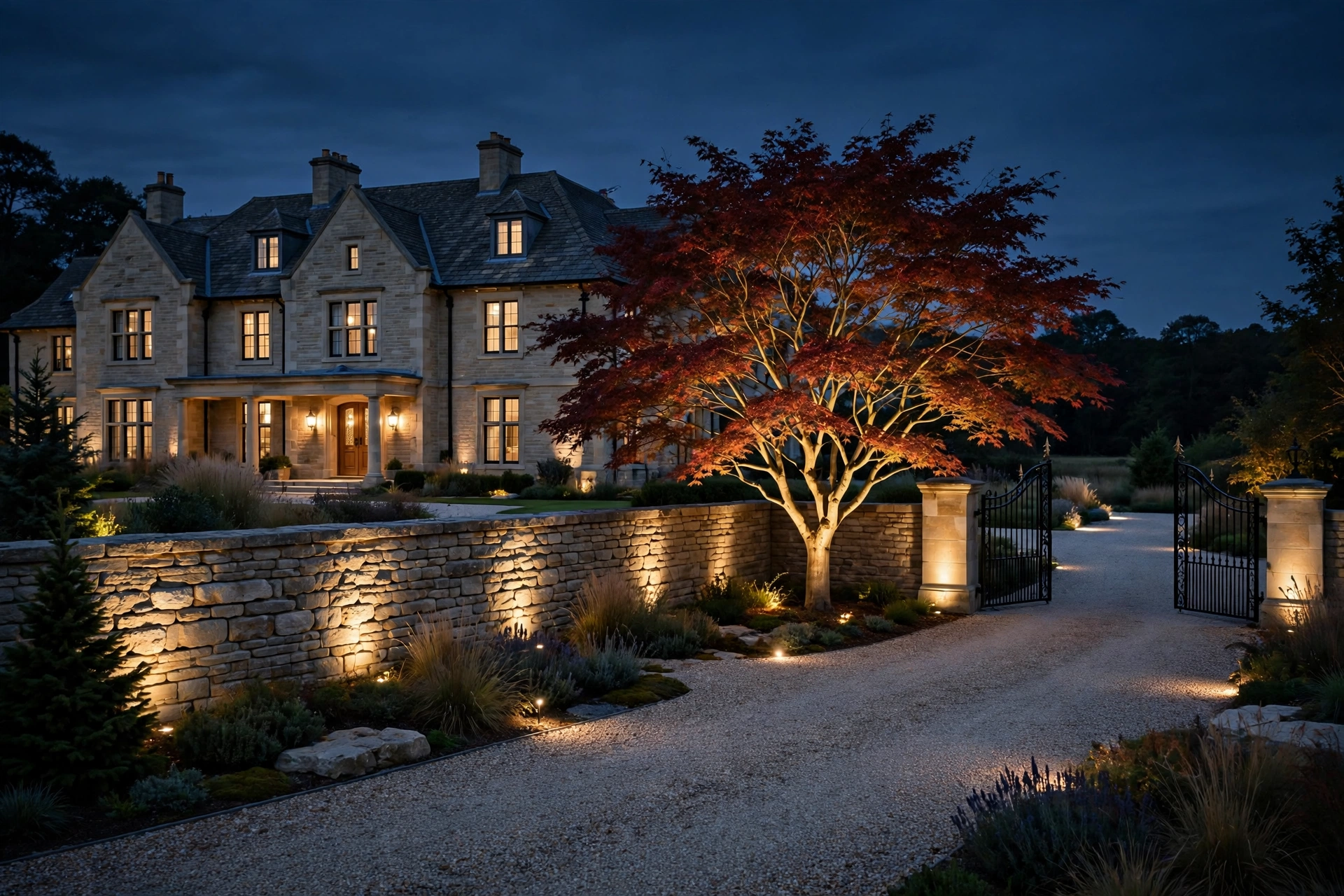
A boundary done well is a promise of what is inside. Low stone walls with hedging above, simple metal gates with clean vertical lines, or tall timber gates on a contemporary home — all work, provided the materials match the house and the mechanism is smooth and quiet.
Leave room for the approach. A short drive, a turning area in gravel or setts, and parking that does not dominate the front garden keep cars from stealing the scene. Where possible, screen bins, meters, and services behind planting or a matching enclosure. Quiet luxury is, in large part, the absence of visual noise.
Roofs and Rainwater Details Nobody Notices — Until They Are Wrong
Look at a truly finished facade and you will see that even the functional parts are considered. Gutters and downpipes are metal, correctly sized, and coloured to disappear. Roof edges are crisp, verges are tidy, and chimneys — real or architectural — are proportioned to the roof they sit on.
These details rarely appear in glossy photos, but they are exactly what separates a house that looks expensive from one that merely looks new. When renovating, budget for them early; they are far cheaper to do with scaffolding up than as an afterthought.
What to Avoid: The Loud-Luxury Traps
A few common moves instantly break the quiet spell. Too many materials and colours on one elevation. Oversized, shiny features — mirror glass, polished chrome, glittering stone cladding. Harsh white security lighting. Plastic anything where the eye can reach it. And ornament copied from a different architectural style: columns on a cottage, rustic beams on a glass box.
Each trap has the same root — adding instead of editing. Quiet luxury is an editing discipline. When in doubt, remove something.
A Simple Order of Work
If you are upgrading an existing house, sequence matters more than scale. First, repair and unify: roof, gutters, and one consistent window colour. Second, the entrance: door, surround, steps, lighting. Third, the boundary and drive surface. Fourth, structural planting, which needs time to mature and rewards being started early. Finishes and furniture come last.
For more facade, garden, and interior inspiration in the same spirit, browse the Millionaire Lifestyle series — and remember the core idea: the most luxurious exterior is not the one with the most features. It is the one where nothing looks accidental, nothing looks temporary, and nothing needs to shout.
