
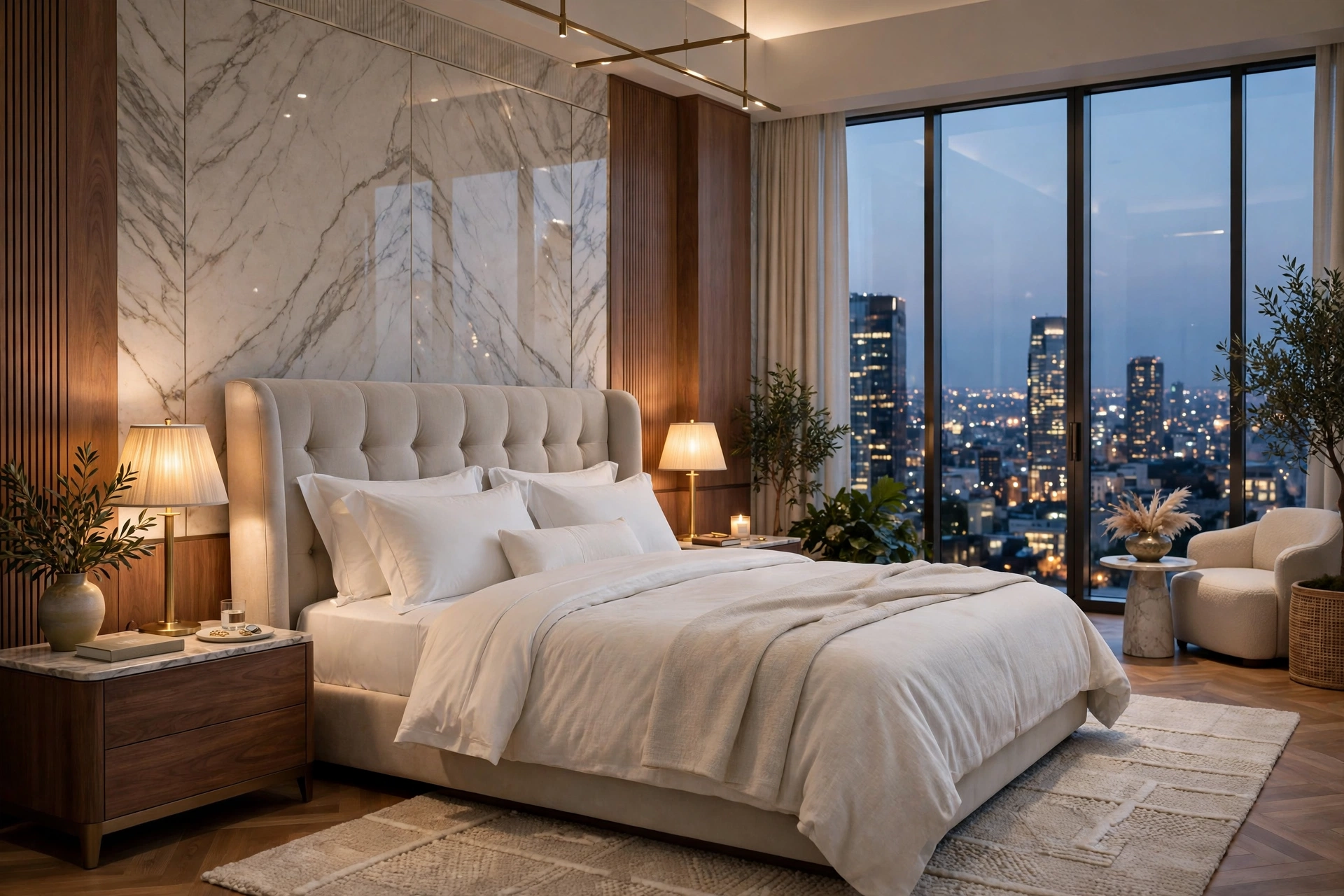
There is a particular feeling you get when you walk into a great hotel suite late at night. The lights are low and warm, the bed looks impossibly inviting, the room is quiet, and everything you need is within reach while everything you do not need is hidden away. You sleep better there, and it is rarely an accident. Hotels design bedrooms the way good restaurants design menus: every choice removes friction and adds calm.
The good news is that a millionaire bedroom is less about square footage than about discipline. The same handful of principles works in a penthouse or a modest apartment. For more rooms in this spirit, browse the full Millionaire Lifestyle collection.
Start With the Bed as the Whole Point of the Room
In a luxury suite, the bed is not one item among many. It is the architecture of the room. Everything else — the art, the rug, the chairs — is placed in relation to it.
Choose the largest bed the room can honestly hold
A generous bed changes how a room feels the moment you enter. If your room can take a king without blocking doors or squeezing the walkways to a shuffle, choose it. If it cannot, a queen with a tall, upholstered headboard will look richer than an oversized frame that crowds the walls. Leave clear space on both sides so the room breathes and making the bed never becomes a wrestling match.
The headboard matters more than the frame. A tall headboard in linen, velvet or soft leather gives the bed presence, softens sound, and makes reading in bed comfortable. Plain shapes age best. Avoid fussy carving and shiny finishes; quiet upholstery is what expensive rooms actually use.
Position it like a hotel would
Hotels centre the bed on the main wall and keep the sightline from the door clean. Try to do the same. If a window wall is your only option, hang curtains wide so the bed still reads as the focal point. Keep tall wardrobes and exercise equipment out of the first view from the doorway if you can. First impressions set the tone for sleep more than we admit.
The Hotel Bed Formula, Simplified
Hotels win on bedding, not on thread-count bragging. The formula is layers, white or near-white top layers, and pillows in two sizes. Article 14 in this series breaks down each layer in detail, but the short version belongs here too, because no bedroom idea matters more.
Use a good mattress protector, fitted and flat sheets in breathable cotton, a medium-weight duvet you can adjust by season, and a lighter coverlet or throw folded at the foot. Keep sleeping pillows — two per person at most — separate from decorative cushions, and limit decorative cushions to two or three. A bed that takes ten minutes to unmake at night will not be made properly in the morning, and an unmade luxury bed is just laundry.
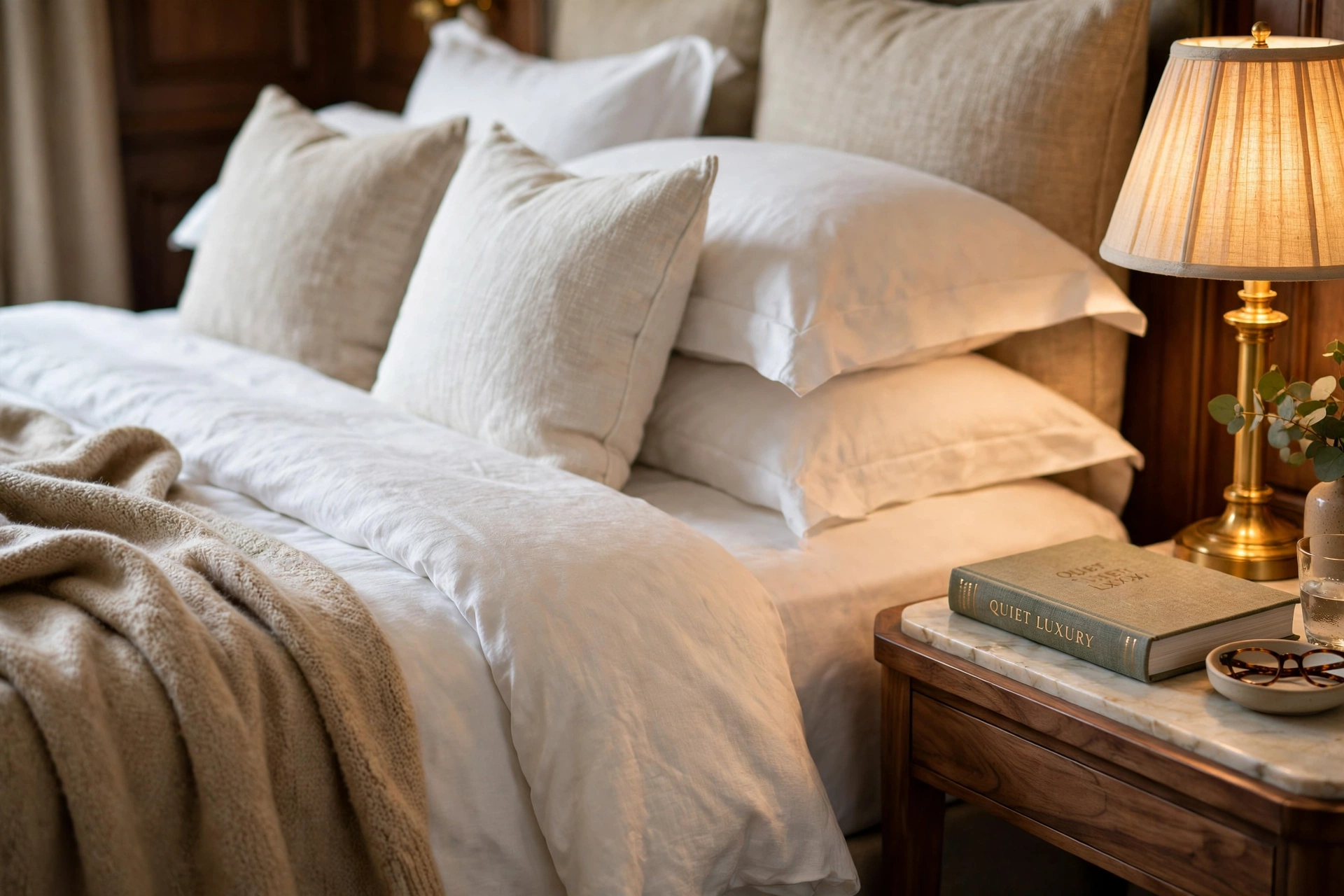
Colour helps here. White bedding photographs well, but warm white, soft ivory and pale stone are kinder in real bedrooms and hide the lived-in look for longer. If you love colour, add it in the throw and cushions, which are cheap to change, rather than in the sheets you wash every week.
Colour and Texture: Calm First, Drama Second
Millionaire bedrooms are almost never loud. The palette is usually built from three tones: a warm neutral for walls and large textiles, a deeper tone for weight — think espresso, charcoal or deep olive — and one metal or wood accent repeated two or three times.
Walls that disappear
Choose wall colours that recede. Warm whites, greiges, soft taupe and muted sage all work because they let texture do the talking. If you want a darker room, commit fully: paint the wall behind the bed a deep, matte colour and keep the bedding light for contrast. Half-hearted accent walls in mid-tones tend to look like a compromise.
Texture does the decorating
When colour is quiet, texture becomes visible — and texture is what makes a calm room feel rich instead of empty. Mix at least four: smooth cotton, nubby linen, a wool throw, and one hard surface such as marble or dark wood on the bedside tables. Add a rug with real pile that extends well beyond the bed on both sides; stepping onto something soft is the first luxury of the morning and the last one at night.
Lighting in Three Layers
Single ceiling lights are the enemy of the suite feeling. Hotels layer light, and you should too.
Ambient light fills the room softly: a dimmable ceiling fitting, cove lighting, or wall washers. Task light sits where you read: bedside lamps or wall lights at shoulder height when you are sitting up, warm in tone, with shades that push light down onto the page rather than into your eyes. Accent light is the glow: a low lamp on a dresser, a picture light, or LED strips hidden behind a headboard.
Put bedside lights on switches or smart bulbs you can dim from the bed. Lowering the light signals sleep far better than scrolling in bright white light. Keep bulbs warm and consistent throughout; a mix of blue-white and amber in one room always looks accidental.
Blackout, Quiet and Cool: The Sleep Trinity
A beautiful room that is bright at 5 a.m., noisy and warm will never feel luxurious. Suite-level sleep rests on three unglamorous fixes.
First, darkness. Layer sheers for daytime privacy with blackout-lined curtains or a blind behind them, and close the gaps at the sides where light leaks in. Second, quiet. A solid rug, upholstered headboard and soft furnishings absorb sound; for street noise, heavier curtains and draught-proofing help more than any gadget. Third, cool air. Choose bedding weights you can adjust and avoid synthetic layers that trap heat.
Keep electronics honest, too. Hide cables, and give phones a charging tray on the dresser — outside arm’s reach — rather than the pillow.
Bedside Tables That Actually Work
Hotel nightstands are edited ruthlessly: lamp, water, book, perhaps a small tray for a watch and rings. Copy that discipline. Choose tables with at least one drawer or shelf so chargers, medicines and clutter can disappear. Keep the surface mostly empty. If both sides of the bed match, the room instantly looks more deliberate; if they do not, matching lamps can tie two different tables together.
Add one small living thing if you like — a single stem in a vase, a small plant — but skip scented clutter if fragrances disturb your sleep. A carafe of water is a classic hotel touch that costs almost nothing and genuinely improves the night.
A Corner for Waking Up Slowly
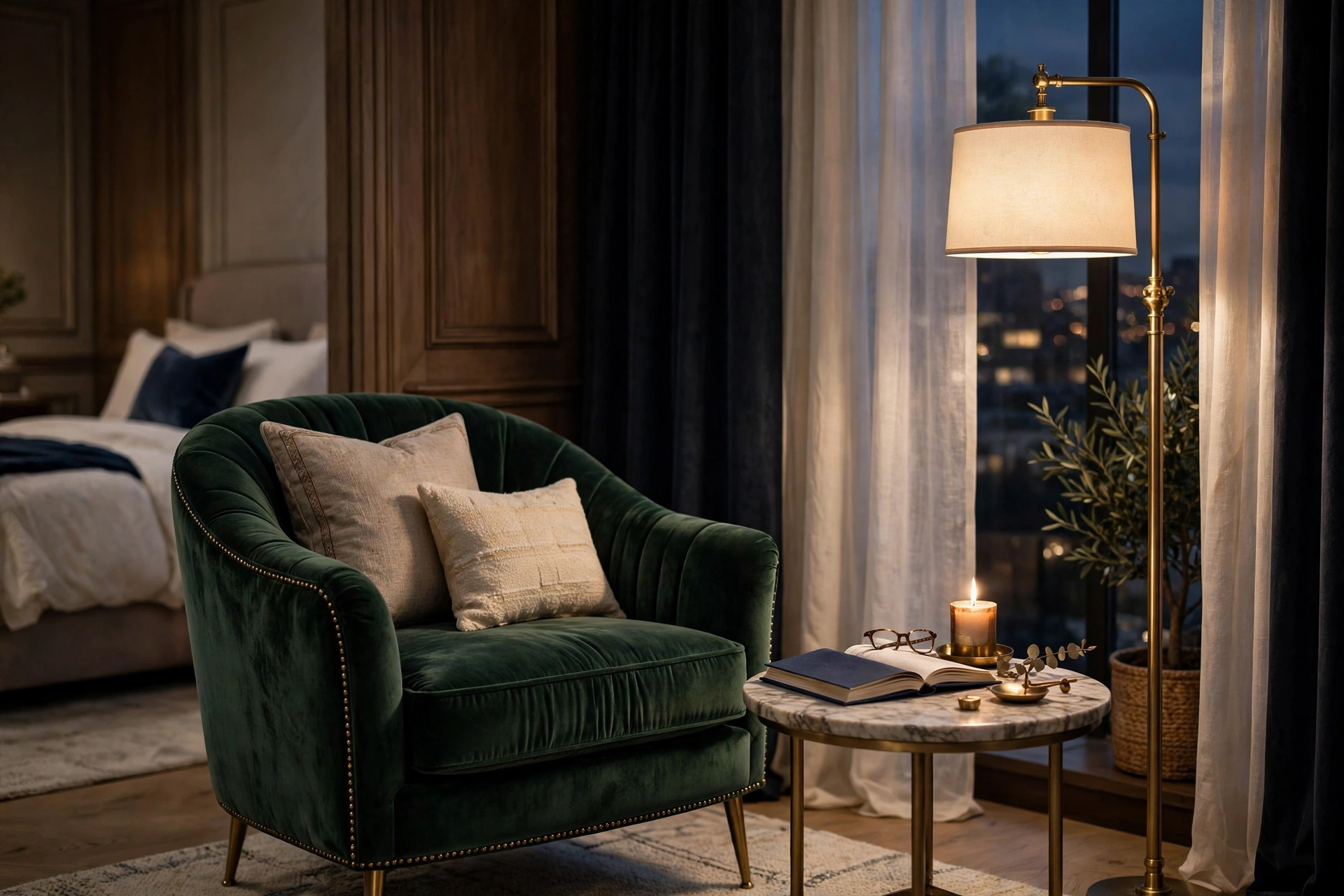
Suites often include a chair that is not for clothes. That is the point: a reading chair with a small side table and a floor lamp creates a morning corner for coffee and a book, and it keeps the bed for sleeping. If space is tight, a bench at the foot of the bed does double duty — a place to sit while dressing, and a landing spot for the throw at night.
Protect this corner from becoming storage. The moment a chair becomes a wardrobe, the suite feeling evaporates. A lidded basket nearby for the things that would otherwise land on the chair is a cheap, honest fix.
Scent, Sound and the Five-Minute Reset
Luxury is partly maintenance. A five-minute morning reset — bed made with the throw folded, surfaces clear, curtains opened fully — keeps the room feeling like a suite you check into each evening rather than a room you collapse into. Open a window when weather allows. Fresh air is the oldest hotel trick there is.
Scent should be subtle and consistent. Choose one direction — cedar, linen, fig or amber are common in high-end hotels — and use it sparingly, not in five competing products. If anyone is sensitive, skip fragrance entirely; clean and aired beats perfumed.
Budget the Upgrade Like a Suite Renovation
You do not need to buy everything at once. The order with the most suite feeling per step is: bedding first, then blackout and lighting, then headboard and rug, then furniture. As an illustrative example only, a household might fund one upgrade at a time — sheets this month, lamps next. Use the free tools on the financial calculators hub to test a staged plan against your real budget first.
A Short Checklist to Steal
- Bed centred, headboard tall and plain, walkways clear.
- Bedding in breathable layers, mostly light, made every morning.
- Palette of three tones, texture in at least four materials.
- Lighting in three layers, warm and dimmable from the bed.
- Blackout solved, room quiet and slightly cool.
- Nightstands with hidden storage and nearly empty tops.
- One chair or bench that is never used for clothes.
- One subtle scent, or none at all.
Do those eight things and you have the essence of the millionaire bedroom: not gold, not glitter, just a room engineered for rest and kept that way. Sleep like a suite is a habit as much as a purchase — and habits, happily, are free.
