
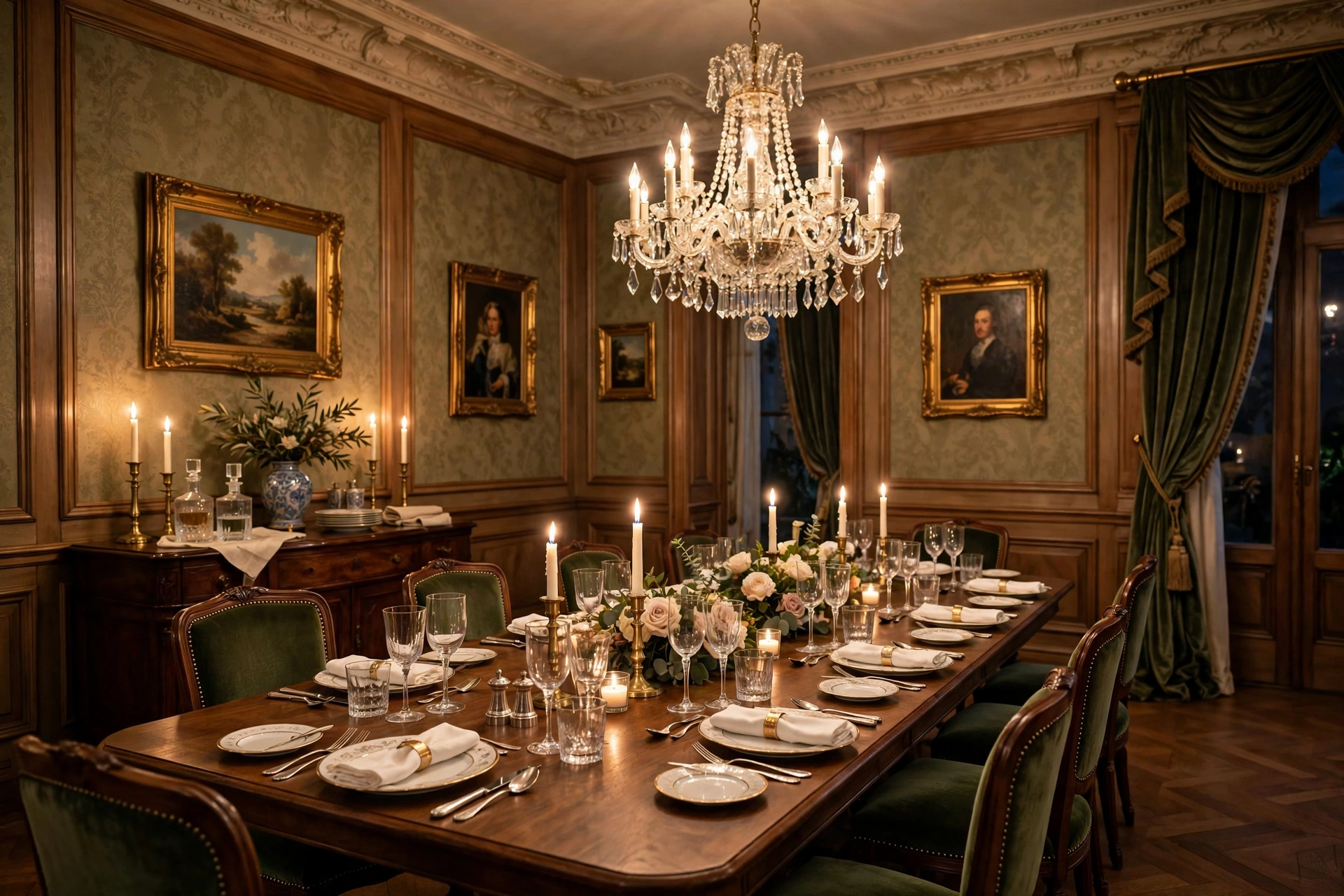
Old money hosts differently. There is no performance, no anxious unveiling of expensive things, no dinner that feels like a showroom tour. Instead there is ease: chairs you can sit in for three hours, light that flatters everyone, food served without fuss, and a table set as if beautiful meals there are simply normal. That ease is not inherited. It is designed, practised and repeatable — and it is exactly what makes a dining room feel like a millionaire’s, whatever the house is worth.
This guide covers the room itself and the hosting habits that animate it, because a dining room is only luxurious when people linger in it. Steal the habits along with the furniture. For kitchens, bars and bedrooms in the same spirit, see the rest of Millionaire Lifestyle.
The Old-Money Room: Quiet, Comfortable, Lived-In
Walk into a truly established dining room and the first impression is calm. Colours are deep or soft, never shrill. Wood has a glow rather than a shine. Nothing matches too perfectly, because pieces arrived over years, not in one delivery. That collected quality is good news for everyone else: you can build it gradually, choosing each piece well, and the room will look more authentic for it.
The table is for people, not for show
Choose a table that fits the room with space to pull chairs out and walk behind seated guests. A table that crowds the walls makes every dinner feel like a negotiation. Wood remains the old-money default — warm, repairable, forgiving of hot dishes and candle wax — though stone and glass suit modern rooms if edges are softened with textiles and upholstered chairs.
Extendable tables are the honest hero of real hosting. Buy for your weekly life, extend for celebrations. A beautiful table pad or cloth protects the surface during big gatherings and disappears the rest of the year.
Chairs your guests will thank you for
If there is one place to spend, it is chairs. Upholstered seats and backs, arms where space allows, and a seat height that lets feet rest flat will keep guests at the table long after dessert. Test chairs by sitting through an imaginary long dinner, not a thirty-second showroom perch. Mismatched chairs can work beautifully if they share a height and a tone; matching chairs in a fabric you love will never look wrong. Keep two spare chairs elsewhere in the house that can join the table without clashing loudly.
Light That Flatters Faces, Not Ceilings
Dining light has one job: make the people and the food look wonderful. A pendant or chandelier centred over the table, hung low enough to create a pool of intimacy without blocking sightlines, is the anchor. Put it on a dimmer and actually use the dimmer — bright for setting the table, low and warm once guests sit down.
Add a second layer: wall sconces, a lamp on the sideboard, or candles, always candles. Candlelight at face height softens every room and every expression in it; it is the oldest hosting trick and still the best. Keep flames unscented at the table so they never compete with the food, and use holders that shield them from draughts and sleeves. If real candles worry you, high-quality flameless ones at the table plus real candles on the sideboard is a compromise many seasoned hosts quietly make.
The Sideboard: Headquarters of a Calm Host
Every relaxed dinner has a sideboard or serving surface behind it. It holds the water jug, spare glasses, serving dishes waiting their turn, and the dessert that should not be revealed too early. With headquarters stocked, the host stops leaping up mid-conversation and dinner flows.
Keep the sideboard styled simply between meals — a lamp, a stack of art or cookery books, one bowl or sculpture — so the room feels finished even when it is not set. Inside it, organise by event: table linen together, candles and matches together, serving pieces where hands expect them. The five minutes before guests arrive should be for lighting candles, not hunting for the corkscrew.
Setting the Table the Old-Money Way
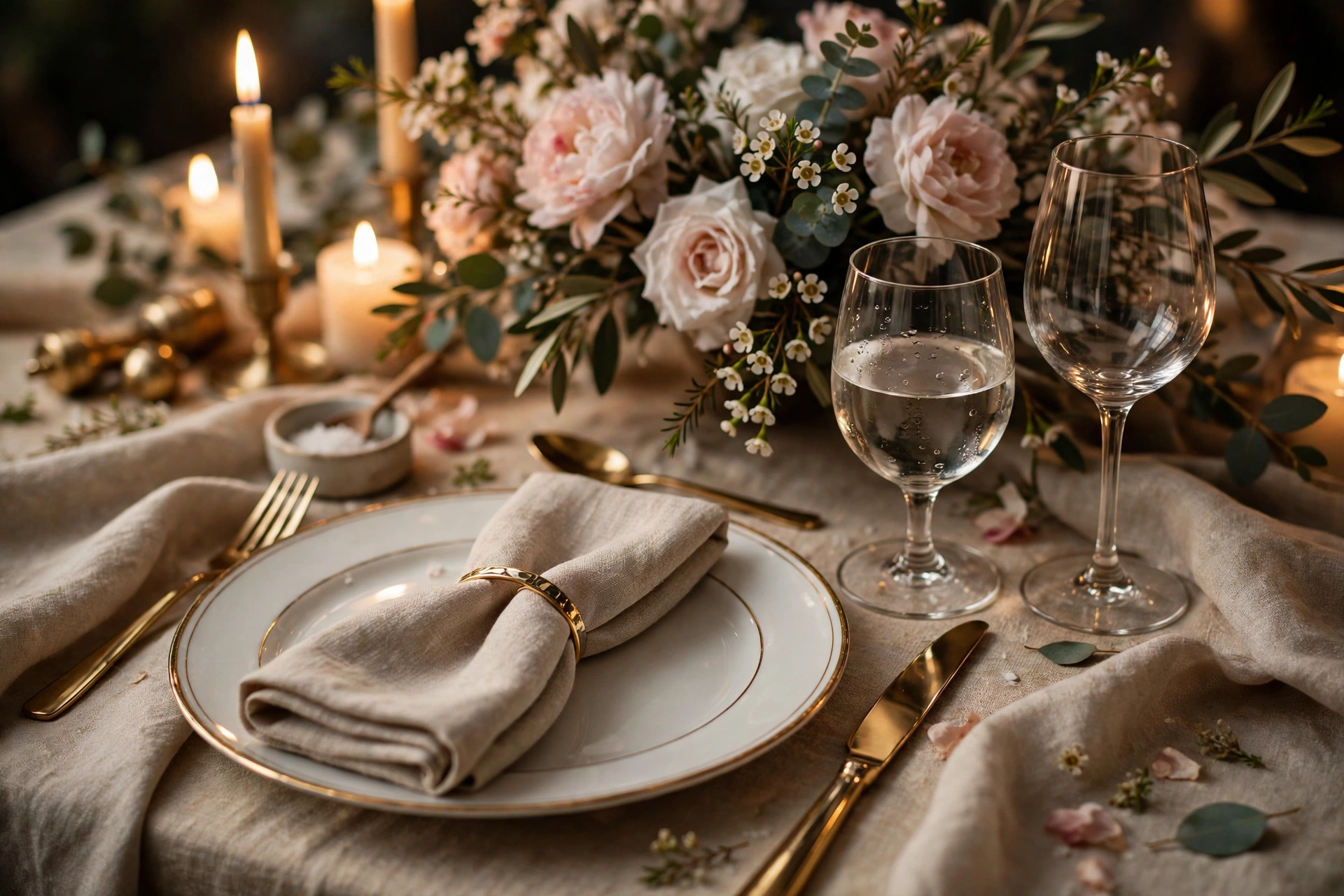
The classic setting is generous but never cluttered. A cloth or bare wood, both are correct; placemats for family suppers, a cloth when you want ceremony. Linen napkins, properly sized, make an ordinary Tuesday feel considered and a celebration feel effortless. Glassware should be clear and comfortable to hold; water glasses for everyone, wine glasses for those drinking, and no forest of crystal that traps elbows.
Centrepieces that let people talk
Keep centrepieces low or narrow — a line of small vases, a bowl of fruit, greenery laid along the table — so guests see each other without ducking around an arrangement. Height belongs at the edges of the room, not between faces. One repeated element, such as the same flower in several small vessels, looks more elegant than one grand, expensive display, and as an illustrative example, a handful of supermarket stems divided this way can outshine a single costly bouquet.
Place cards sound formal, but for six or more guests they are kindness disguised as tradition: they end the hovering at the table’s edge and let the host seat talkative guests where the conversation needs them.
The Hosting Rituals That Actually Matter
Rooms impress once; rituals are remembered. Old-money hosting runs on a few quiet disciplines.
Be ready before the doorbell. The table set, the first course within reach, music already playing softly, and the host dressed and unhurried. A calm host is the greatest luxury a guest can be given.
Serve simply and confidently. A short menu cooked well beats an ambitious menu cooked anxiously. Family-style serving dishes in the middle of the table create warmth and seconds without ceremony. Keep water and bread flowing; guests notice those gaps more than any garnish.
Seat yourself last, pour generously, and never apologise for the food. Commentary about what went wrong teaches guests to taste flaws. Confidence — even cheerful, laughing honesty about a dish — keeps the table’s mood where it belongs: on each other.
Let the evening end slowly. Coffee, tea or a small sweet thing signals a gentle landing rather than an abrupt stop. Some hosts keep a box of good chocolates for exactly this moment; it requires no cooking and always lands as generosity.
Walls, Floors and the Collected Detail
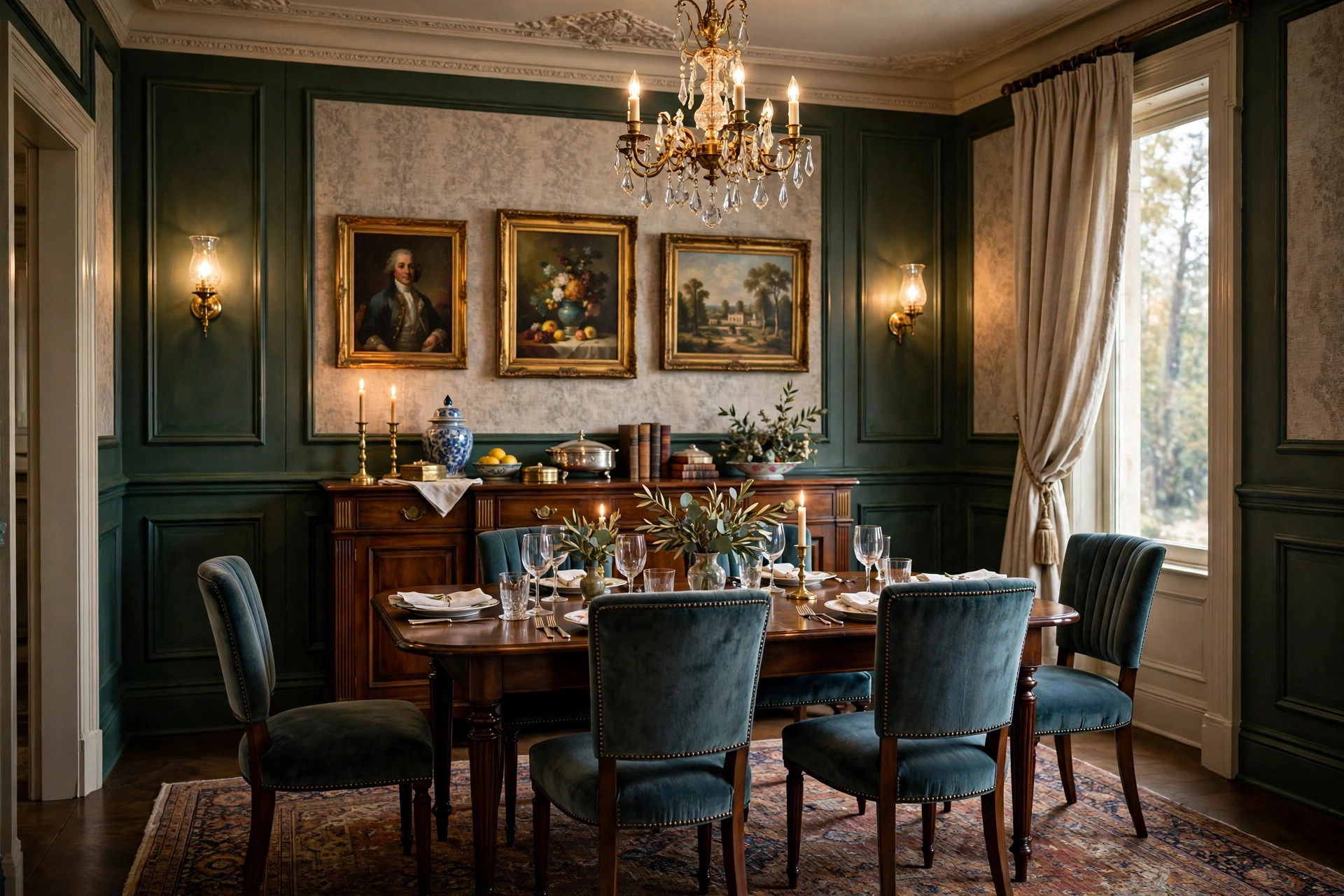
Dining rooms reward depth. A deep green, oxblood, navy or warm plaster wall makes candlelight glow and art look important. If dark walls feel bold, try them on the ceiling or in a high-gloss picture rail detail — or simply start with one wall and live with it through a few dinners. A rug under the table softens sound so conversation stays intimate, but choose one large enough that chairs stay on it when pulled out, and practical enough to forgive a spill without a crisis.
Art in dining rooms is seen at leisure, so hang pieces people enjoy studying: landscapes, portraits, still life with food or flowers. A mirror opposite a window or above the sideboard doubles candlelight beautifully. Curtains that pool very slightly, or end cleanly at the sill in smaller rooms, add the softness hard furniture needs.
Small Dining Rooms, Same Energy
A small dining space can host like a grand one if comfort and light are protected. Choose a round table if corners are tight — it seats flexibly and keeps conversation circular. Banquette seating against a wall saves space and feels inherently convivial. Keep the palette connected to the adjoining room so the dining area borrows its size, and let one chandelier-style pendant, even a compact one, declare that this is a room for occasions, not a table that wandered in.
Investing in the Room Over Time
Build the dining room in the order guests feel it: chairs first, lighting and dimmers second, table and sideboard next, textiles and art as the finishing layer. If a larger piece needs planning, compare staged buying with other options using the free financial calculators — calm arithmetic is very old-money. Above all, use the room. A dining room saved only for rare best occasions gathers dust and intimidation; one used for Sunday roasts, homework celebrations and ordinary friends becomes, dinner by dinner, exactly the room this article describes.
