
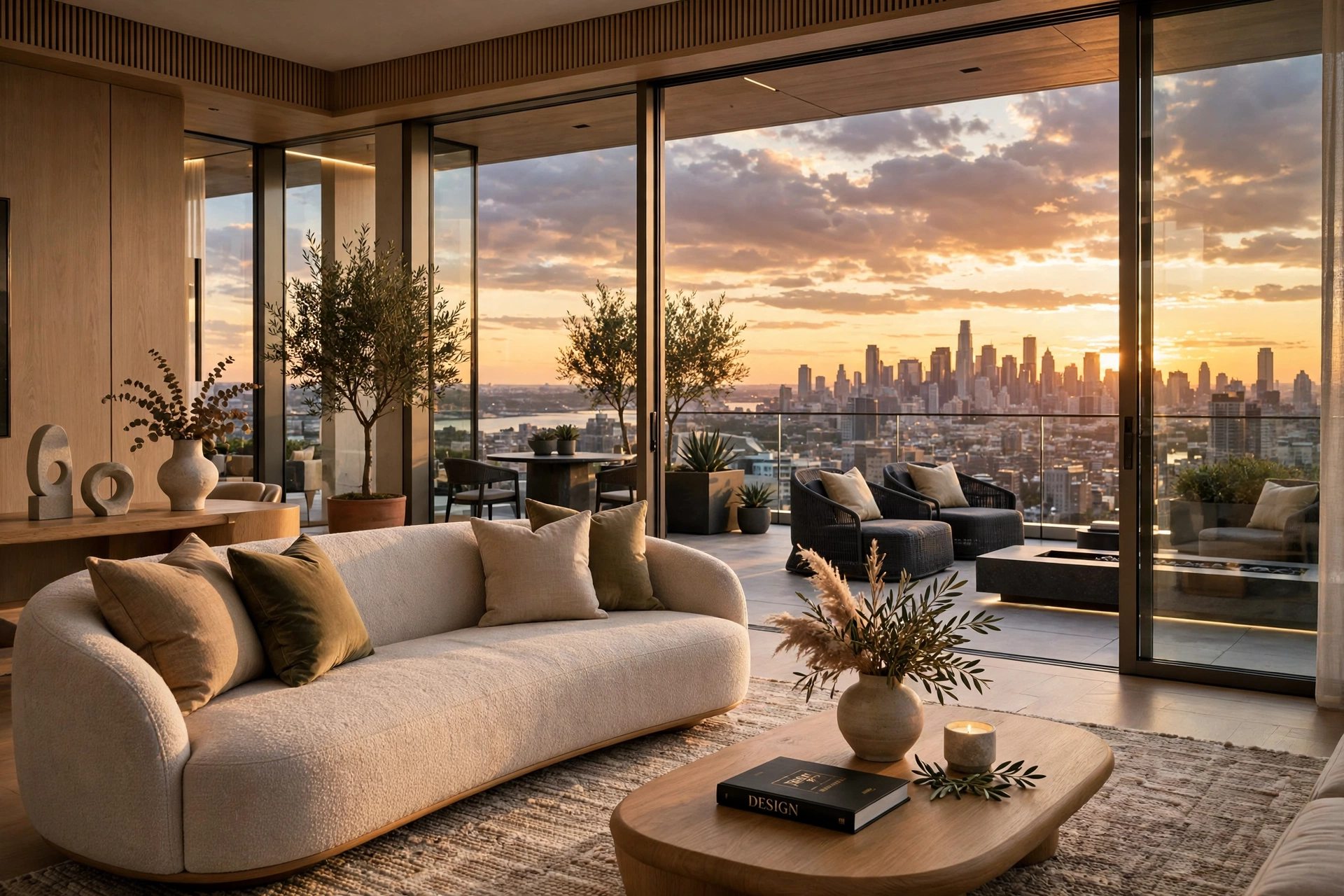
The word penthouse conjures a single image: glass walls, a skyline, a private terrace above the noise of the city. Real penthouse living includes all of that — and also wind, sunlight that needs managing, elevator etiquette, and a surprising sense of calm that comes from living above the street’s daily rush. If you have ever wondered what the top floor actually feels like day to day, or you are furnishing a high-floor apartment and want it to live up to its view, this is the honest tour.
A penthouse is simply the top-floor home in a building, often set back from the facade so it gains a terrace. Some span the whole floor; many share the top level with one or two neighbors. The luxury is less about gold taps and more about four things money genuinely buys up there: light, outlook, privacy, and quiet.
Light From Morning to Night
The first thing residents mention is the light. With nothing above or beside to block it, a penthouse receives sun from angles that lower floors never see. Rooms feel larger, colors read truer, and winter days feel shorter in the best way. South- and west-facing glass brings spectacular evenings — and real heat and glare in summer, which is why experienced penthouse owners treat window coverings as essential infrastructure, not decoration.
Sheer curtains that soften glare while keeping the view, motorized blinds for high or wide windows, and exterior shading where the building allows it are the standard toolkit. Plants love the light too, though leaves can scorch behind south glass, so the lush indoor jungle often lives a step back from the windows in bright, indirect light.
The sky becomes your artwork
On the top floor, the changing sky does the work that paintings do elsewhere. Clouds, storms rolling in, the city lighting up at dusk — residents often keep window walls deliberately simple so the view stays the main event. Furniture is arranged to face outward in at least one room, usually the living area, with seating low enough not to interrupt the sightline.
The Terrace: A Private Garden in the Sky
For many owners, the terrace is the true prize — outdoor space with total privacy, where nobody overlooks you. It becomes a second living room in the warmer months: morning coffee above a waking city is a ritual people describe with genuine affection.
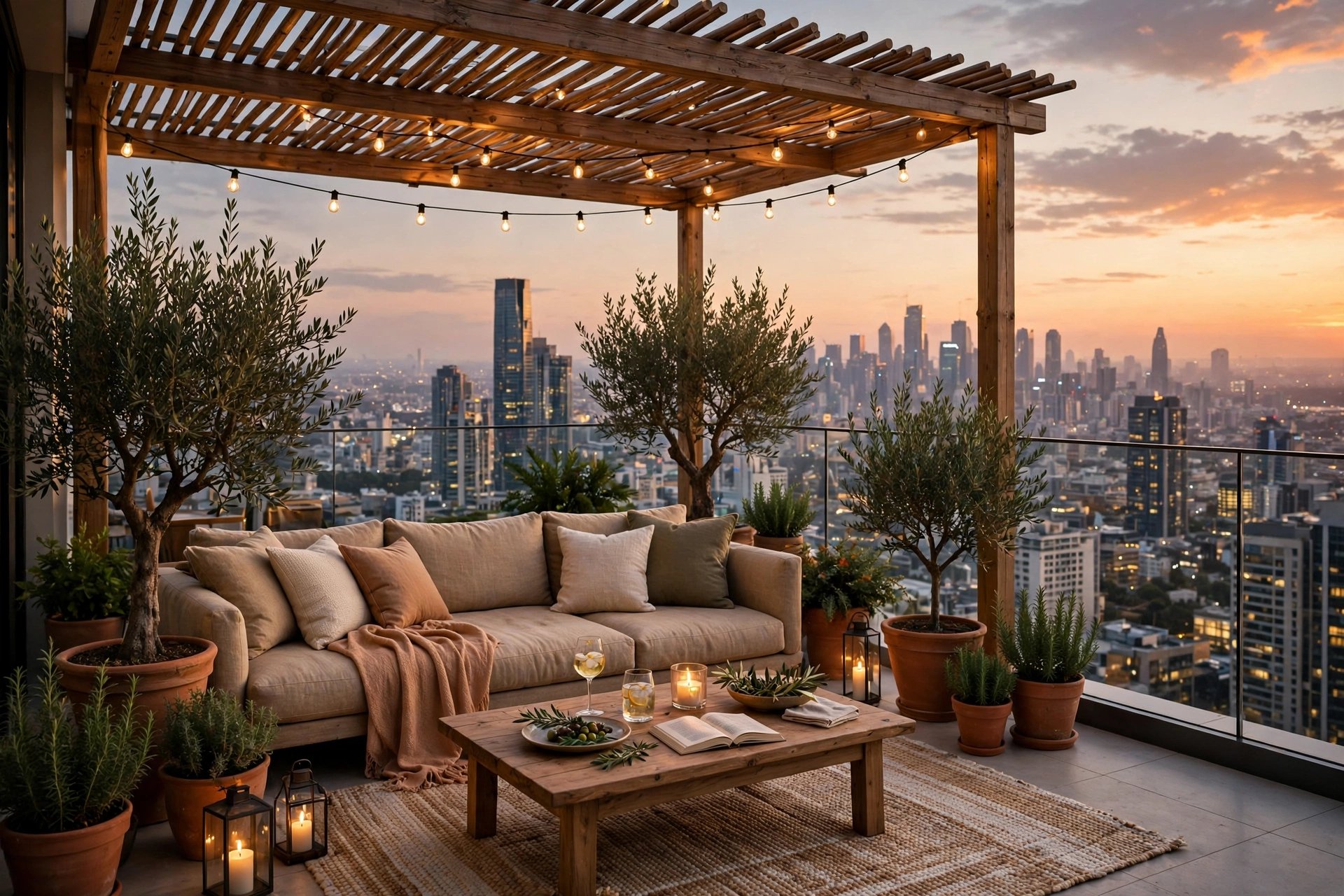
Terrace life has its own rules. Wind is stronger at height, so furniture must be heavy or secured, cushions live in a storage box, and tall plants need sheltered corners and sturdy pots. Drainage and weight limits matter — buildings set rules for planters, hot tubs, and structures, and wise residents check them before dreaming too specifically. Sun umbrellas are often impractical in gusts; a fixed pergola or retractable awning, where permitted, earns its keep.
What thrives up there? Grasses that move in the breeze, olive trees and hardy shrubs in big pots, and herbs by the kitchen door. A small outdoor kitchen or a simple drinks fridge turns the terrace into the default venue for friends — with the skyline doing the decorating.
Quiet, Privacy, and the Elevator Question
Above the top residential floor there are no footsteps overhead — a quiet that apartment dwellers notice immediately. Street noise fades with height, though wind and the occasional siren still visit, and penthouse residents often say the city sounds pleasantly distant, like a film score rather than a conversation.
Privacy works both ways. You are rarely overlooked, but your terrace and windows may be visible from taller neighboring towers, so sheer layers and thoughtful planting still matter in dense districts.
Then there is access. Some penthouses have a private elevator lobby — the lift opens into a small hall that is yours alone — which adds both security and a sense of arrival. Others share the standard lift, and the daily reality includes the same waits and small talk as any floor, just a longer ride. Deliveries, furniture, and renovations all require planning with building management; that grand sofa must fit the lift, a detail more than one buyer has learned the exciting way.
How the Space Is Usually Laid Out
Top floors often inherit the building’s structure in interesting ways: setbacks create terraces on two or three sides, rooflines produce sloped ceilings or skylights in some homes, and the best rooms cluster along the glass. Open-plan living is common because dividing walls would waste the light, with the kitchen, dining, and lounge sharing one long view.
Rooms that work harder
Bedrooms tend to be placed for morning light and quieter aspects. Bathrooms in penthouses frequently get the spa treatment — a tub positioned to soak with a view where privacy allows, walk-in showers, and heated floors that feel essential on a winter morning at altitude. Storage is the quiet challenge: top-floor homes may have fewer full-height walls, so bespoke joinery — window seats with storage, low credenzas under the glass line, a proper dressing area — is common in well-planned examples.
If you are weighing a top-floor purchase or a major furnishing project against other plans, running the numbers in advance helps keep the dream grounded — our financial calculators hub is a practical place to compare purchase, furnishing, and running costs side by side.
The Honest Trade-Offs
A balanced picture matters. Service charges in full-service buildings can be significant, covering concierge, lifts, and facade maintenance. Heat rises, but so does exposure: penthouses can be warmer in summer and feel storms more vividly. Roof maintenance is the building’s responsibility in most arrangements, yet leaks, when they happen anywhere, happen to the top floor first — another reason residents value a responsive building team.
None of this dims the appeal for those who love it. It simply means penthouse living rewards people who enjoy building services, plan purchases around lift dimensions, and treat sun and wind as design materials rather than afterthoughts.
Decor That Suits the Top Floor
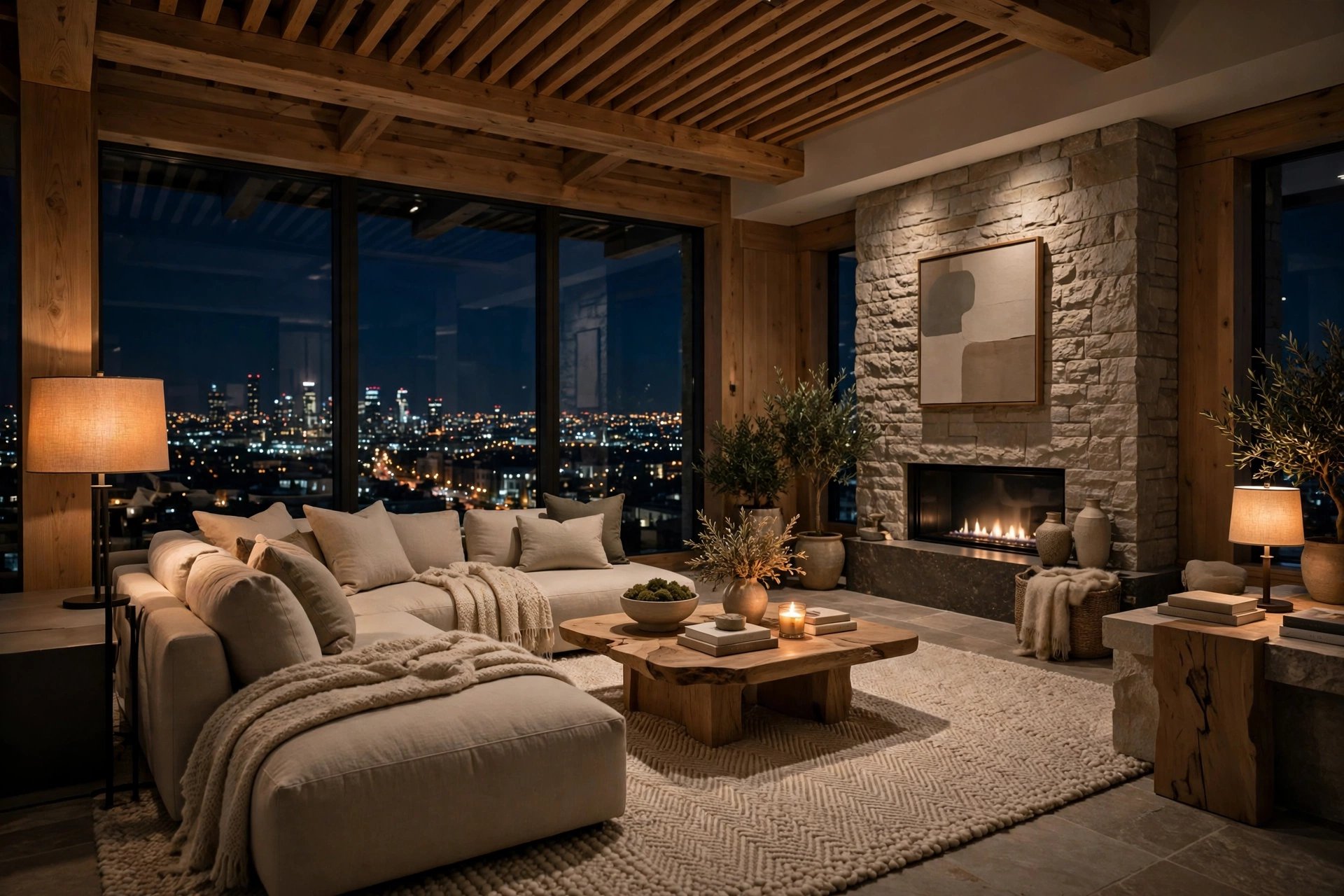
The decorating rule is restraint with texture. Low-profile sofas and chairs keep sightlines open. A limited palette — warm whites, stone, timber, one metal finish repeated — lets the view supply the color. Large rugs define zones in open plans without walls. Lighting is layered and dimmable, because at night the glass turns to mirror and a softly lit interior reflected against the city lights is one of penthouse living’s great pleasures.
Art goes on the interior walls, where it can be lit properly, and often at a larger scale than in a standard apartment — high ceilings and long walls can carry it. Books, ceramics, and one or two sculptural pieces provide the personality that minimal architecture deliberately leaves room for.
A Day on the Top Floor
A typical day explains the appeal better than any brochure. Morning light arrives early and fills the kitchen before the city below is fully awake, so breakfast feels unhurried even on a workday. Working from home means a desk with a horizon instead of a wall, and meetings broken by stepping onto the terrace for air. Evenings are when the penthouse earns its reputation: cooking while the sky changes color, watching lights come on across the city, and eating outside without ever booking a table or sitting in traffic. None of these moments is dramatic on its own. Together, repeated daily, they are why residents rarely want to move back down.
Who Penthouse Living Suits Best
It suits people who entertain at home, who work from home and crave light, who love a city but want to sleep above its noise, and who will genuinely use a terrace. It suits downsizers who want one-level living with a lift, and it suits anyone for whom coming home, rising above the street, and watching the light change is a daily pleasure rather than a novelty.
For more high-rise inspiration — including how to decorate with floor-to-ceiling glass and how to make a smaller top-floor home feel grand — explore the Millionaire Lifestyle category. The top floor is not magic; it is light, air, and outlook, furnished with care. For the right household, that is more than enough.
