
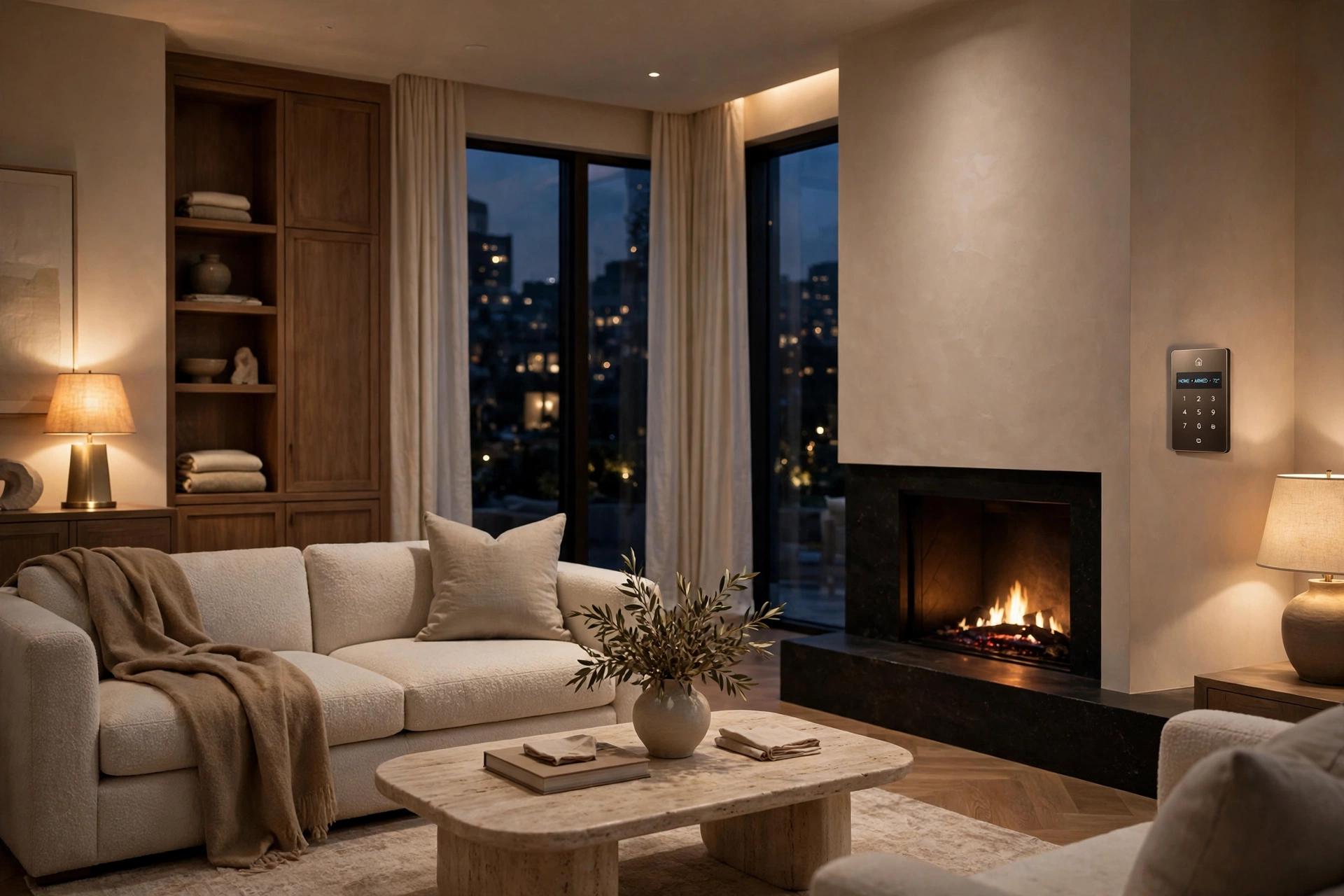
Walk into a truly luxurious modern home and you will notice something surprising: you can barely see any technology at all. There are no glowing boxes under the television, no tangle of remotes on the coffee table, no plastic sensors stuck to the walls. Yet the lights adjust themselves as the evening comes in, music follows you from room to room, the temperature is always exactly right, and the blinds glide shut at sunset without anyone touching a switch. That invisibility is the point. Smart home luxury is not about showing off gadgets. It is about technology that has been designed into the architecture so thoroughly that the house simply feels calm, responsive and effortless to live in.
The Golden Rule: Hide the Tech, Keep the Feeling
Budget smart homes tend to add devices one at a time — a smart speaker here, a video doorbell there, a few app-controlled bulbs. The result works, but it looks and feels like a collection of gadgets. High-end homes take the opposite approach. The system is planned at design stage, wired centrally, and finished with controls that match the interior: slim keypads in stone or metal finishes, touchscreens that sit flush with the wall, or no visible controls at all where sensors and schedules do the work instead.
This planning-first approach has a practical benefit as well as an aesthetic one. A centrally designed system is more reliable than a pile of separate apps, and it can be maintained and upgraded without redecorating. If you are renovating, the lesson still applies at a smaller scale: decide what you want the room to do first, then choose the fewest devices that do it well, and hide every cable, hub and charger you reasonably can.
Lighting That Thinks in Scenes
Lighting is where smart luxury is felt most strongly, because light shapes mood more than any single piece of furniture. Instead of individual switches for individual fittings, high-end homes use scenes. A morning scene raises blinds and brings kitchen lights up bright and cool. A dining scene dims pendants, warms the colour temperature and leaves a soft wash over artwork. A movie scene closes blackout blinds, dims everything to a glow and turns on the screen — all from one button or one voice command.
What makes lighting feel expensive
Three details separate luxury lighting from ordinary smart bulbs. First, dimming quality. Good systems dim smoothly to very low levels without flicker or sudden steps. Second, colour temperature. Warm-to-dim fittings that become more golden as they dim mimic candlelight and firelight, which is why evening rooms feel so comfortable. Third, layering. Ceiling lights, wall washers, shelf lighting, table lamps and floor-level guide lights are controlled together, so a scene shapes the whole room rather than just making it brighter or darker.
Keypads deserve a mention of their own. Engraved buttons labelled with words like Welcome, Dining, Relax and Goodnight are easier for guests than a wall of identical switches, and they look like part of the interior rather than part of the wiring. Motion and daylight sensors handle the in-between moments — hallways that light gently at night, bathrooms that never blast you with full brightness at 2 a.m.
Climate, Blinds and the Comfort You Never Notice
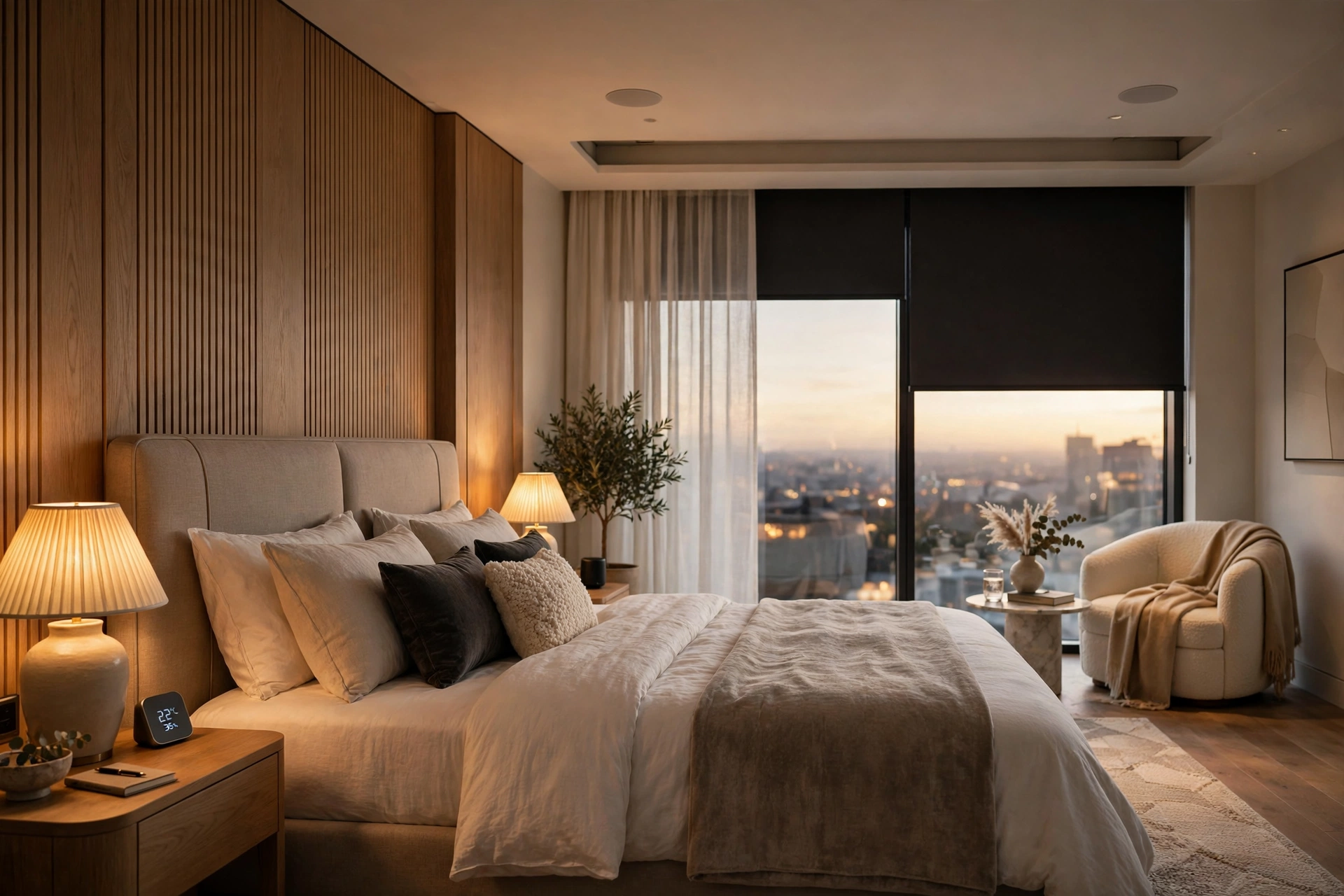
True comfort is invisible when it works. Smart climate systems in luxury homes manage heating, cooling and ventilation room by room, learning occupancy patterns and adjusting before you feel a change. Underfloor heating in bathrooms, silent air conditioning in bedrooms and fresh-air ventilation that keeps a sealed, well-insulated house feeling crisp all belong to the same idea: the house maintains the perfect background conditions so you never have to think about them.
Motorised blinds and curtains are the other half of this comfort system, and they are one of the most satisfying upgrades to live with. Sheer blinds soften glare during the day while keeping the view. Blackout blinds in bedrooms open gradually with a morning routine instead of an alarm jolt. On large glass walls — a signature of modern luxury architecture — automated shading is not a luxury extra at all. It is what makes the glass comfortable to live with in summer sun and winter evenings alike, protecting furniture and artwork from fading at the same time.
If you are costing a renovation in stages, shading and lighting are usually the smartest first investments because you feel them every single day. You can model phased upgrade budgets alongside other home projects using the Financial Calculators hub, which helps you compare doing everything at once with spreading the work over a year or two.
Invisible Audio and Cinema Without the Clutter
Sound is the second sense luxury homes design for. Multi-room audio in a high-end installation uses in-ceiling or in-wall speakers, carefully positioned and calibrated, so music fills a space evenly at low volume instead of blasting from one corner. You hear it clearly while cooking, dining or working, yet conversation never has to compete with it. Playlists and radio follow you between rooms, and outdoor speakers extend the same system to the terrace and pool.
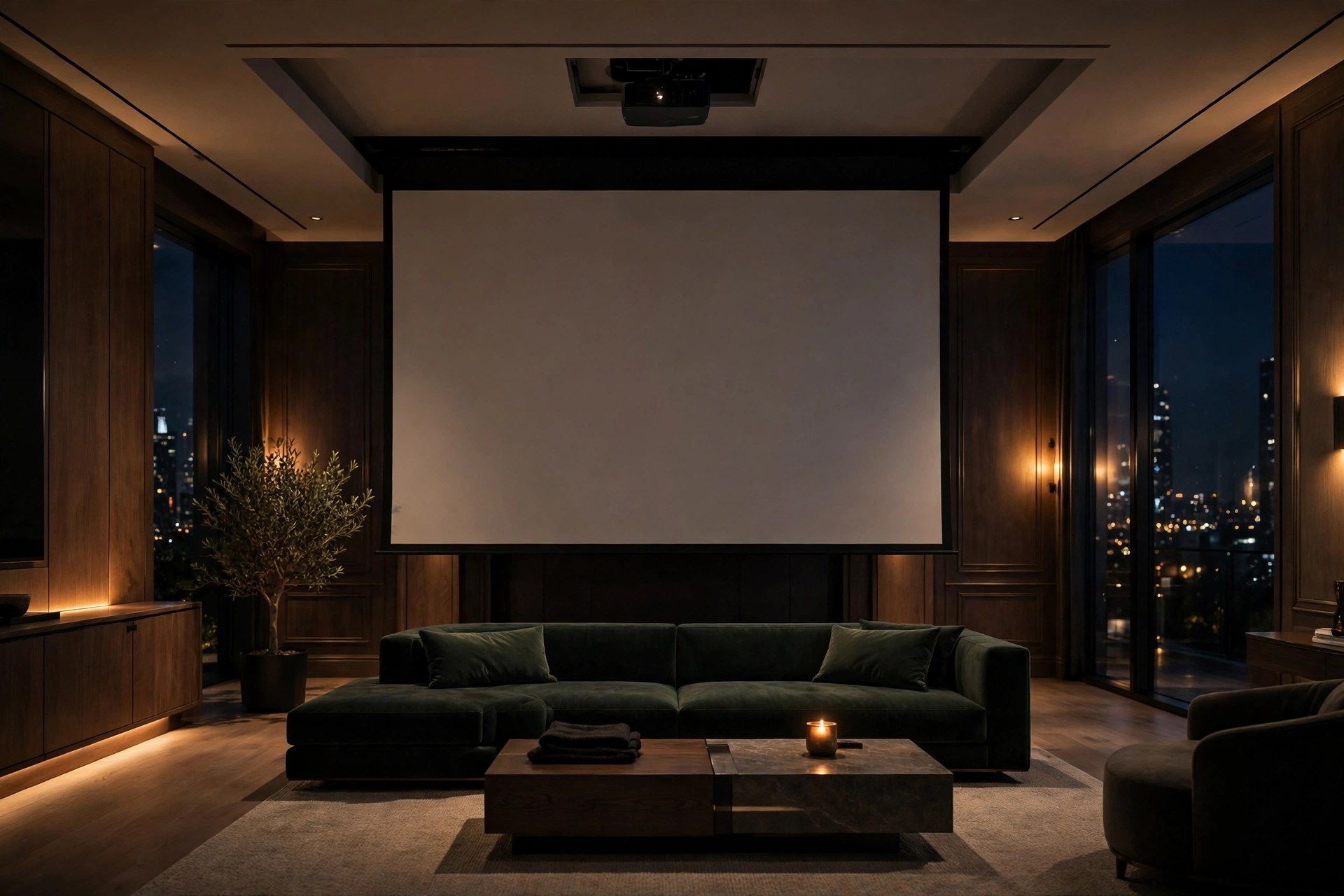
Home cinema has gone the same invisible route. Dedicated cinema rooms still exist, but many luxury living rooms now hide the cinema entirely: a projector concealed in the ceiling, a screen that descends only for film night, speakers behind acoustic fabric, and equipment in a ventilated rack in a cupboard or plant room. By day the room is a calm lounge. By night it transforms in under a minute. The discipline is the same everywhere in the house — media equipment lives in a central rack, not under every screen, so rooms stay uncluttered and updates happen in one place.
Small details, big difference
Some of the most appreciated smart touches are the smallest. Heated bathroom mirrors that never steam up. Taps and showers that deliver a preset temperature instantly. A kettle or coffee machine ready when the morning scene runs. Charging drawers that hide phones and tablets overnight, with cables managed inside the drawer. Television mirrors in bathrooms and dressing rooms that are mirrors until switched on. None of these will impress a visitor for long — and that is exactly why residents love them. They remove daily friction without demanding attention.
Security That Feels Like a Welcome, Not a Fortress
Luxury security works best when guests barely notice it. Cameras are small, well-placed and integrated with lighting, so the approach to the house is bright and clear rather than floodlit like a car park. Gates and doors use fingerprint, code or phone-based entry, which removes lost keys and lets owners grant temporary access to staff, deliveries or guests without handing over physical copies. Video entry systems show who is at the gate on the same touchscreens that control the lights, whether you are in the kitchen or away from home.
The smarter layer is presence simulation and awareness. When the house is empty, lights, blinds and audio follow realistic patterns. Leaks, smoke and unusual activity trigger alerts before they become damage. Importantly, good systems are designed to fail gracefully: doors can still be opened, lights still work manually, and the house never becomes unusable because a network connection dropped. Reliability, not novelty, is the real luxury standard.
Control Without the Remote-Control Drawer
With so much happening in the background, control needs to be simpler, not more complex. The best luxury systems offer three layers. Automatic behaviour handles most of life: schedules, sensors and scenes tied to sunrise, sunset and occupancy. Simple physical controls handle the moment: one keypad, one labelled button, no manual required. An app handles the exceptions: checking the house while travelling, letting someone in remotely, or adjusting a schedule. Voice control sits on top for convenience, but well-designed homes never depend on it — guests, children and grandparents should be able to use every room without learning a single command.
This is also where restraint matters. Automating something you adjust twice a year adds complexity for no benefit. Automate what happens daily — light, shade, temperature, arrival, departure, bedtime — and leave the rare and personal things manual. A luxury system should reduce the number of decisions you make at home, not increase them.
How to Borrow the Approach at Any Scale
You do not need a full architectural installation to live this way. Start with one room and one routine. A bedroom with motorised blackout blinds, warm dimmable lighting on a single bedside control and a phone charging drawer will teach you what you actually value. Choose one control system and stick to it rather than mixing five apps. Hide cables relentlessly, label what remains, and put chargers and routers out of sightlines. When you renovate, run spare cabling and power to the places future devices will live — behind televisions, in ceilings, beside windows for blinds — because adding wire during building work is simple and adding it afterwards is not.
Above all, judge smart technology by how a room feels at 7 p.m. on an ordinary Tuesday, not by how impressive the demonstration is. The homes that get this right feel quieter, warmer and easier in a way visitors struggle to describe. They just know they relaxed the moment they walked in.
Explore more ideas for calm, considered luxury living in the Millionaire Lifestyle collection, from architecture and lighting to offices and outdoor rooms — each one focused on the details that make a home feel genuinely well designed, rather than simply well equipped.
