
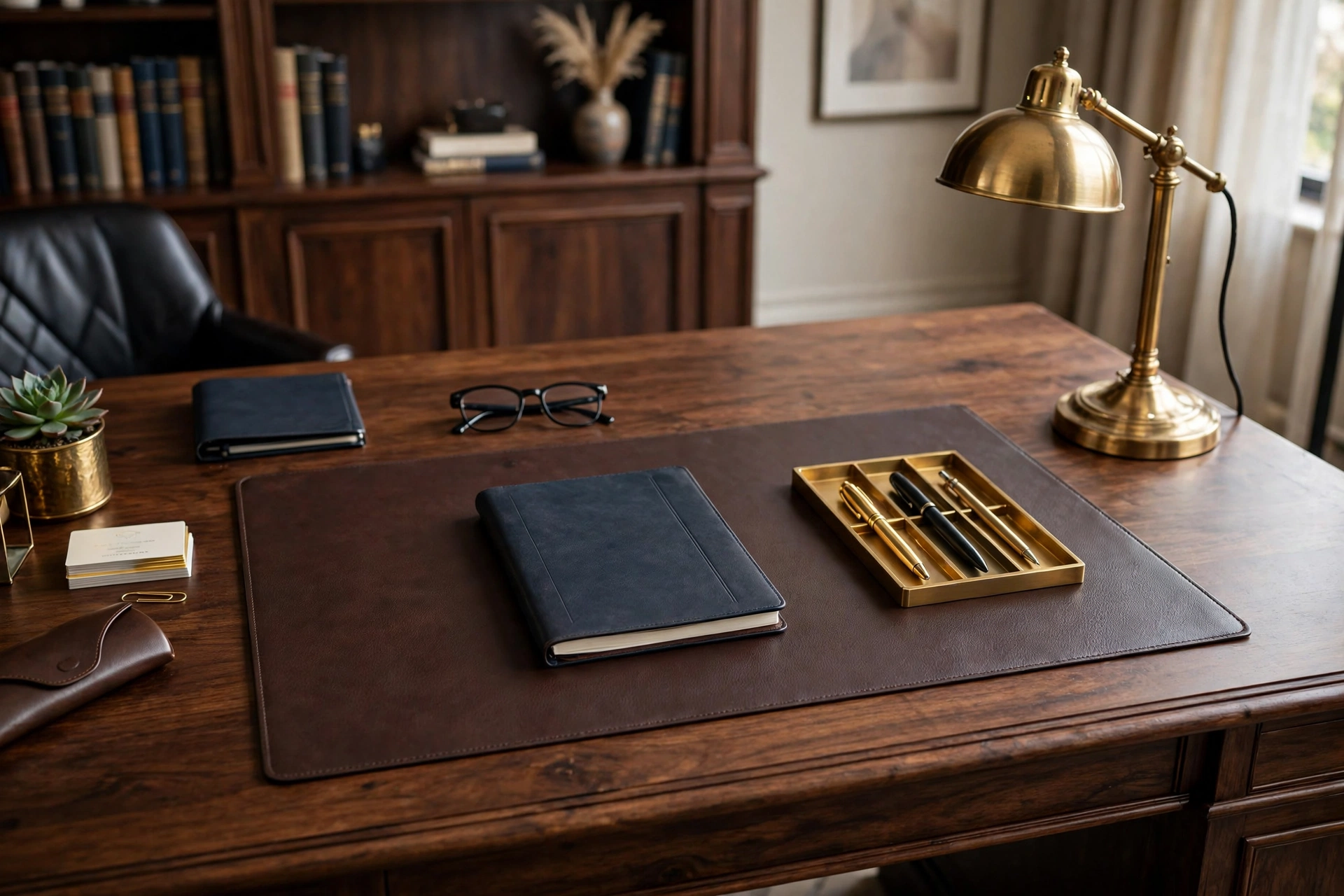
There is a particular kind of desk that changes how a room feels the moment you walk in. The wood is deep and warm, the metal details catch the light with a soft brass glow, the surface is clear except for a few deliberate objects, and everything about it suggests decisions are made here. That is the executive desk setup — less a furniture arrangement than a working philosophy. It says that order is a form of self-respect, that tools should be beautiful as well as useful, and that the place where you spend your most focused hours deserves the same care as any other room in the house. The encouraging truth is that this look is built from clear principles, not from any single expensive purchase, and it can be assembled gradually, piece by piece.
Start With the Desk Itself
The desk is the architecture of the setup, and in the executive tradition it is substantial. A generous work surface — wide enough for a screen or laptop, an open notebook and a document in play at the same time — prevents the cramped, reactive feeling of small desks. Depth matters as much as width. A deeper desk lets you push technology back, keep a clear writing zone in front of you, and sit at a comfortable distance from your screen, which your posture will thank you for by late afternoon.
Why wood still wins
Rich wood remains the defining material for a reason. Walnut, mahogany, stained oak and other deep-toned timbers bring warmth, grain and a sense of permanence that glass and white laminate cannot match, and they age gracefully, gaining character rather than showing every scratch as damage. A solid top, or a quality veneer over a substantial frame, should feel cool, smooth and heavy under your hands. If you are choosing new, prioritise the top surface and the drawers you touch daily; if you are restoring or buying second-hand, a well-made older desk with honest wear often has more presence than a lightweight new one. Protect the surface with a leather or felt desk pad in a deep green, black, brown or oxblood. It defines the working zone, softens sound, gives your pen and mouse a perfect surface, and signals instantly that this desk is curated, not cluttered.
Position completes the foundation. The executive layout faces the desk into the room with space behind the chair and a composed backdrop — shelves, panelling or art — rather than pushing the desk against a wall. If your room forces a wall-facing position, make the wall worth facing: pinboard in a framed finish, art at eye level, or shelves styled as carefully as any in the house.
Brass: The Accent That Ties It Together
Brass is the jewellery of the executive desk, and its power lies in repetition. One brass object looks like an accident. Four or five — lamp, pen cup, tray, clock, drawer handles, the frame of a photograph — look like a language. The warm, low shine of brass flatters wood perfectly, sitting in the same tonal family while adding light and detail, and unlacquered brass develops a soft patina over time that many owners prize as a sign of real use rather than neglect.
Choosing and placing brass pieces
Start with the lamp, because it is both the largest brass presence and the most functional. A classic banker’s style lamp, an architect’s lamp in brushed brass, or a simple column lamp with a linen shade all work; what matters is warm, dimmable light aimed at the work, not the eyes, and a silhouette that suits the desk’s proportions. Add a heavy pen tray or cup, a letter tray or document box, and a small catch-all tray for watch, keys and glasses. A desk clock in brass and glass removes one more reason to reach for your phone. Keep finishes consistent — all brushed, or all polished — and let other metals in the room, such as black steel shelving or chrome technology, play supporting roles rather than competing at the same volume.
Brass also teaches the setup’s central discipline: everything on the desk should be there on purpose. The classic executive surface holds remarkably few things. Lamp, writing tools, notebook or planner, one tray for live documents, a clock, perhaps a photograph or small sculpture, and the technology you are actively using. Everything else lives in drawers. That emptiness is not minimalism for its own sake. It is working space, kept clear so the next task can begin without first excavating the last one.

Technology, Handled With Restraint
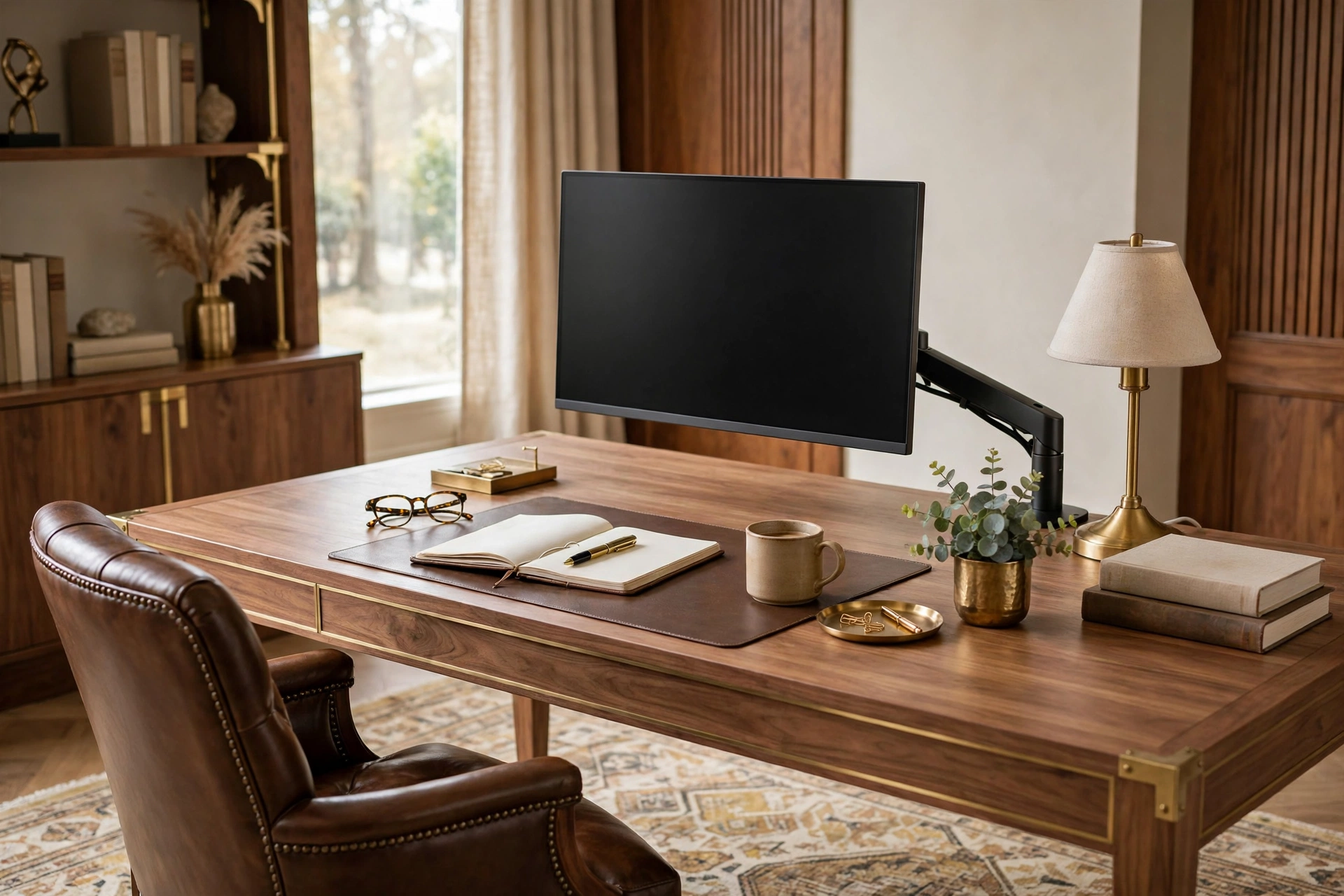
An executive desk still has to function as a modern workstation, and the art lies in integrating technology without letting it dominate. A single high-quality screen on a slim arm beats two mismatched monitors on chunky stands, both visually and ergonomically, though dual screens earn their place if your work genuinely needs them — in which case, match them, align them, and cable them as one installation. A laptop on a stand with a separate keyboard achieves a similar composed look for less furniture. Choose peripherals in quiet finishes: a keyboard and mouse in black, grey or wood tones, without gaming lights or visual noise.
Cables are where executive setups are won or lost. Route everything through a cable tray fixed beneath the desk, use a single charging station inside a drawer for phones and earbuds, and keep only the necessary leads visible, ideally dropping straight down behind the desk in a neat bundle. The test is simple: from the doorway, you should see wood, brass and order — not a waterfall of black cable. Video calls benefit directly. With the desk facing the room, a camera at eye level on the screen, warm lamp light to one side and your ordered shelves behind you, you present exactly the image the setup was designed for.
If you are upgrading in stages — desk first, then chair, then technology — it helps to plan the sequence against your wider budget. The Financial Calculators hub offers simple tools for comparing staged purchases with a single larger spend, so you can build the setup steadily without guesswork.
The Chair and the Ground Beneath
No desk setup survives a bad chair. Executive chairs combine genuine ergonomic support with materials that suit the room: leather or quality fabric, a frame that echoes the desk, and proportions generous enough to sit back and think in. Test any chair for a full working day if you can; comfort at hour six is the only comfort that counts.
Underneath, a rug defines the territory. A flat-weave or low-pile rug in a deep, forgiving pattern protects the floor, softens acoustics and anchors desk and chair as one composition. Size it generously, so the chair stays on the rug when you lean back.
Order as a Daily Ritual
Materials create the look, but ritual creates the reality. Executive desks stay immaculate because their owners run small systems, not because they are naturally tidy people. The most useful is the end-of-day reset: clear the surface completely, file or tray every document, charge devices in their drawer, straighten the chair, and write tomorrow’s first task on the open notebook. Five minutes, every evening. The morning reward is a desk that looks like the photograph — wood, brass and calm — ready for focused work instead of yesterday’s leftovers.
Systems that keep order effortless
Support the ritual with structure. Drawers should have assigned jobs — stationery, live projects, personal items — each with simple dividers. Adopt a one-touch rule for paper: act on it, file it or recycle it when it lands. Digital order matters equally: an empty desktop screen, consistently named files and silenced notifications extend the same calm to the screen.
Personal Touches That Stay Professional
The final layer is personality, handled with restraint. One framed photograph. One object with a story — a brass compass, a stone from a meaningful place, a favourite book on a stand. A small plant or a vase with a single stem. Quality notebooks and a pen you enjoy using turn ordinary tasks into small pleasures. The test for every addition is double: does it help the work, and does it deserve the space? If it passes neither test, it belongs in a drawer or another room. Curated scarcity is what separates an executive desk from a merely expensive one. Dress the wider view too — the wall your eyes rest on, the shelf a visitor sees first — so the office feels composed from every seat, not just the doorway.
Building Yours, Piece by Piece
You do not need to buy this setup in one weekend. Begin with position and clearance: face the room, clear the surface, add a desk pad. Next, fix light and cables. Then upgrade touchpoints in order of contact: chair, pen and notebook, tray and clock. Finally, the desk itself, chosen for decades rather than a season. At every stage the desk remains fully usable.
That is the real lesson of the executive desk. Rich wood and brass are not decoration on top of work. They are the visible form of a deeper decision — to work in order, with good tools, in a place that respects the hours you spend there.
Discover more workspaces in this spirit in the Millionaire Lifestyle collection, with practical details you can adapt to your own desk and budget.
