
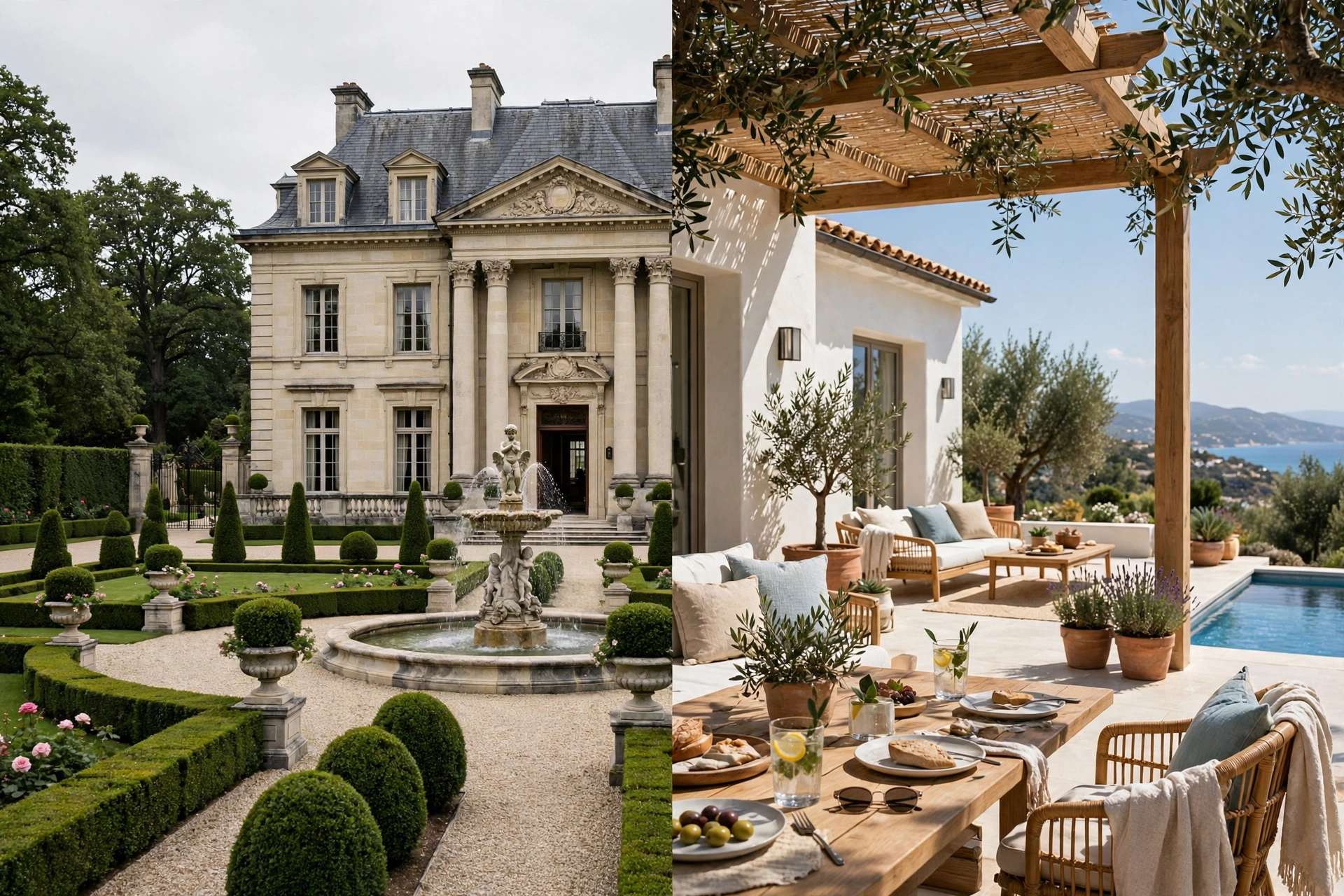
Villa and mansion are used almost interchangeably in property listings, usually to make a house sound grander than it is. In reality, they describe two different ways of living. A mansion is defined mainly by scale and formality — a large, impressive residence, traditionally in or near a city or on a substantial private plot. A villa is defined by its relationship with landscape and leisure — a house designed around outdoor living, views, and retreat, with roots in the countryside estates of the Mediterranean.
Neither is better. They suit different climates, different families, and different ideas of a good day. This guide compares them honestly — layout, lifestyle, entertaining, upkeep, and cost of ownership in broad terms — so you can work out which one genuinely fits your life, not just your imagination.
What Actually Makes a Mansion a Mansion?
A mansion is, at heart, a big house with presence. Think multi-storey, formally arranged rooms, a strong street or entrance facade, and space for specialised rooms: library, cinema, gym, staff accommodation, multiple reception rooms. Mansions grew up in cooler and temperate climates and in cities, where life happens indoors for much of the year and the house must contain everything.
The mansion experience is about arrival, entertaining at scale, and privacy behind walls. Life is vertical and interior: grand halls, suites upstairs, service spaces tucked behind the scenes. Grounds matter, but the building is the star.
What Actually Makes a Villa a Villa?
A villa turns the mansion inside out. Rooms are arranged around outdoor life — courtyards, terraces, loggias, and the pool — often on one or two low storeys spread across the plot. Walls of glass open living spaces to shaded outdoor rooms. The building is a frame for landscape, light, and climate.
The villa experience is about retreat and ease: morning coffee on a terrace, afternoons by the water, dinner outside as the heat leaves the day. Villas belong to warm climates and holiday landscapes — the Mediterranean, the tropics, desert resorts — but the villa idea now travels anywhere summers are real.
Layout and Daily Life Compared
Picture an ordinary Tuesday in each. In a mansion, the day moves between defined rooms: kitchen and breakfast room, study, gym, living room, each with a door and a purpose. That structure suits people who work from home seriously, host formal dinners, collect things that need rooms, or live somewhere with long winters.
In a villa, the day flows. Kitchen, living space, and terrace act as one continuous zone; the pool is a room without a roof; bedrooms are often pavilions or wings that give everyone retreat space. That suits people whose ideal day is outdoors, who entertain casually and often, and who want guests — or teenagers — to have independence without distance.
Families disagree here in predictable ways. Mansion life keeps everyone under one organised roof, which many parents of younger children prefer. Villa life spreads people out, which suits multi-generational living, older children, and households that host long-staying guests.
Entertaining: Formal Spectacle vs Effortless Gathering
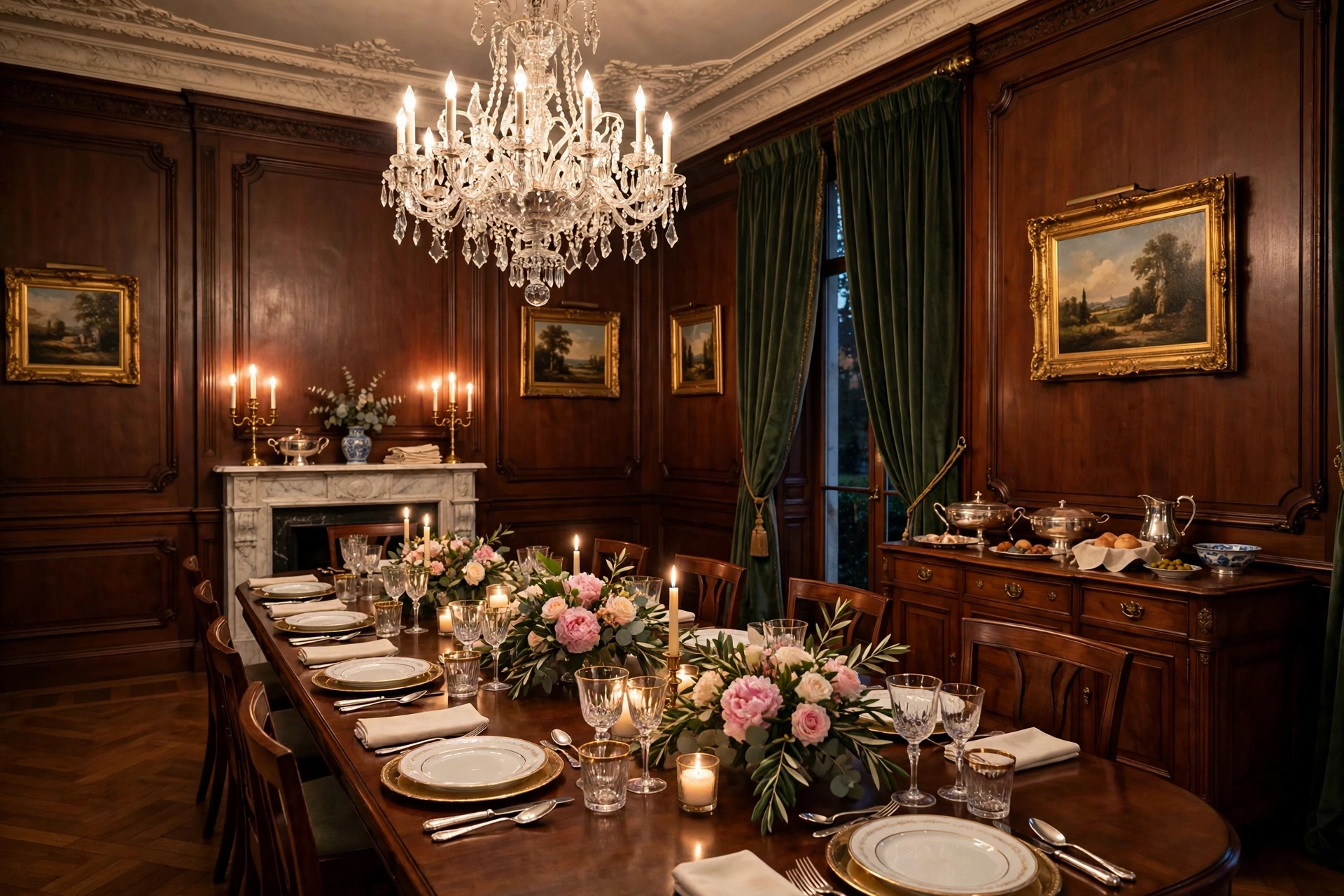
Both homes entertain beautifully — in opposite styles. A mansion does occasions: the entrance hall, the dining room set for fourteen, drinks in a panelled library. If your social life includes formal dinners, charity evenings, or business entertaining where impression matters, the mansion’s stagecraft is built for you.
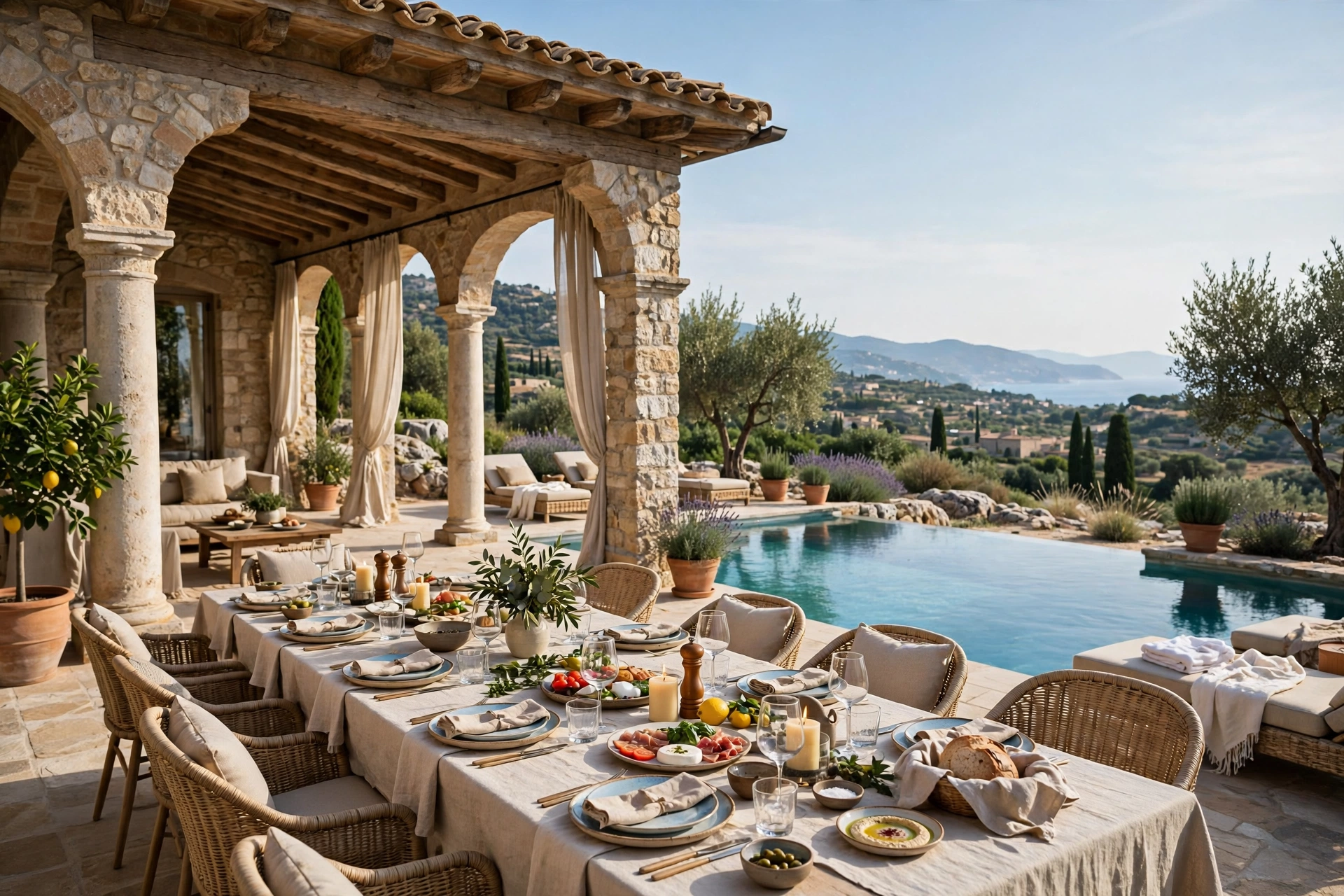
A villa does gatherings: long lunches that drift from terrace to pool to shade, outdoor kitchens working all afternoon, music and conversation under a loggia at midnight. If your dream is barefoot, generous, and unhurried — friends arriving Friday and the house absorbing them without effort — the villa wins easily.
Be honest about which one you actually do. Many buyers purchase the fantasy of formal entertaining and then live, happily, in a villa style — in a house that fights them for it.
Climate Is Not a Detail — It Is the Decision
This is the factor listings underplay. Villas are climate machines for warmth: shade, airflow, outdoor rooms, and water only deliver their magic where the weather cooperates for much of the year. A villa in a cold, wet climate can become a corridor house with a view of an unused pool.
Mansions are climate machines for containment: insulation, layered rooms, and interior amenities carry life through winter. In a hot climate, a traditional mansion layout can feel heavy unless redesigned with courtyards and shade. As an illustrative example, imagine the same family budget spent two ways — a compact mansion in a temperate city versus a sprawling villa in a warm coastal region: the first buys interior space and year-round rooms, the second buys terraces, pool, and garden. Neither is the smarter purchase; they are answers to different weather and different weeks.
Upkeep, Staffing, and Running the Place
Ownership effort differs as much as lifestyle. A mansion concentrates its upkeep in the building: more rooms, more systems, more roof, more facade — but one structure, usually manageable with cleaning help and periodic maintenance. Gardens are often formal and contained.
A villa spreads upkeep across the plot: pool care, irrigation, outdoor kitchens, terraces, and landscaping through a long growing season. Outdoor living is not low maintenance; it is maintenance relocated outside. Villas in resort areas are often supported by local management services, which suits owners who visit seasonally. If you will live there full-time and dislike managing outdoor work, price that honestly into the villa dream. Running the numbers for either path is easier with the planners in our financial calculators hub, where you can compare big ownership decisions side by side.
Privacy, Security, and Setting
Mansions typically achieve privacy with walls, gates, and setbacks, often in established residential areas with neighbours nearby and services close. Villas achieve privacy with land and landscape — distance, planting, and plot position — often in quieter or more rural settings where you trade convenience for calm.
Ask yourself which isolation you prefer: private but connected, or secluded but self-sufficient. Also consider guests and family logistics — airports, schools, hospitals, and the school run have settled more luxury purchases than any infinity edge.
Resale and Flexibility
Without inventing market claims, the practical point is breadth of appeal. In city and suburban luxury markets, the mansion format is the familiar one and photographs as “the big house” buyers expect. In holiday and warm-climate markets, the villa format is the expectation, and a formal mansion layout can feel like the odd one out.
Flexibility also differs. Mansion interiors reconfigure well — rooms change jobs as families change. Villas offer a different flexibility: pavilions and annexes convert easily to guest houses, studios, or accommodation for extended family. Think about your next twenty years, not just your next holiday.
A Simple Decision Checklist
Choose the mansion if most of these sound like you: your climate is cool or mixed; you work from home and need real, closable rooms; formal entertaining is genuinely your style; you want everything under one roof; being near a city matters.
Choose the villa if most of these sound like you: your climate is warm for much of the year; your best days are spent outdoors; you entertain casually, often, and at length; you host guests who stay; you want the house to feel like a permanent holiday.
If you scored both lists evenly, look at hybrid designs — a substantial house with a true outdoor room, a covered loggia, and a pool treated as part of the architecture. Many modern luxury homes quietly blend the two, whatever the listing calls them.
The Name Matters Less Than the Fit
Villa versus mansion is not a contest of grandeur. It is a question about weather, rhythm, and how you honestly spend a day. The right luxury home is the one whose layout disappears into your life — where mornings, work, guests, and rest all have a natural place. Explore both styles in depth across our Millionaire Lifestyle guides, then choose the house that fits the life, not the label.
