
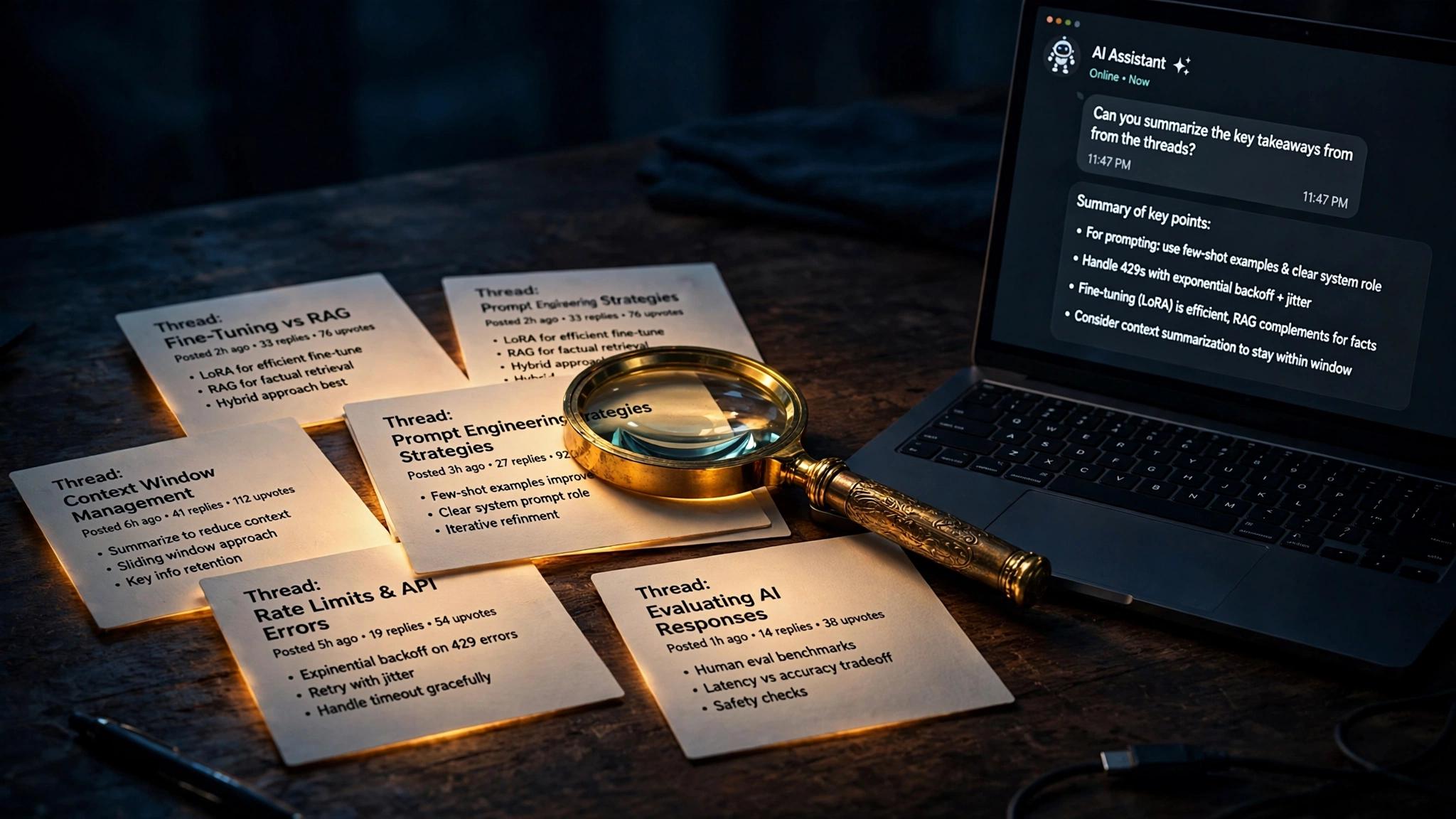
Every content decision in this roadmap — which niche, which video, which pin, which product — depends on one skill: knowing what real people actually want, in the words they actually use. Guessing is the default method, and it’s why most side hustles publish into silence. This ai niche research method replaces guessing with a 30-minute protocol: mine Reddit, where millions of people describe their problems unfiltered, then use AI to organise what you found into a niche map you can build from.
The honest frame: research improves your odds; it does not guarantee a winning niche. A researched topic can still flop, AI summaries can still misread a community, and thirty minutes of reading is a starting sample, not a census. What the protocol guarantees is that your decisions stop being coin flips — you will choose niches, topics, and product angles with evidence in hand, which is the entire difference between Stage 1 flailing and Stage 1 building. It pairs with the other Reddit playbook in this series — the Side Hustle in 2026 Using AI roadmap’s 90/10 participation rule — because the communities you research today are the ones you’ll belong to tomorrow.
Why Reddit Beats Every Other Research Tool
Google Trends tells you that people search. Keyword tools tell you how much. Neither tells you why — the frustration, the failed attempts, the exact sentence a person types at 1 a.m. when the problem is keeping them awake. Reddit threads contain all of it, in public, searchable, and brutally honest because the accounts are pseudonymous.
Three properties make it unmatched for a beginner with no budget. It’s specific: not “people want fitness content” but “I keep quitting meal prep because Sunday cooking takes four hours.” It’s current: sorting by new shows this week’s problems, not last year’s. And it’s verifiable: every claim you extract links back to a real thread you can reread. AI is the accelerator on top of this raw material — and raw material quality is what most people skip.
The 30-Minute Protocol
Set a timer. Research expands to fill whatever time you give it, and this protocol is designed to end with decisions, not tabs.
- Minutes 0–5 — Find the rooms. Search Reddit for your seed topic plus words like “help,” “advice,” “how do I.” Note the 3–5 subreddits where your target person actually asks questions (not just where content gets posted). Check member counts and recent activity — a living 40,000-member sub beats a dead 400,000 one.
- Minutes 5–15 — Mine the pain. Sort each subreddit by Top → This Year, then Top → This Month. Open the ten most-upvoted question and complaint threads. Save the exact titles and the top comments. You’re collecting three things: recurring problems, the words used for them, and what solutions people say they’ve already tried and abandoned.
- Minutes 15–25 — Extract the patterns. Pull out every repeated question (asked three or more times across threads), every “I wish there was a…” statement, and every purchase mention — tools, books, courses people bought or regretted. These are your content topics and your product signals, in the audience’s own vocabulary.
- Minutes 25–30 — Synthesise with AI. Hand the AI your collected titles and comments and ask for structure, not conclusions (prompts below). Output: a one-page niche map — top problems, exact phrases, underserved angles, and your first ten content topics.

The Prompts That Turn Threads Into a Niche Map
Paste your collected material into your AI assistant with prompts like these:
- “Here are 30 thread titles and top comments from [community]. Group them into recurring problems. For each problem, quote the exact phrases people use and estimate how often it appears.”
- “From this material, list questions that are asked repeatedly but never answered well. These are content gaps — rank them by how emotional the language is.”
- “Identify every product, tool, or resource mentioned — positively or negatively. Summarise what people praise and what they complain about for each.”
- “Turn the top five problems into video or article titles written in the audience’s own words, each under 60 characters.”
Two rules for all AI synthesis: demand quotes (phrases must be traceable to the threads you supplied, which keeps the model from inventing), and treat every output as a draft map to check against the real threads, not as truth. AI organises evidence brilliantly and hallucinates confidently — your job is to keep it on a leash of source material.
Turning Research Into Content and Products
The niche map converts directly into the roadmap’s engines. The repeated questions become faceless video scripts — answer the exact question, in the exact words, and searchers recognise their own problem in your title. The emotional phrases become pin headlines. The “I wish there was a…” list becomes your product backlog, validated before you’ve built anything: if thirty strangers independently wished for it in public, that’s the closest thing to a pre-order a beginner gets.
Re-run the protocol monthly in the same niche. The map deepens, your topic backlog stays ahead of your publishing schedule, and you’ll see trends forming weeks before they reach the platforms where you publish — which is when content about them performs best.
What a Finished Niche Map Looks Like
So the protocol ends with something tangible, here’s the shape of the one-page output you’re building toward — using a hypothetical personal-finance niche as the example. Top problems: “I earn more than ever and still end the month at zero,” “budgeting apps work for two weeks then I quit,” “I don’t trust myself with a credit card but I need the credit score.” Exact phrases worth stealing for titles: “where does it actually go,” “paid on Friday, broke by Wednesday,” “the two-week wall.” Underserved angles: every top thread complains about the two-week motivation wall, yet almost no content addresses week three specifically — that’s a series, not a video. Product signals: repeated requests for “a budget sheet that doesn’t need an app,” plus complaints about subscription pricing on the tools that exist.
Four sections, one page, every line traceable to a real thread. That page then drives a month of publishing decisions — compare it to the alternative, which is staring at a blank content calendar and typing whatever the algorithm seemed to like yesterday.
Research Etiquette and Limits
Three boundaries keep this method clean. Read before you ever post: the same threads that teach you the niche teach you its rules and its mood; walking in informed is what separates a researcher from a spammer. Don’t copy people, quote patterns: you’re mining problems and phrasing for topics, not lifting anyone’s story or content as your own. Respect the data rules: read publicly, manually, at human scale — bulk scraping and automated harvesting violate platform terms and, frankly, produce worse research, because you’ll drown in text you never actually understood.
And one honest limit: Reddit skews young, technical, and English-speaking. If your buyer isn’t on Reddit, validate the map against a second source — the comments under your niche’s top YouTube videos work well — before betting a quarter’s content on it.
Thirty Minutes, Every Week
That’s the habit this article is really selling: one half-hour research session a week, feeding every engine you run. Niches stop being guesses, topics stop being gambles, and products stop being prayers. When the research starts paying — and the first affiliate sale or client lands — plan what the money does next with the Financial Calculators hub, then get back to the threads.
Your niche is already describing itself, in public, in its own words. Thirty minutes is all it costs to listen properly.
