
The best hotel lobbies share a secret: they are not decorated room by room, they are choreographed. You enter, your eye lands somewhere beautiful, seating invites you in small sociable groups, light flatters everyone, and nothing — no cable, no clutter, no awkward empty corner — breaks the spell. That choreography translates surprisingly well to a home living room, even a modestly sized one.
Below are fifteen looks borrowed from great lobbies, explained so you can use one, three or all of them. None requires a lobby-sized budget. All of them require intention, which is the real currency of luxury.
The Arrival and the Layout
1. A Defined Entry Moment
Lobbies never let you wander in sideways. Create a small threshold inside your living room: a console behind the sofa, a pair of lamps, a rug that starts the room properly. Even in an open-plan space, that one gesture tells the eye the lounge has begun.
2. Symmetry, Then One Surprise
Pairs are the lobby designer’s oldest trick — matching sofas or chairs, twin lamps, two side tables — because symmetry reads as calm and expensive. Then break it once: an asymmetric artwork, a sculptural chair at an angle, a single oversized plant. Perfect symmetry feels like a showroom; symmetry with one surprise feels designed.
3. Conversation Islands, Not a TV Wall
Lobbies group seating into islands of four to six seats that face each other. At home, float a sofa off the wall, add two chairs opposite and a coffee table between, and the room instantly becomes social rather than cinematic. Keep a screen, by all means — but let it be one element, ideally on art mode or concealed, not the altar.
4. A Rug That Actually Fits
Nothing shrinks a room like a small rug floating under a coffee table. Lobby rugs run under all the front legs of the seating, often wall to wall in the seating zone. Choose the larger size, keep the pattern quiet, and let the rug define the island.
Light and Height
5. Layered Lighting at Three Heights
Overhead, mid-level and low light — pendants or a chandelier, wall sconces or table lamps, and candle-level glow from lanterns or a fireplace. Lobbies are never lit from the ceiling alone, which is why everyone looks good in them. Put the main lights on dimmers and the spell is complete.
6. One Statement Piece Overhead
A single generous light fixture centred over the coffee table anchors the whole arrangement. Scale up more than feels safe: lobbies routinely use fixtures that would look oversized in a shop and perfect in place. More on this idea in our chandelier guide within this series.
7. Tall Curtains, Hung High
Lobby windows dress from just below the ceiling to a soft puddle or clean break at the floor. Hanging curtains high makes ceilings feel taller and windows grander, and it costs nothing extra beyond longer fabric. Keep the fabric heavy, lined and simple — drama from length, not pattern.
8. Something That Reaches Up
Every great lobby has vertical energy: a tall plant, a floor-to-ceiling bookcase, an oversized mirror or a piece of art hung higher than instinct suggests. In a home lounge, one tall element stops the room feeling like everything was chosen at sofa height.
Materials and Colour
9. A Restrained Palette, Repeated
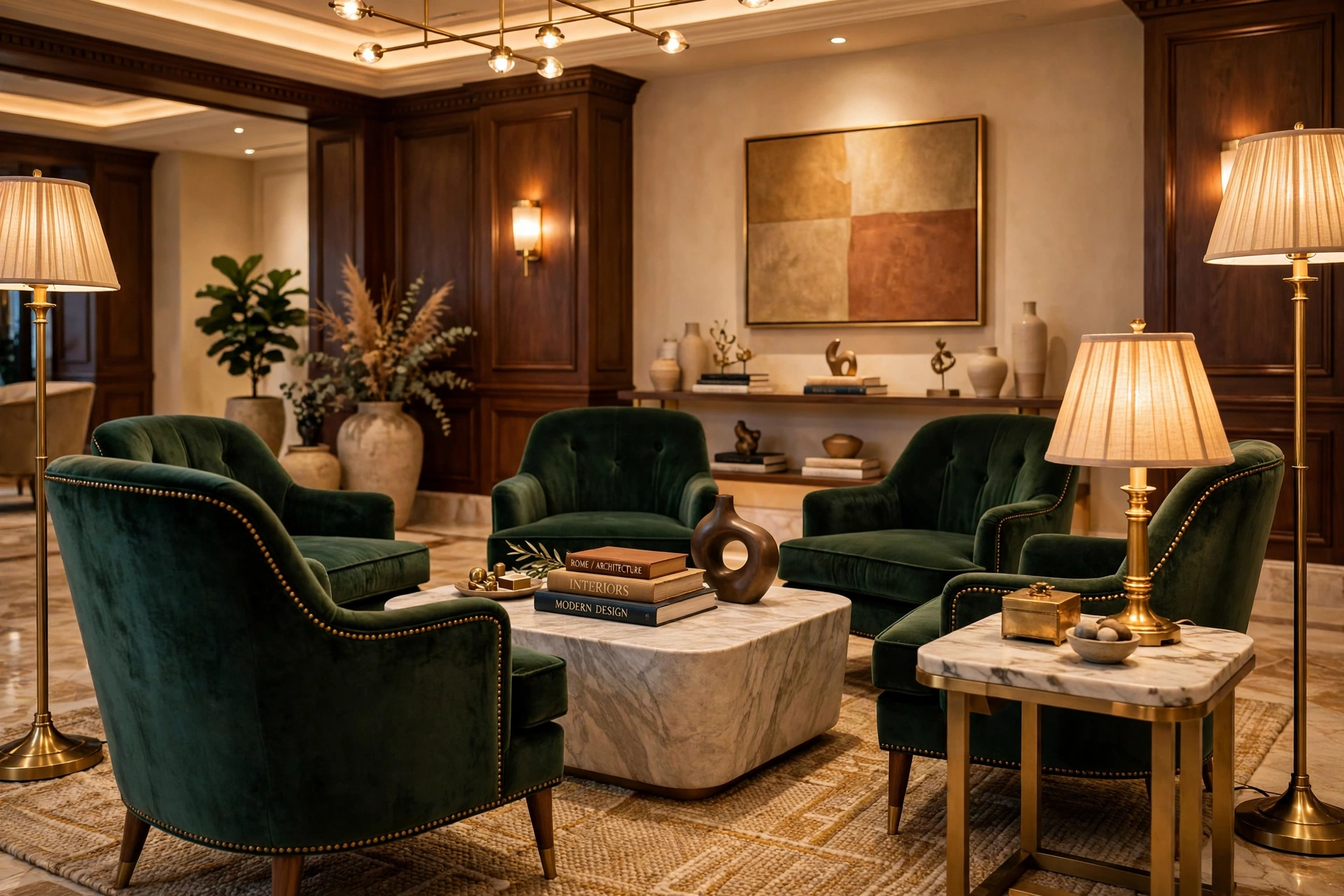
Pick three main tones and repeat them in fabrics, art and objects until the room feels inevitable. Lobbies do this ruthlessly — it is why a cushion, a vase and a painting seem related without matching. Neutrals with one deep accent, such as forest, oxblood or midnight blue, photograph and age best.
10. Texture Mixing, Hotel Grade
Velvet against linen, marble against warm wood, brushed brass against matte plaster. Lobbies layer at least four textures per seating zone. At home, audit your room honestly: if everything is smooth, add boucle, a woven throw, a stone tray and a plant, and watch the temperature of the room change.
11. Stone and Metal Accents With Weight
A marble side table, a heavy brass lamp, a stone bowl — lobby luxury is partly literal weight. A few substantial objects read as expensive far more reliably than many light ones. Choose fewer, heavier, better.
Planning a phased refresh? Costing furniture, lighting and building work in stages is easier with the tools on our financial calculators hub open beside your mood board.
The Details Guests Actually Notice
12. A Styled Coffee Table, Edited Hard
Three groups, no more: a stack of large books, one sculptural object, one living thing — a small plant, a bowl of something seasonal. Leave negative space. Lobbies restyle constantly and edit even more; the discipline is the look.
13. Art at Gallery Scale
One large piece beats six small ones for lobby energy. Hang it lower than you think, centred on the seating, not on the wall’s empty middle. If you love a gallery wall, treat the whole arrangement as one big rectangle with tight, even spacing.
14. Scent, Sound and Temperature
Lobbies manage the invisible: a signature scent, music low enough to talk over, air that is cool but never cold. At home, a consistent candle or diffuser scent, a small speaker hidden in the seating zone and throws within reach of every seat deliver the same subconscious comfort.
15. The Five-Minute Reset
The final lobby secret is operational. Staff reset rooms constantly, so the space always looks freshly composed. Steal the habit, not the staff: cushions plumped and angled, books squared, surfaces cleared nightly, a tray that corrals remotes and chargers out of sight. A room that resets daily looks luxurious even with ordinary furniture.
Two Lobby Looks, Translated for Home
The Grand Classic Lobby
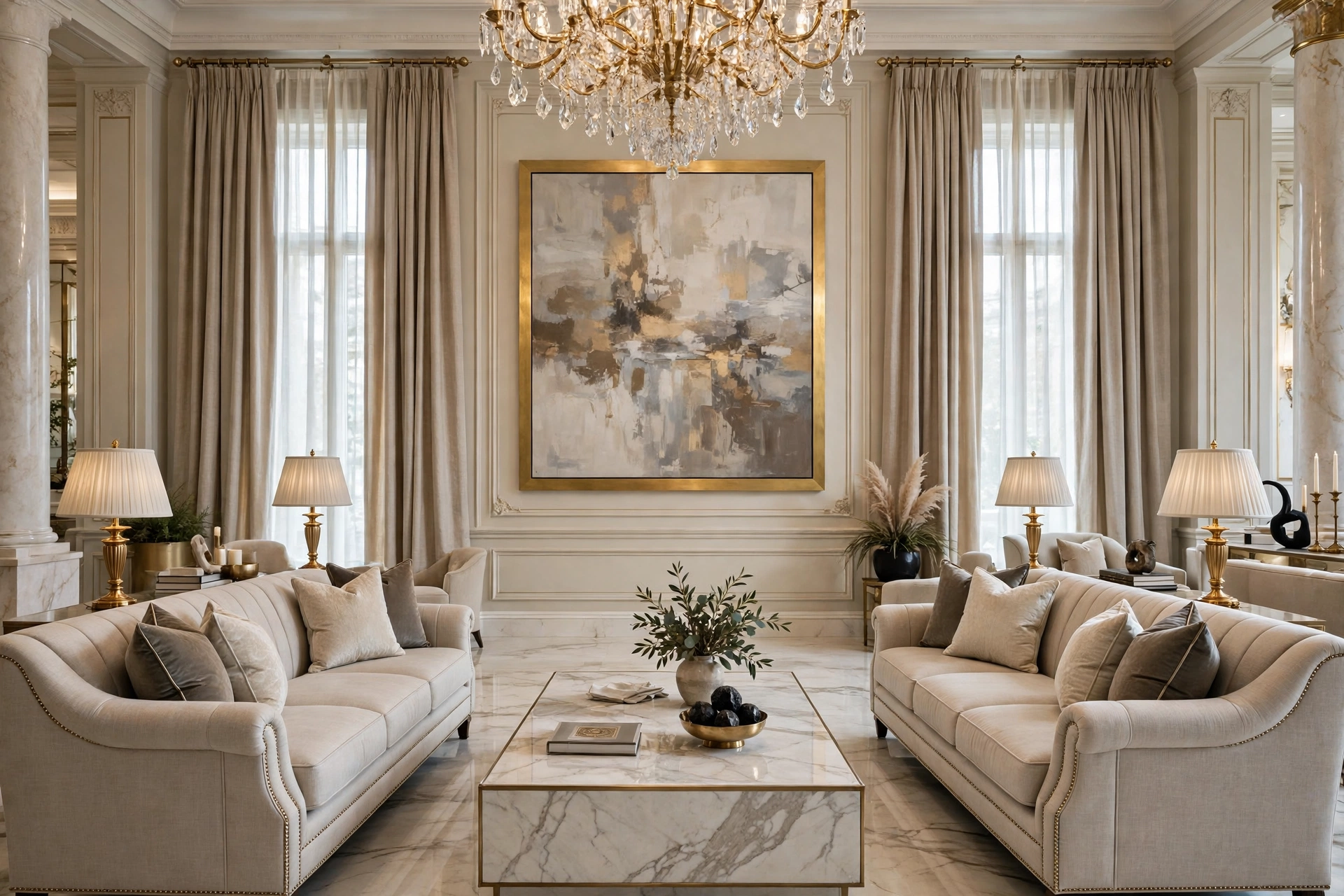
Think high ceilings, a central chandelier, marble or stone underfoot, paired sofas in a pale fabric, dark wood side tables and one large piece of art. At home, you can echo this with a stone-look coffee table, a classic lantern or crystal-style fixture, curtains pooled slightly at the floor, and a palette of ivory, charcoal and brass. Keep pattern to a single cushion fabric or rug border, and let symmetry do the heavy lifting. This look suits period houses and formal rooms where guests are received rather than sprawled in — though deep cushions keep it welcoming, not stiff.
The Relaxed Resort Lobby
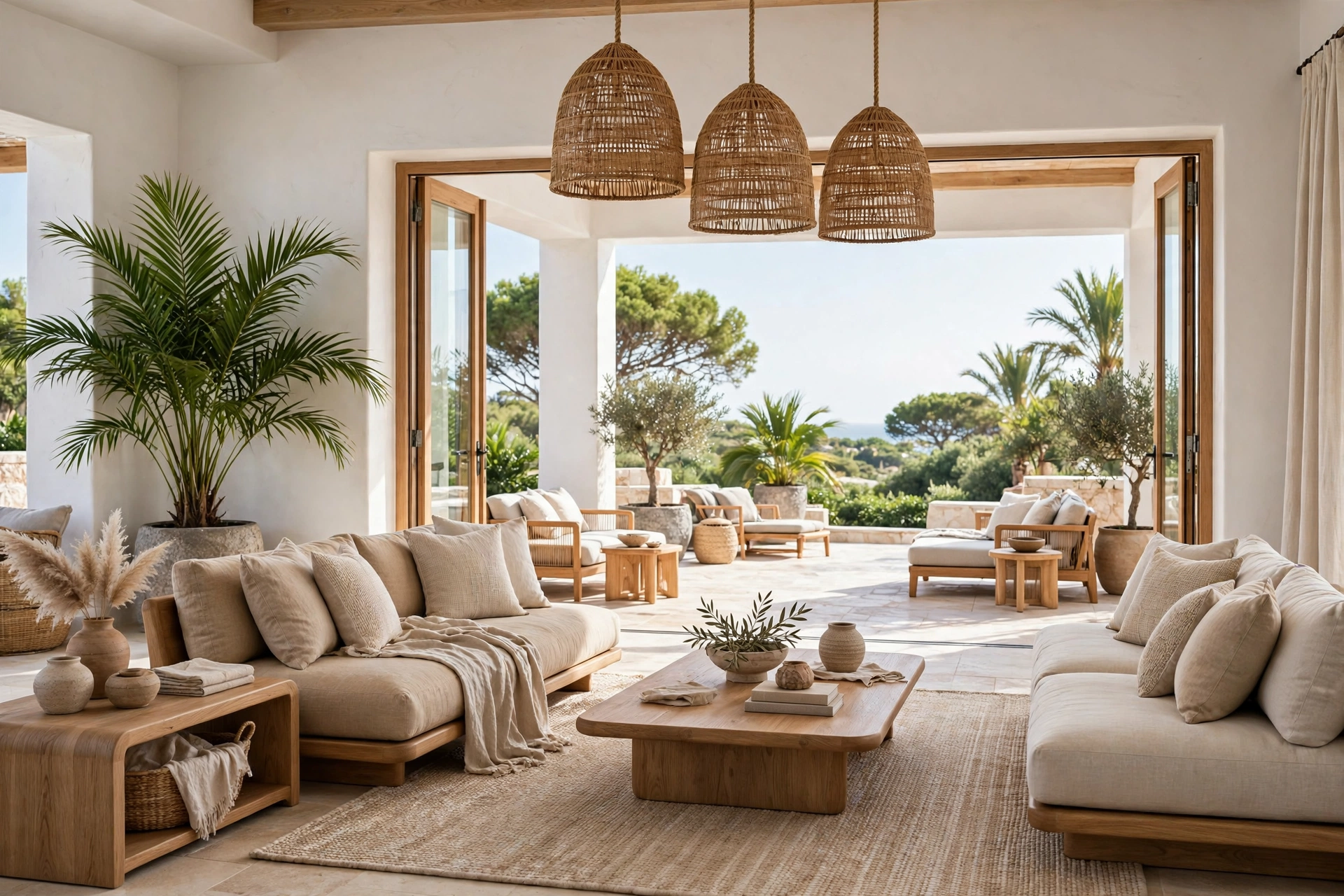
Think low teak or oak furniture, woven pendants, indoor palms, linen in sand tones, and seating that drifts between inside and terrace. At home, translate it with a jute or sisal rug, rattan or cane accents, an oversized plant in a stone pot, and throws in washed cotton. Light is softer, arrangements are looser, and the luxury comes from air and greenery rather than shine. This version suits open-plan family spaces, coastal homes and anyone whose ideal evening involves open doors and bare feet rather than formality.
Both looks share the same skeleton — islands of seating, layered light, repeated colour, edited surfaces. The difference is only the materials you dress that skeleton in. Choosing one direction and committing to it, rather than mixing grand and resort signals at random, is what makes a room feel coherent enough to be called luxurious.
A Weekend Order of Work
If the full list feels like a renovation, shrink it to a weekend. On day one, rearrange: pull furniture off the walls, form one clear conversation island, size up the rug on paper and order the right one, and remove everything that does not belong in the room. On day two, work on light and surfaces: swap in warm bulbs, add or move lamps until you have three heights of light, hang curtains higher if the rail allows it, and style the coffee table down to three groups. Live with the result for a fortnight. Most people find the room already feels halfway to a lobby — and the purchases they still want afterwards are fewer, larger and better chosen.
Putting It Together Without Starting Over
Work in lobby order. First fix the layout — islands, rug size, symmetry. Then fix the light — layers, dimmers, one statement piece. Then repeat your palette and add texture until the room coheres. Only then buy objects, and buy them heavy, few and large. Most living rooms do not need more things; they need the choreography that makes the things they have feel intentional.
For more room-by-room inspiration across villas, penthouses and island homes, explore the full Millionaire Lifestyle archive.
A hotel lobby works because every decision serves welcome, calm and quiet theatre. Bring that thinking home, and your living room stops being the room with the sofa in it. It becomes the room everyone gravitates to — which was the point of the lobby all along.
Related: Inside Elite Mansions: 12 Features Every Millionaire Home Has
